International Dumpling Day
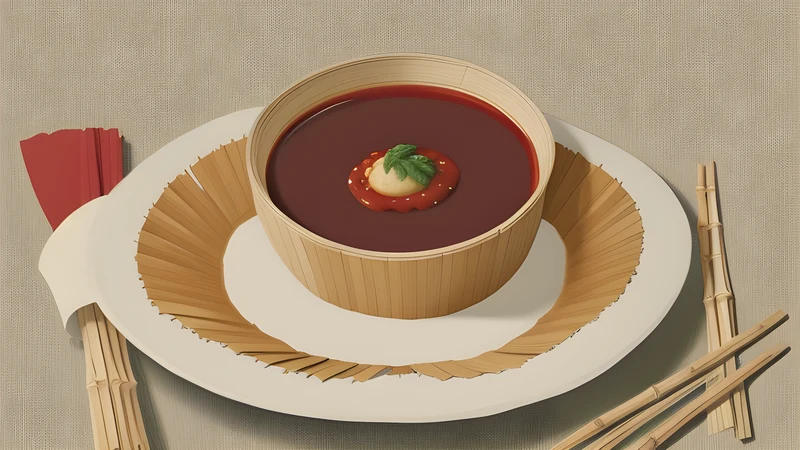
International Dumpling Day, observed on 26 September, was born in New York in 2015, when a manufacturer of Chinese dumplings called the TMI Food Group set out to promote its wares and inadvertently created a global holiday. The Australian food press picked up the idea and began calling it International, or World, Dumpling Day, and the wider name stuck. It is a fitting accident, because the dumpling is the most international food imaginable: almost every culture that ever had flour and a scrap of filling arrived, independently, at the idea of wrapping one in the other.
What counts as a dumpling
A dumpling, at its broadest, is a piece of dough, boiled, steamed, fried or baked, either wrapped around a filling or cooked plain. That definition is deliberately loose, because the family is enormous and no single language draws its boundaries the same way. Chinese jiaozi, Japanese gyoza, Nepali and Tibetan momo, Polish pierogi, Russian pelmeni, Georgian khinkali, Central Asian and Turkish manti, Italian ravioli and tortellini, Jewish kreplach, Korean mandu, and the humble suet dumplings that bob in a British stew are all, by this reckoning, cousins. Some are savoury, some sweet; some are a meal, some a garnish. What unites them is the essential gesture of enclosing goodness in dough.
That the same idea occurred all over the world, without any single origin spreading it everywhere, is part of what makes the dumpling so beloved. It is a food of thrift and ingenuity, a way to stretch a little meat, use up odds and ends, and turn cheap flour into something warming and substantial. Wherever people have been poor and cold and resourceful, which is to say almost everywhere, they have made dumplings.
The Chinese origin story
Though dumplings arose in many places, the richest origin legend belongs to China, and specifically to jiaozi. The tale credits Zhang Zhongjing, a revered physician of the Eastern Han dynasty around the end of the second century, who is honoured as one of the fathers of Chinese medicine. Returning to his home town one bitter winter, the story goes, he found the poor suffering from frostbitten ears. He cooked mutton, chilli and warming herbs, chopped them fine, wrapped them in little parcels of dough folded to resemble ears, and boiled them, giving the broth and the “tender ears” to the sick to restore the circulation to their frozen faces. The dish was called jiao’er, tender ears, and from it, the legend holds, descended the jiaozi eaten across China today.
Whatever the truth of the story, jiaozi became bound to the most important festival of the Chinese year. On the eve of Lunar New Year, families gather to fold dumplings together, and they are shaped to resemble yuanbao, the boat-shaped silver and gold ingots that once served as currency, so that eating them is a wish for wealth in the year to come. A coin is sometimes hidden inside one dumpling, and whoever finds it is promised good fortune. The dumpling, in China, carries the weight of an omen and a family ritual, folded into its very pleats.
History across the map
The dumpling’s spread and independent invention track the movement of peoples and the reach of empires. The nomads of the Eurasian steppe carried folded, filled dough west, and its descendants surface as manti in Turkey and Central Asia, as pelmeni across Russia and Siberia, and as the buuz of Mongolia. Trade along the Silk Road moved techniques and fillings between China and the wider world. In Europe, the pierogi of Poland and Ukraine, the vareniki of the east, the maultaschen of Germany and the ravioli of Italy each grew from local grains and larders. Jewish communities carried kreplach through the diaspora. Each of these has its own festival associations and its own defended orthodoxy, and each is a chapter in a story with no single beginning.
Because the dumpling belongs to everyone, International Dumpling Day naturally keeps company with other borderless food observances such as World Tapas Day and World Hummus Day, all of them celebrations of humble, communal, deeply local foods that somehow became global.
Why the day matters
Beyond the eating, the dumpling carries a social meaning that few foods can match. Making dumplings is almost always a group activity: the rolling, filling and pleating are fiddly enough that many hands make the work bearable and the gathering itself becomes the point. From a Chinese New Year kitchen to a Polish Christmas Eve table to a Nepali family folding momos, the dumpling is a reason for people to sit together and work with their hands. A day devoted to it honours that quiet function as much as the flavour.
How the day is celebrated
International Dumpling Day is a food-industry and social-media affair, with restaurants running dumpling specials, offering samplers of styles from several cuisines, and staging folding demonstrations. Home cooks treat it as a licence to attempt an ambitious batch, and the internet fills with photographs of steamers, pleating tutorials, and the inevitable comparison of everyone’s technique. Cooking schools run dumpling classes, and food writers use the day to send readers down the rabbit hole of the world’s astonishing variety, from soup dumplings that hide a mouthful of hot broth to sweet dumplings poached in syrup.
Variations worth knowing
The variety is genuinely dizzying. Shanghai’s xiaolongbao trap a spoonful of gelled broth inside the wrapper that melts to soup as they steam. Georgian khinkali are twisted into a thick topknot and eaten by hand, the knot left uneaten as a tally of how many you have downed. Japanese gyoza are pan-fried to a lacy crisp on one side. Nepali momos come with a fiery tomato-and-chilli dip. Polish pierogi run from savoury potato-and-cheese to sweet fruit fillings. Some dumplings are boiled, some steamed in bamboo, some fried, some baked, and the wrapper ranges from gossamer to hearty. To eat across the whole family is to take a tour of the world’s kitchens without leaving the table.
The dumpling as thrift and celebration
The dumpling occupies a curious double life: it is both peasant food and festival food, and often the same dumpling is both at once. Its roots are firmly in scarcity, a means of turning a small amount of expensive meat into a dish that fills a family, padding the filling with cabbage, onion, potato or wild greens and multiplying it inside cheap wheat dough. Yet precisely because making them is laborious and communal, dumplings became the food of feasts and holidays, the thing a family sets aside a whole afternoon to prepare together for New Year, for Christmas Eve, for a wedding or a homecoming. A food born of poverty came to signify abundance, simply because the effort of making it in quantity was itself a kind of gift.
That doubleness helps explain the dumpling’s endurance in an age of convenience. Frozen dumplings now fill supermarket freezers on every continent, and they are genuinely good, a small miracle of industrial food. But the ritual survives alongside the product. Families who could easily buy a bag still gather to fold their own on the days that matter, because the folding is the memory, and the slightly uneven, hand-pleated dumpling carries a meaning the machine-made one cannot. International Dumpling Day, at its best, is an invitation to reclaim that afternoon, to flour a surface, to argue about the correct number of pleats, and to feed the people around you something you made with your hands.
A food that crosses every border
It is worth pausing on how thoroughly the dumpling has ignored the world’s dividing lines. Nations that share little else share the dumpling: the same basic parcel appears in cuisines separated by oceans, faiths and centuries, adapted to whatever grew nearby and whatever the local palate craved. In this it is a quiet emblem of how human cultures actually work, borrowing, adapting and independently rediscovering good ideas, rather than staying sealed and separate. To celebrate the dumpling internationally is to celebrate that porousness, the way a good idea about food will always find its way across a mountain range or a sea.
Fun facts
The legend of jiaozi credits a physician, Zhang Zhongjing, with inventing them as medicine, shaping the dough into little ears to cure frostbitten ears, which makes the dumpling one of the few foods whose founding myth is a prescription.
Chinese New Year dumplings are folded to look like ancient silver ingots because their shape is a wish for prosperity, and a lucky coin is sometimes sealed inside one for a diner to discover.
Georgian khinkali are eaten with the fingers by holding the thick doughy knot at the top, and diners traditionally leave a little pile of those uneaten knots on the plate to keep count of how many they have eaten.
The name “International Dumpling Day” was not the manufacturer’s own coinage; the American company launched a promotional National Dumpling Day, and it was the Australian press that upgraded it to International.
A closing reflection
There is a gentle lesson in a food that so many unconnected peoples invented for themselves. The dumpling arose independently across the world, reached again and again wherever cold weather met cheap flour and a little meat, by people solving the same problem in the same satisfying way. International Dumpling Day celebrates that shared human instinct to wrap warmth in dough and to make it together. Every culture folds them differently, and every culture is right.
Related Content