International Day of Women and Girls in Science
In 1903 a Polish-born physicist named Maria Sklodowska Curie shared the Nobel Prize in Physics with her husband Pierre and Henri Becquerel; eight years later, in 1911, she won the Nobel Prize in Chemistry on her own. She remains the only person ever to win Nobel Prizes in two different sciences, and she did it while being refused, for years, the recognition and resources her male colleagues took for granted. Her story is the kind the International Day of Women and Girls in Science, observed every 11 February, was created to keep alive: not as a museum piece, but as proof of what is lost when half of humanity is quietly steered away from discovery.
Where the day comes from
The observance has a surprisingly precise origin. The idea took shape at the inaugural High-Level World Women’s Health and Development Forum, organised by the Royal Academy of Science International Trust together with the UN Department of Economic and Social Affairs, and held at UN Headquarters on 10 and 11 February 2015. Government ministers and representatives from UNESCO, UN Women, the World Health Organization and several other UN bodies took part, and from those discussions came the proposal for a dedicated international day.
The General Assembly acted later that year. In its seventieth session it adopted Resolution 70/212 on 22 December 2015, formally proclaiming 11 February as the International Day of Women and Girls in Science. The first observance followed on 11 February 2016. Responsibility for implementation was given to UNESCO and UN Women, working with research institutions and civil society partners, which is why the day combines the language of human rights with the practical business of getting more girls into laboratories and lecture halls.
A longer history of brilliance and erasure
The day exists partly to correct a record that has been bent since the dawn of modern science. Consider Ada Lovelace, the English mathematician who, in 1843, wrote what historians regard as the first algorithm intended to be processed by a machine, working on Charles Babbage’s proposed Analytical Engine. She grasped, more clearly than Babbage himself, that such a machine might one day manipulate symbols and not merely numbers, an insight that anticipated general-purpose computing by a century.
Or consider Rosalind Franklin, whose X-ray diffraction images at King’s College London in the early 1950s, particularly the celebrated Photograph 51, were crucial to the discovery of the double-helix structure of DNA. Watson and Crick drew on her work, and the three men involved received the Nobel Prize in 1962; Franklin had died of ovarian cancer in 1958 at the age of thirty-seven, and Nobel Prizes are not awarded posthumously. Then there is Lise Meitner, who helped explain nuclear fission in 1939 but was excluded from the 1944 chemistry Nobel that went to her collaborator Otto Hahn alone, an omission now widely seen as one of the prize’s clearest injustices.
The pattern of women doing the work and men receiving the credit became known, with grim wit, as the Matilda effect, named by the historian Margaret Rossiter in 1993 after the suffragist Matilda Joslyn Gage, who had noticed the phenomenon over a century earlier. The day is, in part, an annual attempt to reverse that effect, to restore names to the discoveries they belong to.
The list of the overlooked is long and specific. Chien-Shiung Wu, a Chinese-American physicist, conducted the 1956 experiment that disproved the conservation of parity, yet the 1957 Nobel went to the two male theorists whose hypothesis she had tested. Jocelyn Bell Burnell discovered the first radio pulsars as a graduate student in Cambridge in 1967, only to see the 1974 Nobel in Physics awarded to her supervisor. Nettie Stevens established in 1905 that sex is determined by chromosomes, a finding long attributed chiefly to the male geneticist Thomas Hunt Morgan. Each name is a small correction the day tries to make permanent.
Why it matters
The argument for the day rests on more than fairness, though fairness alone would suffice. Science that draws on a narrow slice of humanity asks a narrow set of questions. Medical research conducted largely on male bodies, for instance, has produced drug dosages and diagnostic criteria that serve women poorly; heart attacks in women were for decades under-recognised because the textbook symptoms were the male ones. A scientific workforce that reflects the population it serves is simply more likely to notice what that population needs.
There is also the matter of sheer waste. Every girl who is told, implicitly or otherwise, that science is not for her is a mind diverted from problems that need solving. Climate modelling, vaccine development, materials science, the search for clean energy: none of these can afford to fish in only half the pool of talent. The day frames the inclusion of women not as charity extended to them but as a correction the whole enterprise of science requires.
How it is observed
The day is marked through a mixture of celebration and pointed advocacy. Universities and research institutes open their laboratories to schoolchildren, especially girls, so that abstraction becomes something they can touch. UNESCO and UN Women host an assembly at UN Headquarters that brings together scientists, ministers and students. Across the world, professional societies present awards, launch mentoring schemes and publish profiles of women researchers, both the historical pioneers and those working now.
Social media plays an outsized role, with researchers sharing their own paths into science under common hashtags, deliberately making visible the working scientist who happens to be a woman. Each year carries a theme, often tied to a pressing global challenge such as water, health or sustainable development, which gives the observance a focus and lets campaigners coordinate their message. The UN also uses the occasion to release fresh data on women’s representation in research, ensuring that the celebration is grounded in evidence rather than sentiment, and that the gap between aspiration and reality stays in plain sight.
A growing number of countries have folded the day into their national calendars, with science ministries, academies and broadcasters producing programming aimed squarely at schoolgirls. The deliberate timing matters: 11 February falls during the academic year in most of the northern hemisphere, so schools can build lessons and visits around it while pupils are at their desks rather than on holiday.
Variations and the global picture
The shape of the problem differs sharply by place and discipline. In many countries women now earn the majority of degrees in the life sciences and medicine, yet remain a small minority in engineering, physics and computing. UNESCO data has repeatedly shown that women make up less than a third of the world’s researchers overall, with the proportion shrinking further at senior and decision-making levels, the so-called leaky pipeline. Some nations buck the pattern: several countries in the Arab world and Central Asia report unusually high proportions of women in fields such as computer science, a reminder that the gaps are cultural rather than innate.
Symbols and themes
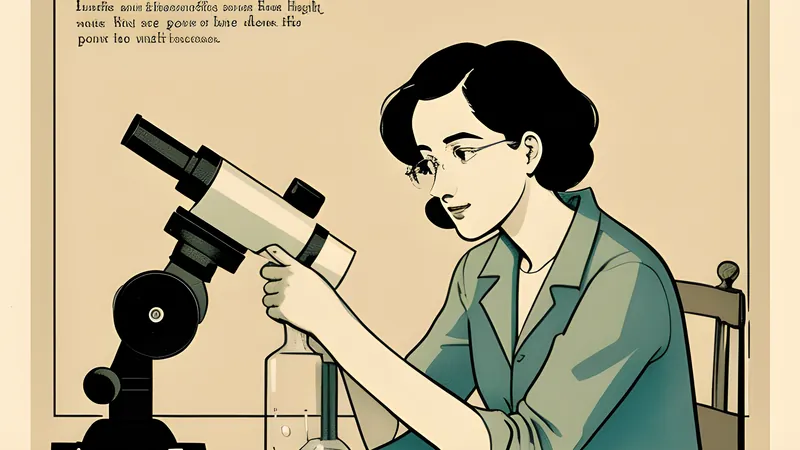
The emblems of the day are simply the instruments of inquiry, the microscope, the telescope, the test tube and the equation, shown in the hands of women and girls. The recurring image of a girl looking through an eyepiece is doing quiet rhetorical work: it places her at the point of observation, as the one who sees, rather than the one who is studied. The message folded into every year’s theme is the same, that the next significant discovery may belong to someone currently being told she does not fit.
This insistence that opportunity be opened rather than rationed connects the day to other observances that press for inclusion and access, such as the International Day of Education, which treats learning itself as a right rather than a privilege. It also sits naturally alongside the World Science Day for Peace and Development, which makes the broader case that science serves humanity best when it serves all of it.
Fun facts
- Marie Curie’s notebooks from her radium research are still so radioactive that they are kept in lead-lined boxes at the Bibliotheque nationale de France, and anyone wishing to consult them must sign a liability waiver.
- Ada Lovelace was the daughter of the poet Lord Byron, whom she never knew; her mother steered her firmly towards mathematics, partly in the hope of suppressing any inherited poetic temperament.
- The “human computers” who calculated trajectories for NASA’s early spaceflights included a team of Black women mathematicians, among them Katherine Johnson, whose hand calculations John Glenn personally insisted on having checked before his 1962 orbital flight.
- The Matilda effect, the systematic crediting of women’s scientific work to men, was named only in 1993, even though the suffragist it honours had described the phenomenon in writing back in 1870.
A closing reflection
A telescope does not care who looks through it. The light from a distant galaxy falls just the same on any eye placed at the eyepiece, and the equation that describes its motion yields its answer to anyone who works it through. The barriers that the day confronts were never imposed by nature; they were imposed by people, which is the genuinely hopeful part. What people have built, people can dismantle. The girl encouraged today to keep looking is not being granted a favour. She is being allowed, at last, to take a turn at the instrument that was always meant for her too.
Related Content