International Day of the Yak
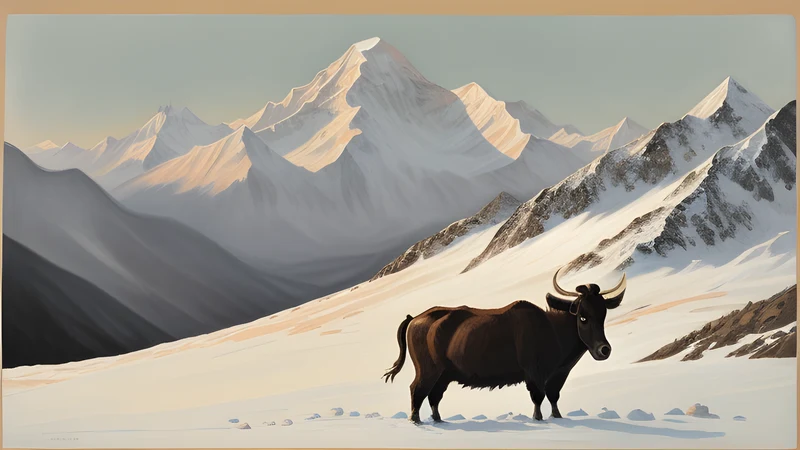
On 20 April 2025, in a hall in Kathmandu, Nepal held its first National Yak Day, becoming the first country in the Hindu Kush Himalaya to set aside an official date for the animal that has carried its mountain economy for millennia. The International Centre for Integrated Mountain Development (ICIMOD), the regional body that helped organise the event, framed the yak as a keystone of Himalayan life rather than a curiosity of the high pasture. From that momentum grew a wider observance, International Yak Day, marked each 29 April as a tribute to an animal most of the world will never see grazing at 5,000 metres.
The animal built for thin air
There are two yaks, and the distinction matters. The wild yak, Bos mutus, is a massive, dark, endangered animal that still roams the remote Tibetan Plateau in herds; the IUCN lists it as Vulnerable, with perhaps 10,000 mature individuals left, some bulls standing two metres at the shoulder and weighing a tonne. The domestic yak, Bos grunniens, descends from it and numbers somewhere around 14 to 15 million, more than nine in ten of them in China, chiefly across Tibet and Qinghai. The rest are spread through Nepal, Bhutan, Mongolia, the Indian territories of Ladakh and Sikkim, and pockets of Kyrgyzstan, Pakistan and the Russian Altai. The species name grunniens means “grunting”, and anyone who has stood in a yak caravan knows why: the animal converses in low grunts and hums rather than the lowing of lowland cattle.
Everything about the yak is engineering for altitude. It carries larger lungs and a bigger heart than ordinary cattle, more haemoglobin in its blood, and a capacity to keep foetal haemoglobin, which binds oxygen more tightly, well into adult life. Its coat is a double system: a dense woolly undercoat trapping warmth beneath a long shaggy outer skirt that hangs almost to the ground and sheds snow like a thatched roof. It has few sweat glands, which suits an animal that rarely needs to cool down and would suffer badly in lowland heat. Take a yak below about 2,000 metres and it tends to sicken, troubled by warmth and by diseases its mountain immune system never learned. This is a creature that struggles where humans breathe easily and thrives where we gasp, and that inversion is the whole point of it.
A history measured in passes crossed
The yak was probably domesticated on the Tibetan Plateau several thousand years ago, and for the communities of the high Himalaya it became the single animal that made permanent settlement possible above the tree line. It gave milk far richer than a cow’s, at six to seven per cent fat, which could be churned into the butter that fuels both the lamps of a monastery and the endless cups of po cha, the salted butter tea that keeps herders warm through a plateau winter. It gave meat, hides for boats and tents, and wool spun into rope and cloth. Its dung, dried in flat cakes on stone walls, is often the only fuel available on a treeless plateau, so the animal quite literally warms the home it feeds.
As a load-carrier the yak reshaped trade. Sure-footed on ice and scree, able to shoulder close to its own body weight, it moved salt, wool, tea and grain across passes that no wheel could manage, threading the caravan routes that laced Tibet to Nepal, Bhutan, Ladakh and beyond. The great salt-for-grain exchanges of the Himalaya, in which highlanders traded Tibetan salt down to the middle hills for barley and rice, ran on yak legs. Herders also bred the yak to cattle, producing the dzo (male) and dzomo (female) hybrids that are hardier at middle altitudes and, in the case of the females, fertile and heavy milkers, useful exactly in the zone where pure yaks flag and lowland cows fail. Whole valleys organised their year around the rhythm of yak husbandry: high summer pastures, autumn descent, winter shelter, and the shearing and churning that filled the months between.
Why a day for the yak
The observance exists because the yak’s world is changing faster than the animal can adapt. Warming on the Tibetan Plateau is running well above the global average, pushing the alpine grasslands the yak depends on higher up the slopes and thinning them out, while shifting snow and rain patterns disrupt the seasonal grazing calendar herders have followed for generations. At the same time, younger people are leaving herding for towns and wage work, so the deep practical knowledge of how to manage yaks across a season, when to move, how to read the weather, how to treat a sick animal, is fraying with each departure. ICIMOD and its partners use the day to argue that the yak deserves a place in serious development and climate planning, because a decline in yak herding is also a decline in the only viable livelihood across vast stretches of high country, and often the last thread holding a mountain community to its valley.
There is a conservation strand too. The wild yak faces pressure from hunting, habitat loss and interbreeding with domestic stock that dilutes its distinct genetics, and protecting it means protecting the intact high-altitude ecosystems it shares with the snow leopard, the Tibetan antelope and the wild ass. Marking the animal with a date is a way of insisting that a species living out of most people’s sight still counts.
How it is observed
Celebration clusters in the range countries, where the yak is woven into daily life. In Nepal, Bhutan and parts of India, festivals feature yak races and grooming competitions, stalls selling chhurpi, the rock-hard dried yak-milk cheese that herders chew for hours on the trail, and demonstrations of weaving with yak wool. Monasteries and mountain communities hold gatherings that fold the animal into song and dance, and in Tibet the older tradition of the yak festival brings decorated animals into the open for display, their horns painted and their bridles hung with red tassels. Beyond the mountains, the day travels mostly online, where conservation groups and mountain-tourism outfits share the science of high-altitude adaptation and the economics of pastoral life, and where the growing market for yak-wool textiles and yak-cheese products gives herders a reason to hope the animal still has an economic future.
The yak in belief and imagination
The animal that feeds the plateau also colours its imagination. In Bon and Tibetan Buddhist tradition the wild yak appears as a symbol of raw mountain power, and yak-tail whisks once served as ceremonial fans and standards from Tibet to the courts of India, where the white chowrie became an emblem of royalty and of the divine. The tail found its way into Hindu ritual and into the regalia of temples far south of any yak’s range, carried down the trade routes with the salt and the wool. In Mongolia and the Altai the yak shares its pastures with horses and camels in a herding culture that measures wealth in animals, and folk songs there praise the yak for the stubborn reliability that keeps a family alive through a winter that kills lesser stock.
The animal has even reached the modern schoolroom by an odd back door: in English-language children’s alphabet books, “Y is for yak” so reliably that the yak has become one of the first exotic animals a Western child can name, long before ever grasping that it lives three or four kilometres up in the sky. That accident of the alphabet has given the yak a cultural presence out of all proportion to how few people have met one.
Fun facts
The yak’s grunt gave it its scientific name, yet the animal is also remarkably calm in temperament, and trained pack yaks will follow a herder for days without a rope. Yak wool sorts into two very different fibres: the coarse outer guard hair used for ropes and tents, and the soft down beneath, sometimes marketed as khullu, which rivals cashmere for warmth and has become a boutique textile sold far from any mountain. The English word “yak” comes from the Tibetan g.yag, which strictly means only the male; the female is a dri, so the phrase “yak milk” is, to a Tibetan ear, a small contradiction, since only the dri gives milk. Yak butter is burned in butter lamps in Himalayan temples, meaning the same substance lights the shrine, flavours the tea and greases the axle of mountain life. And the animal’s blood is so oxygen-hungry that it can climb slopes at altitudes where a lowland cow would collapse, which is why expeditions to the world’s highest peaks have leaned on yak trains to carry loads to base camp for well over a century.
A closing reflection
The yak asks us to notice a kind of value that does not photograph as easily as a tiger or a whale. It is a common working animal without the glamour of a tiger or a whale, and its worth is of a plainer kind: it is simply indispensable, the quiet engine of human survival in places the rest of us visit only briefly and gratefully leave. A day for the yak is really a day for the people who live where it lives, and for the argument that an animal can be worth defending because a civilisation was built on its back. If you like the way one working animal can hold up an entire way of life, the same thread runs through World Camel Day and World Donkey Day, and the high-pasture cousin of the yak’s story appears again in World Alpaca Day and among the mountain climbers of World Goat Day.
Related Content