International Day of the Seal
In 1982 the United States Congress designated 22 March as the International Day of the Seal, a response to growing public anger over commercial seal hunting and the mass killing of pups for their fur. More than four decades later the date survives as an annual focus on the world’s seals, sea lions and walruses, the group of marine mammals known as pinnipeds, and on the mix of conservation successes and continuing threats that shape their lives across every ocean from the tropics to the polar ice.
Three families, one body plan
“Seal” is a loose word covering a group properly called the pinnipeds, from the Latin for “fin-footed”, and it splits into three families. The true or earless seals, family Phocidae, include the harbour seals, grey seals, elephant seals and the ice-breeding species of the poles. The eared seals, family Otariidae, are the sea lions and fur seals. The walrus stands alone in its own family, Odobenidae. Together they number around thirty-four species, all descended from land carnivores related to bears and otters that returned to the sea tens of millions of years ago.
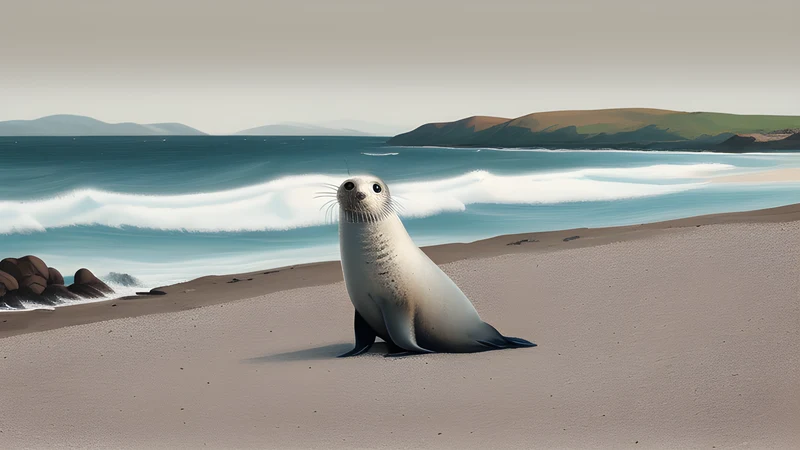
The difference between a true seal and a sea lion is easy to see once you know it. Sea lions and fur seals have small external ear flaps and can rotate their hind flippers forward to walk, even gallop, on all fours across land. True seals have no visible ears, only holes, and cannot bring their hind flippers under the body, so on land they haul themselves along in an ungainly caterpillar wriggle. In the water, though, that streamlined true-seal body is superbly efficient, propelled by side-to-side sweeps of the hind flippers.
A history written in fur and outrage
The International Day of the Seal was born out of one of the twentieth century’s fiercest wildlife controversies. For generations, harp seals off the coast of eastern Canada were hunted in enormous numbers, and the killing of their pure-white newborn pups, the fluffy “whitecoats”, for the fashion fur trade became a defining image of animal-welfare campaigning. Graphic footage of pups being clubbed on the ice spread worldwide through the 1970s and early 1980s, galvanising organisations and celebrities and prompting import bans on seal-pup products in Europe and the United States. The 1982 congressional designation of a seal day was part of that wave of concern.
Seals had already suffered catastrophic commercial exploitation long before. Fur seals were hunted to the brink across the southern oceans in the eighteenth and nineteenth centuries, with whole colonies on remote islands wiped out for their dense pelts. Elephant seals were slaughtered for the oil rendered from their blubber, and the northern elephant seal was reduced to perhaps a few dozen animals by the 1890s before recovering, from that tiny remnant, to hundreds of thousands today, a genuine conservation triumph that also left the species with unusually low genetic diversity. The Caribbean monk seal was less fortunate; hunted relentlessly, it was last reliably seen in 1952 and formally declared extinct in 2008, the only seal known to have been driven out of existence by humans in modern times.
Why the day matters
Not every seal is thriving. The Mediterranean monk seal and the Hawaiian monk seal remain among the most endangered marine mammals on Earth, each down to numbers in the hundreds or low thousands, squeezed by lost habitat, entanglement in fishing gear, disturbance and disease. Even abundant species face modern pressures, from plastic and net entanglement to shifting fish stocks and melting sea ice, since several polar seals depend on stable ice platforms to give birth and nurse their young. The International Day of the Seal keeps these varied fortunes in public view, and it also acknowledges the tension that still surrounds regulated seal hunts in some countries, where questions of tradition, indigenous rights, fisheries and welfare remain genuinely contested.
How it is marked
Aquariums, marine sanctuaries and rescue centres lead the day, particularly the organisations that rehabilitate stranded and orphaned pups. In Britain, groups that care for weaned grey and harbour seal pups washed up along the coast use the date to explain their work and to remind the public to keep dogs and crowds away from seals resting on beaches. Educational events, fundraising appeals and social-media campaigns highlight individual species, and conservation bodies release updates on the most threatened populations. Coastal walks and guided viewing at established seal colonies give people a chance to see wild pinnipeds at a respectful distance, which is very much the point: much seal harm now comes from well-meaning people getting too close rather than from hunters.
Extremes of the seal world
Seals include some of the most physically extreme mammals alive. The southern elephant seal is the largest carnivore on the planet, with bull males reaching six metres in length and weighing up to four tonnes, dwarfing the females they gather into harems on sub-Antarctic beaches. At the other end of the scale, the Baikal seal, or nerpa, is the only seal that lives entirely in fresh water, marooned in Siberia’s Lake Baikal thousands of kilometres from any ocean, a mystery of how it got there that scientists still debate. The Weddell seal of Antarctica routinely dives beyond six hundred metres and can stay submerged for well over an hour under the ice, while elephant seals descend well over a kilometre in search of food, holding their breath for up to two hours.
The walrus, the odd one out
No account of the pinnipeds is complete without the walrus, the single species that forms its own family. Found around the Arctic, a bull walrus can weigh well over a tonne and is instantly known by its tusks, which are elongated canine teeth that grow up to a metre long in large males. Both sexes carry them, using them to haul their bulk out onto ice, to spar for status and, contrary to old assumptions, not to dig for food. Walruses feed mainly on clams and other shellfish on the seabed, which they find with a broad muzzle covered in hundreds of sensitive whiskers and then suck from their shells with a powerful piston-like tongue. They gather in vast, noisy herds hauled out on ice and shorelines, and their dependence on sea ice makes them one of the species most exposed to a warming Arctic, forcing larger and more dangerous crowds onto land as the ice retreats.
Life on the colony
For animals so graceful in water, seals lead intensely social and often chaotic lives on land. Many species gather in dense breeding colonies where thousands of animals pack onto beaches and ice floes to give birth, nurse and mate within a short, frantic season. Among elephant seals and fur seals, dominant bulls fight brutal battles to control groups of females, and the roaring, blood-streaked contests of the breeding beach are among the most dramatic spectacles in the animal world. Mothers and pups locate one another in the crush by voice and scent, a remarkable feat of recognition amid the din. Once the pups are weaned, often abruptly, they are left to teach themselves to swim and hunt, and mortality in that first independent stretch of life is high. Understanding this demanding life history matters for conservation, because disturbance during the brief, crowded breeding window, whether from tourism, development or dogs, can cause pups to be crushed, abandoned or separated from their mothers.
Fun facts worth surfacing
Seal milk is astonishingly rich. The milk of some species is up to half fat, richer than double cream, which lets pups pile on blubber at extraordinary speed. The hooded seal takes this to an extreme, weaning its pup in only around four days, the shortest nursing period of any mammal.
Their whiskers are precision instruments. A seal’s stiff facial whiskers, called vibrissae, can detect the faint hydrodynamic trails left in the water by a swimming fish, allowing a seal to track and catch prey in darkness or murky water using touch alone.
They sleep in the sea. Seals can doze while floating upright at the surface, a posture called “bottling”, and some can shut down half their brain at a time so one hemisphere stays alert, a trick shared with dolphins.
Blubber does more than insulate. A seal’s thick fat layer stores energy, streamlines the body and provides buoyancy control, and it is so effective that many seals overheat and must actively shed warmth when hauled out on land in the sun.
Some seals wander far inland. Seals have turned up in rivers many kilometres from the coast, following fish upstream, and there are records of them appearing well inside cities on tidal rivers, startling commuters far from any beach.
A closing reflection
The story of the seal is, unusually, one where public outrage genuinely changed outcomes. Campaigns over the whitecoat hunt reshaped laws and markets, elephant seals clawed back from a few dozen animals to a thriving population, and the very existence of a day for seals is a monument to a moment when people decided a fur coat was not worth the image on the ice. Yet the monk seals and the ice-breeding species remind us the work is unfinished. The seal shares its threatened seas with the gentle grazers of World Manatee Day, the great cetaceans of World Whale Day and the river-hunting mustelids of World Otter Day, and its fortunes rise and fall with the health of the same coasts and currents. Marking 22 March is a way of remembering both how much changed, and how much still depends on us keeping watch.
Related Content