International Day of the Potato
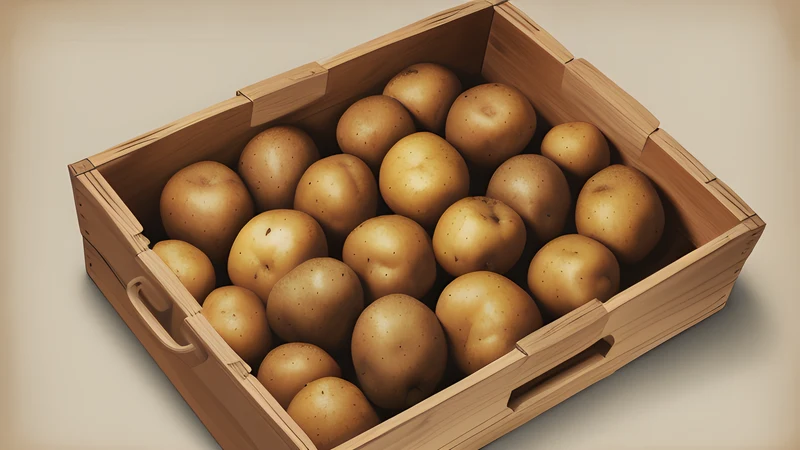
On 30 May 2024, in Rome, Lima and New York on the same day, the humble tuber finally got a place on the United Nations calendar. The General Assembly had adopted resolution A/RES/78/123 six months earlier, on 8 December 2023, proclaiming 30 May every year as the International Day of Potato. The inaugural theme, “Harvesting diversity, feeding hope”, pointed at the plant’s quiet superpower: with more than 5,000 cultivated varieties and farmer landraces, the potato bends itself to almost any soil, altitude and kitchen on Earth.
A crop that began in the Andes
The potato’s story starts on the cold high plains around Lake Titicaca, on the border of modern Peru and Bolivia, where farmers domesticated wild tubers somewhere between 7,000 and 10,000 years ago. Solanum tuberosum was bred into a whole spectrum of varieties, adapted to terraces at different heights so a family harvest never failed all at once. Andean growers learned to freeze-dry surplus potatoes in the night frosts and midday sun, treading out the water underfoot to make chuño, a preserved food that could be stored for years and that helped sustain the Inca state and its armies. The genetic memory of that early work survives today: a single Andean market stall may sell a dozen shapes and colours of potato that carry names, uses and stories the way European kitchens know their apples.
Peru still treats the crop as national heritage. The International Potato Center (CIP), founded in Lima in 1971, maintains a gene bank of more than 4,000 varieties, and it was Peru’s own Día Nacional de la Papa, observed on 30 May since 2005, that supplied the date the UN eventually adopted for the whole world.
From New World curiosity to global staple
Spanish ships carried the potato to Europe in the second half of the sixteenth century, part of the vast biological exchange that followed 1492. It spent decades as a botanical oddity, distrusted as animal fodder or feared as a cause of leprosy because it grew in the dark and did not appear in the Bible. Its acceptance owes a great deal to a few determined promoters. In France, the pharmacist Antoine-Augustin Parmentier, who had survived on potatoes as a prisoner during the Seven Years’ War, staged elaborate publicity stunts in the 1770s and 1780s, including a guarded potato field that peasants were tacitly encouraged to raid at night on the reasoning that anything worth guarding was worth stealing. In Prussia, Frederick the Great issued the Kartoffelbefehl of 1756, ordering his subjects to plant the crop as insurance against famine; his grave at Potsdam is still decorated with potatoes by visitors.
The plant transformed northern Europe. A single acre of potatoes yielded more calories than the same acre of grain, and the crop grew underground where armies and hailstorms could not easily destroy it. Historians including William McNeill and Alfred Crosby have credited the potato with underwriting much of the population growth that fed the Industrial Revolution, freeing labour from the land and filling the growing cities of Britain and Germany.
That same dependence turned catastrophic in Ireland. When the water mould Phytophthora infestans arrived in 1845, it rotted the crop in the ground across successive seasons. Roughly a million people died in the Great Famine of 1845 to 1852, and at least a million more emigrated, permanently reshaping Ireland and the cities of North America that received them. The blight remains a standing warning about what monoculture does when a single pathogen finds it, and it is one reason the modern day places such stress on preserving genetic diversity.
Why the day matters
The potato is the third most important food crop for human consumption after rice and wheat, grown in more than 150 countries and eaten by roughly two-thirds of the world’s households. It produces more food per unit of water than any major cereal, matures in as little as three months, and thrives where wheat and rice struggle, which makes it a serious instrument of food security as climate patterns shift. The FAO frames the observance around exactly this: a climate-resilient, nutrient-dense crop that supports smallholder incomes and diets in the places that most need both.
The geography of production has quietly turned upside down. China is now by far the world’s largest potato grower, followed by India, and Asia today accounts for more of the global harvest than Europe or the Americas. A plant that spent millennia as an Andean secret has become a mainstay of Chinese and Indian food security, which is precisely the kind of diffusion the UN day celebrates. The nutrition, meanwhile, is genuinely underrated. A potato eaten with its skin carries vitamin C, potassium, fibre and useful protein, and the deep-frying that gives the tuber its unhealthy reputation is a choice of cookery rather than a property of the plant.
How it is marked
Because the day is new, its traditions are still forming, and they lean towards the practical. The FAO and CIP host scientific symposia on breeding, disease resistance and storage; agricultural ministries run field demonstrations; and schools and community kitchens organise tastings that put obscure coloured Andean varieties next to the familiar supermarket white. In Peru, festivals in the highland regions of Puno, Cusco and Huancavelica turn the day into a showcase of purple, red and yellow potatoes most of the world has never seen, alongside cooking competitions and market fairs. Elsewhere the day slots naturally alongside other food observances such as World Marmalade Day, National Toast Day and World Porridge Day, each celebrating a staple that carries a nation’s memory.
Traditions and symbols
The potato’s symbolism is bound up with the earth itself: it is dug rather than picked, it stores through winter, and it has long stood for peasant sturdiness and thrift. Van Gogh chose it deliberately for The Potato Eaters of 1885, wanting to show hands that had “dug the earth” eating the food those same hands had raised. In the Andes, the diversity of the crop is a point of cultural pride, with communities in the Potato Park near Cusco safeguarding hundreds of native varieties as living heritage rather than museum specimens, and returning seed potatoes from international gene banks to the fields they originally came from.
Surprising facts
The potato was the first vegetable grown in space: in 1995, plantlets flew aboard the Space Shuttle Columbia in an experiment run by NASA and the University of Wisconsin, testing whether astronauts on long missions might one day grow their own. Marie Antoinette is said to have worn potato blossoms in her hair to popularise Parmentier’s campaign at the French court. The English word “spud” originally referred to the narrow digging tool used to lift the tubers, and only later attached itself to the crop. And the ordinary potato keeps genuinely dangerous company: it belongs to the nightshade family, and its green skin and sprouts contain solanine, a natural toxin the plant produces as a defence, which is why greened potatoes are best cut away or discarded. Perhaps the strangest fact is scale, with the world growing something on the order of 370 million tonnes of potatoes in an average year, a mass difficult to picture from a plant that was a regional secret only five centuries ago.
The potato around the world
Few foods have been so thoroughly adopted by their host cultures that they now feel indigenous. Belgians and the French argue over who invented the frite; India folds spiced potato into the masala dosa and the samosa; Peru layers cold yellow potato into causa and drowns boiled potato in the chilli-and-cheese sauce of papa a la huancaína; Spain binds it into the tortilla; Germany serves it as Kartoffelsalat and dumpling; and the Andes still eat the ancient freeze-dried chuño that made storage possible in the first place. The Kitchen desk has followed several of those threads, from papa a la huancaína to the twice-cooked potato of causa limeña and the potato dumplings of eastern Europe. The International Day of Potato quietly gathers all of these under one date, a reminder that a single Andean plant now sits at the centre of so many national tables that most of the people eating it have forgotten it ever came from anywhere at all. That forgetting is, in its way, the highest compliment a food can receive.
A closing reflection
There is something fitting about a food this ordinary taking so long to be honoured. The potato asks for no ceremony, keeps quietly in a dark cupboard, and turns up in almost every cuisine without demanding to be noticed. The International Day of Potato is really an argument that ordinariness on this scale is its own kind of marvel, and that the plant which fed the tenements and the trenches deserves a moment of attention before it disappears back into the everyday meals it has always made possible. For a crop that spent decades being fed to pigs, a seat at the United Nations is a long way to have travelled.
Related Content