International Day of the Midwife
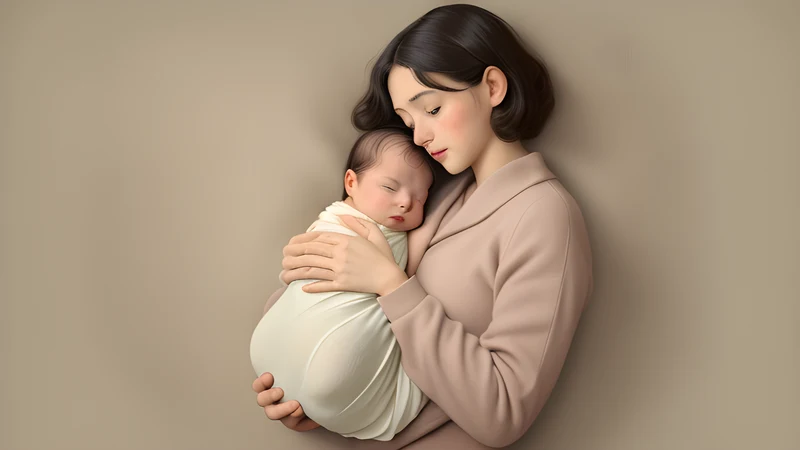
The International Day of the Midwife has been observed on 5 May each year since 1992, when the International Confederation of Midwives launched it to honour a profession as old as humanity itself. The idea had been floated at the Confederation’s 1987 conference, and once adopted it spread quickly through the world’s midwifery associations. The date is now a fixture in the global health calendar, a moment to recognise the practitioners who attend the beginning of every human life and who, in much of the world, remain the difference between a safe birth and a fatal one.
What a midwife does
A midwife is a trained professional who cares for women through pregnancy, labour, birth and the weeks that follow, and who cares for the newborn in its first days. The word describes the role precisely: it comes from the Old English mid wif, meaning “with woman,” the person who is with the woman as she gives birth. That plain, ancient phrase captures something the modern medical vocabulary often loses, that the heart of the work is presence, continuity and support, alongside genuine clinical skill.
Midwives conduct antenatal care, monitor the health of mother and baby, guide women through labour, deliver babies in normal births, recognise the danger signs that require a doctor, and provide the early postnatal care that catches problems before they become emergencies. In many countries they are the primary caregivers for the whole span of low-risk pregnancy and birth, and the evidence is strong that midwife-led care produces excellent outcomes with fewer unnecessary interventions.
An ancient calling
Midwifery is among the oldest of all human occupations, for the obvious reason that women have always needed help giving birth. The record reaches back to the earliest civilisations. Ancient Egyptian texts refer to midwives, and the Hebrew Bible names two of them, Shiphrah and Puah, in the Book of Exodus, midwives who defied Pharaoh’s order to kill newborn Hebrew boys, in one of the earliest written accounts of conscientious refusal. In classical Greece the midwife was a respected figure, and the philosopher Socrates, whose own mother Phaenarete was said to be a midwife, borrowed the profession as a metaphor for his teaching method, calling it maieutics, the art of the midwife, because he saw himself as helping others give birth to ideas they already carried.
Ancient tradition also preserves the story of Agnodice, a woman of Athens who, according to legend, disguised herself as a man to study medicine and midwifery at a time when women were barred from the field. When her success drew the jealous accusation that “he” was seducing patients, she revealed herself to be a woman, and the resulting scandal is said to have led Athens to change its laws to allow women to practise. True or embroidered, the tale marks how far back the struggle over who may attend birth actually runs.
History and the fight for the profession
For most of history, birth was women’s business, attended by female midwives whose knowledge passed from one generation to the next through apprenticeship rather than books. That began to change in early modern Europe, sometimes for the worse. The rise of male physicians and, later, the “man-midwife” or accoucheur, along with the invention of instruments such as obstetric forceps, gradually medicalised childbirth and pushed traditional midwives to the margins. In some periods and places midwives were regarded with suspicion, even accused of witchcraft, and their standing fell.
The modern profession was rebuilt through training, regulation and organisation. In Britain, the Midwives Act of 1902 established formal registration and training standards, lifting midwifery into a regulated profession. Internationally, the body that became the International Confederation of Midwives traces its origins to 1919, taking its present form in 1954, and it now unites midwifery associations from more than a hundred countries. It was this Confederation that created the International Day of the Midwife, giving a global voice to a profession that had spent centuries fighting for recognition.
The day sits alongside other observances honouring the essential, life-sustaining trades, in the same spirit as International Firefighters’ Day and World Plumbing Day, each marking a profession that societies depend upon at their most vulnerable moments.
Midwifery around the world today
The place of the midwife varies enormously from country to country, and those differences reveal a great deal about each nation’s approach to birth. In much of northern Europe, midwives lead the care of healthy pregnancies as a matter of course, and countries such as the Netherlands and the Scandinavian nations have long traditions of midwife-attended and even home births with excellent safety records. In Britain, midwives run antenatal clinics, staff labour wards and community teams, and are the default carers for uncomplicated pregnancies, with doctors called in only when needed. In the United States, by contrast, birth became heavily physician- and hospital-centred during the twentieth century, and midwifery is only now being rediscovered as evidence mounts that midwife-led care improves outcomes and satisfaction for low-risk births.
In many low-income countries the challenge is more basic: there are simply not enough trained midwives, and vast numbers of women still give birth without any skilled attendant present. Traditional birth attendants, respected community members with inherited knowledge but little formal training, fill part of the gap, and international efforts increasingly focus on training and equipping professional midwives to reach rural and underserved populations. The International Day of the Midwife devotes much of its energy to this uneven global picture, pressing wealthy nations to value the profession they have and poorer ones to be helped to build it.
The evidence for midwife-led care
What makes the advocacy compelling is that it rests on hard data rather than sentiment. Large reviews of maternity care have repeatedly found that women cared for by midwives through pregnancy and birth are less likely to experience unnecessary interventions, more likely to have a spontaneous vaginal birth, and just as safe or safer in their outcomes for low-risk pregnancies, while reporting greater satisfaction with their care. The continuity a midwife provides, seeing the same woman across her pregnancy and knowing her history and wishes, turns out to carry a real clinical advantage of its own. This is the quiet argument the day makes each year: that the oldest form of birth care is also, for most births, one of the best.
Why the day matters
The stakes could hardly be higher. Every year, hundreds of thousands of women die from complications of pregnancy and childbirth, and millions of newborns die in their first month, the overwhelming majority in poorer countries and the overwhelming majority from causes that skilled birth attendants could prevent. Study after study has shown that well-trained, well-supported midwives could avert a large share of these deaths. The World Health Organization and the United Nations have identified investment in midwifery as one of the most effective ways to reduce maternal and newborn mortality. The International Day of the Midwife exists to press that case, to demand the training, staffing and respect the profession needs, and to remember that a midwife saved is many mothers and babies saved.
How the day is observed
The International Confederation of Midwives sets a theme for each year, and midwifery associations around the world build events around it. There are conferences and marches, awards for outstanding practitioners, campaigns to recruit and train more midwives, and public education about maternal health. Hospitals and birth centres celebrate their own teams, and social media fills with tributes from the mothers and families whose births were guided by a midwife. In lower-income countries the day often carries a sharper political edge, becoming a platform to demand the resources that would let midwives do their work safely.
Symbols of midwifery
The enduring symbol of the midwife is the image at the centre of the work: a pair of steady, gentle hands receiving or cradling a newborn. The profession’s emblems tend towards the tender and the elemental, hands, an infant, sometimes a stylised mother-and-child. Where firefighting has its helmet and axe and plumbing its wrench, midwifery’s iconography is deliberately human and unmechanical, because the essential tool of the trade has always been the trained, attentive person who is simply, as the word says, with the woman.
Fun facts
The word “midwife” means “with woman” in Old English, from mid (with) and wif (woman), so the title names the accompaniment of the mother, the person who stays beside her through the birth.
Socrates called his method of teaching maieutics, the midwife’s art, because his mother was reputedly a midwife and he claimed to help students give birth to ideas they were already carrying, making midwifery the root metaphor of Western philosophy’s most famous teaching style.
The Book of Exodus names two midwives, Shiphrah and Puah, who refused Pharaoh’s order to kill newborn boys, giving the profession one of the earliest recorded acts of civil disobedience in Western literature.
The legend of Agnodice holds that Athens changed its laws to permit women to practise medicine after she was tried for the crime of being a woman practising as a physician and midwife, a story used for centuries to argue women’s right to the profession.
A closing reflection
Every person who has ever lived arrived through a birth, and for most of human history someone skilled and calm was there to help. The International Day of the Midwife honours that continuous line of practitioners stretching from Shiphrah and Puah to the midwife on shift tonight in a crowded ward or a remote village clinic. It is a celebration, but it is also a demand, because the knowledge and skill exist to make birth far safer than it still is for millions of women. Honouring midwives means giving them the means to do the work, and that remains the truest tribute the day can offer.
Related Content