International Day of the Intangible Cultural Heritage
When UNESCO drew up its first lists of intangible heritage in 2008, the inaugural entries included things no conservator could ever varnish or shore up: the Sicilian puppet theatre of the Opera dei Pupi, the polyphonic chant of the Aka pygmies of Central Africa, the carnival of Oruro in the Bolivian Andes. These are not buildings or paintings. They exist only in the moment a puppeteer pulls the strings, a singer holds a note or a dancer takes a step, and they vanish the instant a community stops performing them. The International Day of the Intangible Cultural Heritage, observed every 17 October, exists to defend exactly this kind of treasure, the part of a culture that lives in practice and memory rather than in stone.
A surprisingly young observance
The day itself is far newer than the cause it serves. It was proclaimed only in November 2023, by the 42nd session of UNESCO’s General Conference under Resolution 42/34, with the first observance falling in 2024. The choice of 17 October was not arbitrary: it marks the anniversary of the adoption, on 17 October 2003, of the Convention for the Safeguarding of the Intangible Cultural Heritage, the treaty that gave the whole field its legal foundation.
That distinction matters and is easy to muddle. The 2003 Convention is the landmark; the day is a recent commemoration of it. The treaty itself did not take effect until 2006, once thirty states had ratified it, and the first representative lists were drawn up in 2008. The story of intangible heritage as an international concern is therefore one of steady accretion, from an idea in the early 2000s to a global calendar fixture two decades later.
What counts as intangible heritage
The 2003 Convention sets out five broad domains, and they are worth naming because the breadth is the point. Intangible heritage covers oral traditions and expressions, including language as a vehicle of culture; the performing arts; social practices, rituals and festive events; knowledge and practices concerning nature and the universe; and traditional craftsmanship. A harvest festival, a method of building a dry-stone wall, the calls of a market trader, the recipe handed down without ever being written: all can qualify.
What unites them is that they are living. A cathedral, once built, stands whether or not anyone tends it; a song dies the moment the last person who knows it falls silent. This fragility is precisely what makes the safeguarding both urgent and delicate, because you cannot preserve a tradition by locking it in a vault. You can only keep it alive by ensuring someone keeps doing it.
Why it matters
The argument for the day is not nostalgia. Traditions carry knowledge that is genuinely useful and often irreplaceable: navigational techniques, agricultural calendars, medicinal practices, ways of managing land and water refined over generations. When a language disappears, and linguists reckon one falls silent roughly every two weeks, an entire library of such knowledge goes with it, which is why the cause overlaps so closely with the defence of endangered mother tongues.
There is a second argument about variety. A world that converges on a single global monoculture is poorer in the same way that an ecosystem reduced to one species is poorer. UNESCO has long framed cultural diversity as a resource to be protected for its own sake, a conviction it celebrates more broadly through the World Day for Cultural Diversity. The intangible-heritage day sharpens that idea to a fine point: it is not abstract diversity at stake but specific, named practices held by specific, named communities.
How it is marked
Because the observance is so new, its forms are still settling, but a pattern has already emerged. UNESCO issues an annual call for participation, inviting cultural institutions, communities and member states to organise events. Heritage bodies host performances of traditional music and dance, craftspeople give demonstrations, and elders lead storytelling sessions and workshops in which they pass techniques to the young.
The emphasis throughout falls on transmission rather than display. The aim is not to put a tradition behind glass to be admired but to ensure it is actually continued, which is why so many events are participatory, drawing schoolchildren and apprentices into the doing rather than merely the watching.
Several countries have built their own national inventories of intangible heritage, partly as a requirement of the Convention and partly as a way to take stock of what they hold. Ireland, for example, maintains a national inventory and marks 17 October with calls for the public to nominate the practices they value, from sporting traditions to seasonal customs. The day thus reaches down from the level of grand international lists to the parish hall and the family kitchen, asking ordinary people to notice the heritage they may not have realised they were carrying.
Variations across the world
The richness of the field is visible in UNESCO’s lists, which by now run to hundreds of elements from scores of countries. The tango was inscribed in 2009 as a joint nomination by Argentina and Uruguay, submitted on behalf of Buenos Aires and Montevideo, the twin cities that gave the dance its form. Spanish flamenco followed in 2010. Washoku, the traditional dietary culture of Japan, joined the list in 2013, sitting alongside the Mediterranean diet and traditional Mexican cuisine as proof that food can be heritage. India’s Kumbh Mela, the vast Hindu pilgrimage often described as the largest peaceful gathering of people on Earth, was inscribed in 2017. Add Neapolitan pizza-twirling, Belgian beer culture, falconry and yoga, and the list begins to map the sheer range of what human beings have chosen to make, repeat and hand on.
The lists also tell a quieter story about who decides. Inscription is meant to follow the wishes of the communities concerned, a principle that has occasionally caused friction when neighbouring states claim the same dish, dance or festival as uniquely their own. The tango entry sidestepped that trap by naming two countries together; other nominations have not always managed the same grace, and disputes over cultural ownership have become a recurring feature of the system.
The mechanics of safeguarding
It is worth pausing on how the Convention actually works, because the machinery is more deliberate than the celebratory tone of the day suggests. A state that has ratified the treaty can nominate elements for inscription, and an intergovernmental committee meets each year to decide which to add. There are in fact three separate registers: the well-known Representative List, the urgent-safeguarding list for traditions at acute risk, and a quieter Register of Good Safeguarding Practices, which collects methods that have actually worked so that others can borrow them.
Inscription is not the end of the process but a beginning. Each listed element comes with safeguarding measures, and states are expected to report periodically on what they have done. The aim, repeatedly stressed in the Convention’s text, is not to freeze a tradition in some idealised form but to support its continued, evolving practice. A living tradition that stopped changing would already be half dead, and the framework is careful not to mistake preservation for embalming.
Symbols and the truest emblem
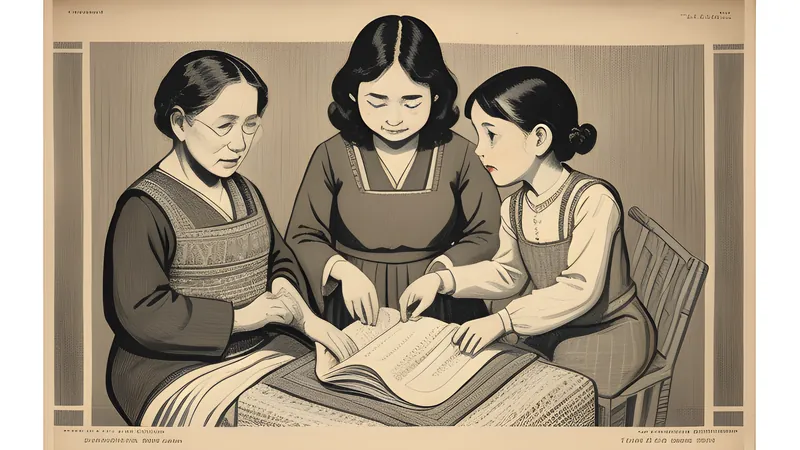
The day has no single logo, which suits a subject this plural. Its symbols are found instead in the things it protects: the weaver at the loom, the dancer in costume, the puppeteer behind the booth, the hands shaping clay. If there is a truest emblem, it is the image of an elder teaching a child, because that act of handing on is the entire mechanism by which intangible heritage survives. The medium of the heritage is, quite literally, the human being who carries it.
Fun facts
- UNESCO ran an earlier scheme, the Proclamation of Masterpieces of the Oral and Intangible Heritage of Humanity, between 2001 and 2005; all 90 masterpieces it named were folded in as the founding entries of the 2008 representative list.
- The Convention keeps a separate, sobering register called the List of Intangible Cultural Heritage in Need of Urgent Safeguarding, for practices judged to be at real risk of vanishing.
- Falconry holds a record for collaboration, having been jointly inscribed by more than twenty countries spanning the Middle East, Europe and Asia under a single shared entry.
- The day is younger than many of the smartphones used to film it, having been proclaimed only in late 2023, even though the treaty it celebrates was signed two decades earlier.
A closing reflection
There is a paradox at the heart of this day. The very thing that makes intangible heritage precious, that it lives only in the doing, is also what makes it impossible to save by the usual means. You cannot fund a building, hire a guard and call a song protected. The only true conservation is a person who still knows the steps and a younger person willing to learn them. That places the survival of these treasures not with institutions but with ordinary human choices, made quietly, generation after generation, to keep doing the difficult, beautiful, unprofitable thing that someone once taught you.
Related Content