International Day of the African Child
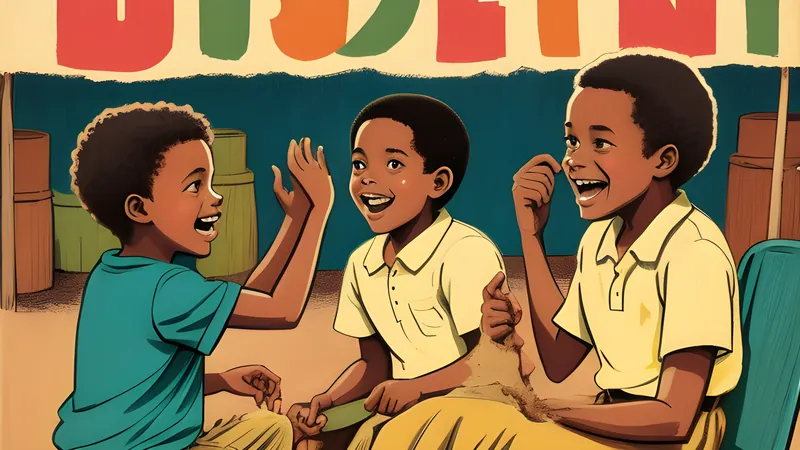
On the morning of 16 June 1976, a column of perhaps ten thousand pupils set out through the dusty streets of Soweto, the sprawling township south-west of Johannesburg. They were schoolchildren, some no older than ten, and they were protesting against a government decree that half their lessons be taught in Afrikaans, the language of the apartheid state. Among them was a twelve-year-old named Hector Pieterson. By the afternoon he was dead, shot by police, and Sam Nzima’s photograph of his limp body being carried by a fellow pupil, with his sister running alongside, was already on its way to the front pages of London, New York and beyond. The International Day of the African Child, observed every 16 June, takes that date as its anchor. It honours the children of that march and turns their memory into an annual reckoning with the rights and welfare of children across the continent.
What happened in Soweto
The Soweto uprising did not come from nowhere. The trigger was the Afrikaans Medium Decree of 1974, which required black schools to teach mathematics, arithmetic and social studies in Afrikaans rather than English. For pupils and teachers alike, Afrikaans was the language of the police and the bureaucracy that enforced apartheid, and many could barely speak it. Resentment built through the early months of 1976 until pupils across Soweto organised a mass but peaceful demonstration.
The march was meant to end with a rally at Orlando Stadium. It never got there. Police confronted the children, and after a tense standoff opened fire. Sam Nzima, a press photographer, captured the image of the dying Hector Pieterson that would appear on front pages everywhere and become one of the defining photographs of the twentieth century. The violence spread from Soweto into townships across the country and continued for months; estimates of the dead run from the official figure of fewer than two hundred to far higher counts of several hundred, with thousands injured or detained.
From massacre to remembrance
Fifteen years passed before the day itself was founded. In 1991 the Organisation of African Unity, the predecessor of today’s African Union, established the Day of the African Child to honour those killed in Soweto and to press the cause of children’s rights across the continent. The choice of date was deliberate and unflinching: rather than picking a neutral anniversary, the OAU rooted the observance in a specific act of state violence against the young.
The day did not stand alone for long. On 11 July 1990 the OAU had adopted the African Charter on the Rights and Welfare of the Child, which came into force on 29 November 1999 and remains the only regional children’s-rights treaty of its kind. The charter created its own watchdog, the African Committee of Experts on the Rights and Welfare of the Child, tasked with monitoring how well member states keep the promises they signed up to. The charter and the day work in tandem, the one a legal instrument, the other an annual occasion to measure how far those promises have been kept.
Each year the African Union, through that committee, sets a theme, and the recent run gives a fair picture of the day’s preoccupations. The 2025 theme returned to first principles by asking states to assess their “planning and budgeting for children’s rights” in the fifteen years since 2010, a pointed demand that governments show the money rather than merely the rhetoric. The 2026 theme turned to a stark practicality, universal access to water, sanitation and hygiene for every African child. The pattern is deliberate: each year the spotlight swings to a concrete, measurable problem rather than a vague good intention.
Why the day still matters
It would be comfortable to treat 16 June as purely historical, a commemoration of a struggle long won. The figures argue otherwise. UNICEF has estimated that tens of millions of African children remain out of school: in West Africa around 40 per cent of primary and secondary-age children were not enrolled in recent counts, and in East Africa roughly a third. Child labour persists, child marriage has not been eradicated despite the charter’s prohibitions, and conflict and displacement uproot the young from any semblance of a stable childhood. The day exists precisely because these are not abstractions: they are the lived conditions of real children, and an annual focus forces governments and organisations to publish progress, admit failures and recommit.
There is also a deeper argument folded into the date. The Soweto pupils were not passive victims; they were political actors who chose to march. The day inherits that insight, insisting that children are not merely to be protected but to be heard. The most striking feature of the observance is how often children themselves take the microphone, the stage and the placard, which connects it in spirit to a broader human-rights calendar that includes the fight against child labour. The same conviction, that the young deserve a stake in the decisions that shape their lives, animates observances as different as India’s drive to enrol new young voters on National Voters’ Day: both rest on the belief that giving young people a voice is not a courtesy but a duty.
How it is marked
In South Africa, 16 June is a public holiday known as Youth Day, and the country pauses to remember Soweto with wreath-laying at the Hector Pieterson Museum in Orlando West, which opened on 16 June 2002 near the spot where he was shot. Elsewhere on the continent the day takes the form of school assemblies, marches, radio debates and policy launches, frequently built around the year’s African Union theme.
The tone is unusual in deliberately mixing grief with celebration. A morning may begin with the solemn reading of names or a minute’s silence and end with choirs, drama and dance performed by the very children the day exists to serve. Non-governmental organisations time the release of reports and campaigns to coincide with it, knowing the date guarantees attention.
A continent of childhoods
One reason the day resists easy summary is that “the African child” is not a single figure. Africa is the youngest continent on Earth by median age, and its young people grow up under wildly different conditions, from the classrooms of Nairobi and Lagos to refugee settlements in the Sahel and pastoralist communities far from any school. The day’s annual themes try to hold this range together, but the underlying point is that childhood on the continent is plural, and that a policy which helps a child in one country may miss a child a border away entirely.
This is why the African Committee of Experts spends much of its year examining individual states rather than issuing continent-wide pronouncements. It reviews reports, hears complaints and, in some cases, rules on them, building up a body of decisions that gives the charter teeth beyond the symbolism of a single June morning. The day functions, in effect, as the public-facing edge of a quieter, year-round legal process.
Beyond Africa
Although the day is African in origin and focus, its reach extends through the diaspora and the wider human-rights community. Organisations such as UNICEF and Save the Children mark it, and African communities abroad hold their own gatherings. It sits alongside the broader Universal Children’s Day in November, complementing rather than duplicating it: where that observance speaks to all children everywhere, 16 June keeps a particular, named history in view, and refuses to let the specific courage of the Soweto pupils dissolve into a general sentiment.
Symbols and the weight of an image
The day has no official emblem, but it has something more powerful: a single photograph. Sam Nzima’s image of Hector Pieterson has become shorthand for the entire observance, much as the white headscarves of Argentine mothers came to stand for another struggle over disappeared children. The figure of the marching schoolchild, fist raised or placard held, recurs in posters and murals each June, a reminder that the day’s authority comes from the young themselves.
Fun facts
- Hector Pieterson’s real surname was Pitso; the family used “Pieterson” to pass more easily under apartheid’s racial classifications, so the boy whose name became a rallying cry was not, strictly, named that at all.
- Sam Nzima, who took the famous photograph, had to smuggle the film out hidden in his sock to stop the police seizing it, and afterwards went into hiding; he received little of the income from the image for decades.
- South Africa’s Youth Day and the continent-wide Day of the African Child fall on the same date but were created separately, the former by post-apartheid South Africa and the latter by the OAU in 1991.
- The Hector Pieterson Museum deliberately opened on 16 June 2002, fixing the anniversary into the building’s own founding so that its birthday and its subject coincide.
A closing reflection
There is a particular discomfort in a day that asks adults to be instructed by children. The pupils of Soweto understood something their government refused to grasp, that a language imposed by force is not education but erasure, and they were willing to walk into danger to say so. To mark 16 June honestly is to accept that the young are sometimes the clearest-eyed among us, and that the measure of any society is not the speeches it makes about its children but the streets it makes safe enough for them to march in.
Related Content