International Day of Light
On 16 May 1960, in a laboratory at the Hughes Research Laboratories in Malibu, California, a 32-year-old physicist named Theodore Maiman flashed a coiled lamp around a small synthetic ruby rod and produced something that had never existed in nature: a pulse of coherent light, every wave marching in step, in a single pure colour. It was the first working laser. Maiman’s employers were so underwhelmed that the journal Physical Review Letters initially rejected his paper, and a press conference described the device in terms that prompted headlines about a “death ray”. UNESCO would later choose that exact date for the International Day of Light, observed every 16 May.
The day celebrates light in the widest possible sense, as a subject that refuses to stay inside any one discipline. It belongs to the physicist measuring the speed of a photon and to the painter chasing the gold of late-afternoon sun, to the surgeon wielding a laser scalpel and to the engineer laying fibre under the ocean. Few things are so fundamental to human life and so thoroughly taken for granted.
Where the day comes from
The International Day of Light grew directly out of a larger success. The United Nations had declared 2015 the International Year of Light and Light-based Technologies, a year-long programme that drew enthusiastic participation from scientists, educators and cultural institutions across more than a hundred countries. Rather than let that momentum dissipate, its organisers proposed an annual successor. The day was put forward by Ghana, Mexico, New Zealand and the Russian Federation, and UNESCO’s General Conference approved it in November 2017. The first International Day of Light was held on 16 May 2018.
UNESCO’s stewardship is telling. This is not narrowly a science observance but a cultural one, run by the UN’s education, science and culture body precisely because light spans all three.
History: from prism to laser
The science the day celebrates has a long and quarrelsome lineage. In the 1660s Isaac Newton passed sunlight through a glass prism and showed that white light is a mixture of colours rather than a single thing, a result he set out in his 1704 work Opticks. The nineteenth century brought the great unification: James Clerk Maxwell’s equations, published in the 1860s, revealed that light is an electromagnetic wave, the same phenomenon as radio and X-rays differing only in wavelength. Then, in 1905, Albert Einstein explained the photoelectric effect by proposing that light also comes in discrete packets, or photons, the work for which he won his Nobel Prize and which helped found quantum theory.
Maiman’s laser was the practical flowering of that theory. Einstein had described the underlying principle, stimulated emission, back in 1917, but it took more than four decades to turn the idea into a working device. Once built, the laser proved to be one of the most consequential inventions of the century. It reads the data off every CD, DVD and barcode; it carries the internet as pulses down glass fibre; it corrects eyesight, removes tumours, measures continental drift and, in 2015, helped detect gravitational waves rippling from colliding black holes. Anchoring the day to 16 May ties the whole sweep of light’s influence to that single morning in Malibu.
Why it matters
Light underpins modern life in ways that are mostly invisible until they fail. Optical fibres thinner than a hair carry almost all long-distance internet traffic; imaging technologies let physicians see inside the body without a single incision; solar panels turn sunlight directly into electricity. The day insists that these are not separate marvels but expressions of one phenomenon understood and put to work.
There is a development dimension too, which is why UNESCO frames the day around sustainable progress. Access to light, and to the reliable electricity that produces it after dark, remains tightly bound up with education, safety and economic opportunity. A child who can read after sunset, a clinic that can operate at night, a market that stays open past dusk: each depends on something wealthy societies stopped noticing a century ago. The same concern for knowledge as a shared resource animates the International Mother Language Day, another UNESCO observance, while the UNESCO World Radio Day marks a technology that, like fibre-optics, is at heart a way of sending information on electromagnetic waves.
How it is celebrated
The day inspires a striking range of events: laser shows and science demonstrations, art installations and gallery exhibitions, lectures, workshops and stargazing nights. Universities throw open their optics laboratories; museums mount displays on colour, vision and astronomy; schools run experiments with prisms, lenses and shadows. Photographers and lighting artists treat the day as theirs, and observatories invite the public to look at the light of distant stars, some of it older than the human species.
Variations across cultures
Light has been central to human ritual far longer than it has been a subject of physics. India’s Diwali, the festival of lights, sees millions of oil lamps and candles lit to mark the triumph of light over darkness. The Jewish festival of Hanukkah turns on the kindling of the menorah over eight nights. Sweden’s St Lucia’s Day brings candle-crowned processions into the depths of the northern winter. Ancient builders encoded the same reverence into stone: the passage tomb at Newgrange in Ireland, older than the pyramids, is aligned so that the rising sun floods its inner chamber only on the winter solstice. The International Day of Light draws gently on this inheritance, secular in its science but conscious of how deeply light is woven into belief.
The strange nature of light itself
Part of what makes light such a rewarding subject is that the closer physicists looked, the stranger it became. For most of the eighteenth and nineteenth centuries the great debate was whether light was a wave or a stream of particles; Newton favoured particles, while Thomas Young’s famous double-slit experiment around 1801, in which light passing through two narrow slits produces an interference pattern, seemed to settle the matter in favour of waves. The twentieth century then refused to choose. Quantum mechanics established that light behaves as both wave and particle depending on how it is measured, a duality that sits at the uneasy heart of modern physics and that no everyday intuition can quite accommodate.
Stranger still is light’s role as the universe’s speed limit. Einstein’s special theory of relativity, published in 1905, took the constancy of light’s speed as its starting point and derived from it the conclusion that time itself slows for objects moving very fast, and that nothing carrying information can outrun a beam of light. That single number, roughly 299,792 kilometres per second, is now woven so deeply into physics that the metre is officially defined in terms of it: a metre is the distance light travels in a vacuum in 1/299,792,458 of a second. The day celebrates not only what light does for us but how profoundly its study reshaped our picture of reality.
Symbols and traditions
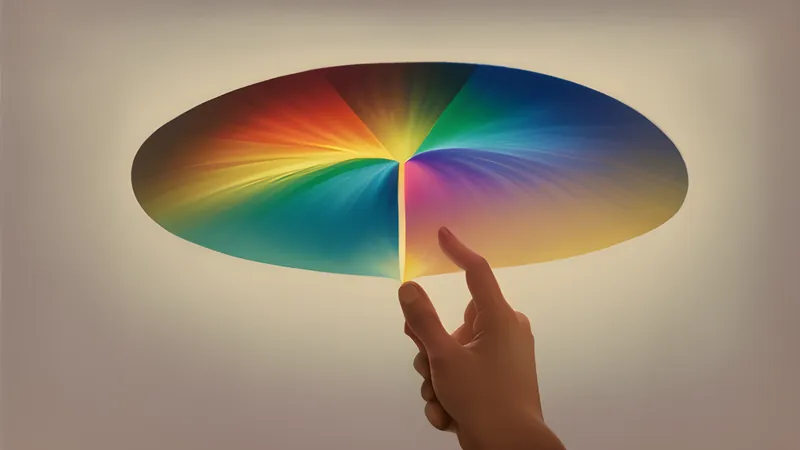
The prism splitting white light into a spectrum is the day’s most evocative emblem, capturing the union of science and beauty at its heart. The laser beam, the rainbow, the glowing filament and the candle flame all serve as symbols. Light has carried metaphorical weight in nearly every culture, standing for knowledge, hope, revelation and understanding, so that to “see the light” or to “enlighten” someone needs no explanation in any language.
Fun facts
- Physical Review Letters rejected Theodore Maiman’s paper announcing the first laser, so the most important optics result of the century was first published in the journal Nature instead.
- Light from the Sun takes about eight minutes and twenty seconds to reach the Earth, which means we always see the Sun as it was, never as it is.
- The human eye can perceive only a sliver of the electromagnetic spectrum; bees see ultraviolet patterns painted on flowers that are completely invisible to us, and some snakes sense infrared heat with dedicated organs.
- The word “laser” is an acronym, standing for Light Amplification by Stimulated Emission of Radiation, a phrase that quietly credits Einstein’s 1917 theory in every use.
- Because their light takes years or millennia to reach us, some of the stars visible on any clear night have already died, so the sky is partly a view of objects that no longer exist.
A closing reflection
What makes light such a fitting subject for a day of its own is that it is the one thing we never look at directly; it is always the means by which we see everything else. We notice the lit object, the colour, the shadow, almost never the light itself. UNESCO’s choice of 16 May, the date of a breakthrough that most people have never heard of, carries a quiet lesson in this. The technologies that change the world most completely tend to be the ones that vanish into the background once they work, until the internet arriving down a strand of glass, or a beam of ruby light healing an eye, comes to seem as ordinary and unremarkable as daylight through a window.
Related Content