International Day of Education
On 3 December 2018, the United Nations General Assembly passed, by consensus, a resolution that had been put forward by Nigeria and co-sponsored by fifty-eight other member states. Resolution 73/25 declared 24 January the International Day of Education, and the first observance followed barely seven weeks later, on 24 January 2019. The speed was unusual for the UN. It reflected an argument that had been building for years: that without education none of the other things the world says it wants, less poverty, better health, more stable societies, are reachable, and that the cause deserved a fixed date of its own.
The day is, in effect, an annual audit of one of the oldest promises in modern international law, the promise that learning is a right rather than a privilege. It is a moment to weigh how widely the classroom door has been opened and to be honest about the tens of millions of children still standing outside it.
How the day came to be
The proclamation was the work of a coalition. Alongside Nigeria, the permanent missions of Ireland, Norway, Qatar and Singapore worked with UNESCO to bring the idea to the General Assembly floor, and UNESCO became the day’s lead agency. The resolution called on a sweeping list of actors, governments, UN bodies, civil society, academic institutions, the private sector and individuals, to mark the day and to treat education as the foundation on which every other Sustainable Development Goal rests.
That framing was the point. The drafters did not present education as one worthy cause among many but as the precondition for the rest, the lever that moves health, livelihoods, equality and peace. Putting the day in late January, at the start of the calendar year, gave it the feel of a resolution in both senses of the word.
A right long in the making
The notion that everyone is owed an education is younger than it feels. It was set down formally in 1948, in Article 26 of the Universal Declaration of Human Rights, which states that everyone has the right to education and that elementary education shall be free and compulsory. Eleanor Roosevelt, who chaired the drafting committee, regarded the declaration as a yardstick the world would be measured against, and education was written into it as a basic entitlement rather than a charitable gift.
In the decades since, that principle has been restated in treaty after treaty, including the 1989 Convention on the Rights of the Child, and woven into the development agendas that succeeded one another at the turn of the century. It now sits as the fourth of the seventeen Sustainable Development Goals adopted in 2015, which commits the world to inclusive and equitable quality education and lifelong learning for all by 2030. The International Day of Education is the yearly checkpoint on that long, unfinished journey, and a reminder that a right written on paper still has to be delivered to a child in a particular village on a particular morning.
Why education matters
The case for education runs as wide as human ambition. For an individual, learning multiplies options: it raises earnings, improves health, and hands people the confidence and the tools to direct their own lives rather than have them directed. For a society, education is the engine room, the source of the scientists, nurses, builders, teachers and informed voters that a functioning country cannot do without.
There is also a well-documented multiplier effect in educating girls and women. A girl who stays in school tends to marry later, have fewer and healthier children, earn more, and pass the benefit of her schooling on to the next generation. This is why the inclusion of every child, and the closing of the gender gap in particular, runs through almost every statement the day produces. The push to bring more women into technical fields, marked by the International Day of Women and Girls in Science, is the same project carried into the laboratory and the lecture hall: an education promised to all is meaningless if half the population is quietly steered away from large parts of it.
How the day is marked
UNESCO sets an annual theme to focus attention on a specific obstacle, whether that is financing, the role of technology, learning during emergencies, or the needs of those left furthest behind. Around that theme the day fills with conferences, public debates, campaigns and classroom activities. Schools hold special lessons, advocates press governments to spend more, and people share, often online, the story of a teacher who changed the direction of their life.
Above all the day is an occasion to recognise teachers themselves, whose patient and frequently underpaid work underpins everything else it celebrates. A great deal of the activity is deliberately aimed at the young, on the reasoning that the people with the most to gain from the right to learn should understand that it is a right at all.
An uneven global picture
The state of education varies enormously from one place to another. In wealthier regions, near-universal schooling and rising rates of higher education are taken for granted; elsewhere, large numbers of children remain out of school altogether, and many who do attend still leave unable to read a simple passage or do basic arithmetic. Conflict, displacement, poverty and disaster can shut down learning for a whole generation, and the gaps between rich and poor, urban and rural, persist stubbornly.
One of the sharpest threats to the right to learn is the demand on children’s time and bodies elsewhere. Where children are sent to work, schooling is the first casualty, which is why the day’s concerns overlap so directly with those of the World Day Against Child Labour: a child in a field or a workshop is a child not in a classroom, and the two struggles cannot really be separated. The International Day of Education holds these realities up to the light, insisting that progress, though real, is uneven and far from done.
How learning got organised
Formal education has not always meant a building full of children of the same age following a printed curriculum; that arrangement is largely an invention of the last two centuries. For most of recorded history, learning passed through apprenticeship, religious instruction and oral tradition, available mainly to the wealthy, the clergy or a guild’s chosen few. The great libraries of antiquity, such as the one at Alexandria, concentrated knowledge in a handful of places rather than distributing it.
Mass schooling, the notion that the state should educate every child, took hold in the nineteenth century, driven partly by industrial economies that needed literate workers and partly by reformers who saw education as a route to self-improvement and citizenship. Prussia is often credited with one of the earliest compulsory state systems, and the model spread across Europe and the Americas. The printing press had already made books cheaper and ideas harder to confine; the spread of compulsory schooling then turned literacy from an elite skill into an ordinary expectation. The right written into the Universal Declaration in 1948 was, in this sense, the legal capstone on a century of practical change. Today that long arc continues into lifelong learning, as adults return to study at every age and digital tools stretch the classroom across borders, so that the idea of education as something completed in childhood looks increasingly like a relic.
Symbols and themes
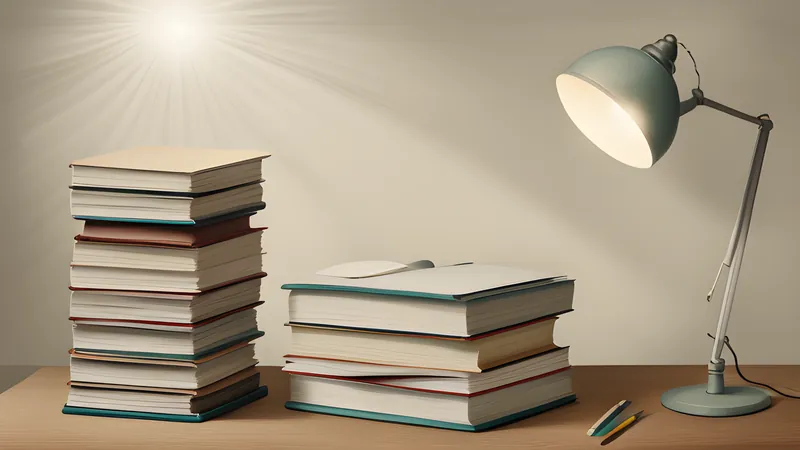
The day leans on a small set of quiet emblems: the open book, the pencil, the lamp of knowledge, the classroom itself. Each stands for possibility, for a door that learning opens and that nothing else quite can. The recurring message is that education unlocks human potential and remains the surest route out of poverty, while the annually rotating theme keeps the conversation moving with a changing world.
Fun facts
- The English word “school” descends from the ancient Greek skhole, which originally meant leisure or free time, reflecting a classical idea that learning was an activity worth pursuing for its own sake by those with the time to do it.
- The International Day of Education was proposed by Nigeria and co-sponsored by fifty-eight other countries, and the resolution passed by consensus, meaning no member state voted against dedicating a day to learning.
- The right to a free elementary education has been formally guaranteed in international law since 1948, when it was written into Article 26 of the Universal Declaration of Human Rights.
- Modern technology now lets a single teacher reach students scattered across continents at once through online courses, a scale of audience that would have astonished the scholars of the great libraries of antiquity.
A closing reflection
Behind every statistic about enrolment and literacy stands a particular person whose horizon can be widened or narrowed by whether a school is there for them. That is the quiet weight the day carries. It is easy to treat education as an abstraction, a line in a development report, but the right it defends is finally very concrete: a child, a book, an adult willing to teach, and the simple decision by a society that this transaction should be available to everyone and not just to those who can pay. Renewing that decision once a year is a modest thing, and an oddly hopeful one.
Related Content