International Day of Cooperatives
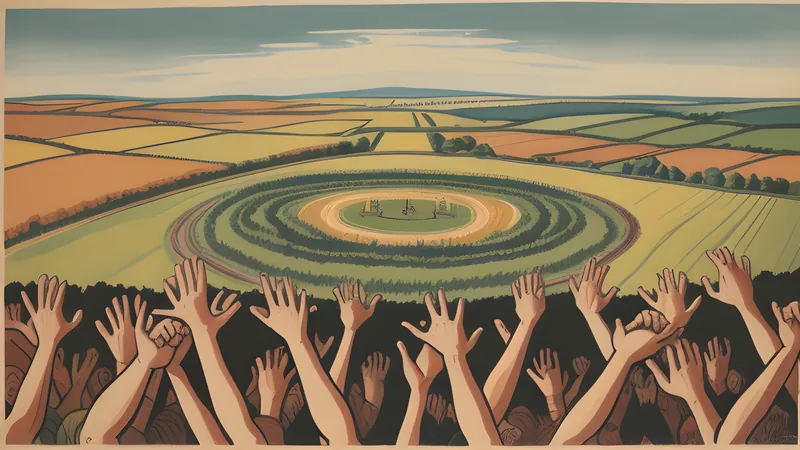
On a damp December evening in 1844, twenty-eight working men unlocked the door of a rented cellar at 31 Toad Lane in Rochdale, Lancashire, and put four humble items on the shelves: flour, oatmeal, butter and sugar, with a stock worth roughly fourteen pounds. They had been beaten in a strike in the flannel trade and were tired of being sold adulterated food at dishonest weights by shopkeepers who had them over a barrel. So they pooled a few coppers each and opened a shop they would own themselves. That shop, and the rules its founders wrote down, is why the cooperative movement now sets aside the first Saturday of July to celebrate itself. In 2026 the International Day of Cooperatives falls on Saturday 4 July.
The day, often shortened to CoopsDay, honours a particular way of organising economic life: enterprises owned and democratically controlled by the people who use them rather than by outside investors. It is a chance to look at how cooperatives feed, bank, house and employ vast numbers of people, and to take stock of a model that has quietly outlasted a great many corporate fashions.
Who the Rochdale Pioneers were
The men who opened the Toad Lane shop called themselves the Rochdale Society of Equitable Pioneers. They were weavers and tradesmen, many of them flannel workers, living through the hard years of industrial Lancashire when mechanisation had gutted hand-weaving wages and the price of basics kept climbing. Earlier cooperative experiments had come and gone across Britain, including communities inspired by the mill reformer Robert Owen, but most had foundered. What set Rochdale apart was a set of rules clear and fair enough to be copied.
Those rules became the Rochdale Principles. Membership was open to anyone willing to buy a share. Each member had a single vote regardless of how much capital they held, so a wealthy member could not buy control, the same democratic arithmetic that underpins civic exercises such as India’s National Voters’ Day, where one person means one ballot. Goods were sold at honest weight and at market prices rather than on shaky credit. Most ingeniously, any surplus was returned to members in proportion to how much they had spent, a payment that became known in Britain as the “divi” or dividend. That little quarterly cheque turned ordinary shoppers into part-owners and gave them a direct stake in the shop’s success.
From a cellar to a global federation
The Rochdale model spread with remarkable speed because it worked. Within a few decades cooperative shops, mills, banks and wholesale societies had sprung up across Britain and then across Europe and beyond. In 1895 the various national movements came together to form the International Cooperative Alliance, a body that still unites cooperatives worldwide. The ICA formally adopted the Rochdale Principles in 1937, revised them in 1966, and restated them again in 1995 as part of its Statement on the Cooperative Identity, marking its own centenary that year.
The ICA had been holding an annual cooperators’ day since 1923. The United Nations gave the celebration global weight in 1995, when the General Assembly proclaimed the International Day of Cooperatives to be marked on the first Saturday of July, coinciding neatly with the ICA’s hundredth birthday. Because the date floats with the calendar rather than sitting on a fixed number, it always lands in early July, anchoring the observance to high summer in the Northern Hemisphere.
Why the model endures
A cooperative answers to its members, not to shareholders looking for the largest possible return. That single structural difference shapes almost everything else about how these enterprises behave. Because the owners are usually also the customers, the workers or the suppliers, decisions tend to weigh long-term stability against short-term profit in a way that investor-owned firms often cannot. Wealth and decision-making stay closer to the community that generated them.
This is not sentiment but observable behaviour. Cooperatives have a reputation for riding out economic storms, partly because they are slower to chase risky growth and quicker to protect the members who depend on them. Credit unions kept lending to ordinary savers during banking crises that left commercial rivals reeling, and the financial cushion a cooperative offers its members in hard times is a quiet form of the mutual support that wider efforts like World Suicide Prevention Day press society to take seriously. Agricultural cooperatives have given small farmers the collective muscle to bargain with large buyers they could never face alone. Where conventional business sees a market too poor or too remote to bother with, a cooperative often sees its own members and serves them anyway.
The model is not without its strains, and the day is increasingly used to talk about them honestly. Because a cooperative cannot simply sell shares to outside investors, raising large amounts of capital quickly is harder than it is for a conventional firm, which can leave cooperatives undercapitalised in fast-moving industries. Democratic governance is slower than a single owner issuing orders, and it depends on members actually turning up, voting and caring; apathy is a real threat, and a cooperative whose members treat it as just another shop has lost the thing that made it distinctive. Some large, long-established cooperatives have drifted so far from their members that they behave much like the corporations they were meant to be an alternative to. The movement’s answer has generally been education, the fifth of the cooperative principles, on the view that members who understand what they own are the ones most likely to keep it true to its purpose.
How the day is marked
Each year the global movement, coordinated by the ICA and the United Nations, chooses a theme, frequently tied to wider aims such as sustainable development or decent work. That theme shapes much of the activity. Federations and individual societies hold conferences, fairs and open days; members gather to review the year and argue over the next one, which is itself a cooperative ritual. There are exhibitions of cooperative products, public lectures, and a good deal of advocacy aimed at persuading governments to write cooperatives properly into law and tax codes.
In Britain the day often draws attention back to Toad Lane, where the original Pioneers’ premises survive as the Rochdale Pioneers Museum. Elsewhere the flavour is entirely different: a coffee-growing cooperative in Latin America, a fishing cooperative in West Africa and a worker-owned software firm in Spain will each mark the same Saturday in ways that fit their own work.
A movement of many shapes
The word “cooperative” covers a startling range of enterprises that share principles but little else. Consumer cooperatives run shops for their member-customers, the direct heirs of Rochdale. Worker cooperatives are owned by the people who work in them, from the sprawling Mondragon group in the Basque Country to small design studios. Agricultural cooperatives let farmers process and market their crops together, and they dominate the dairy and grain trades in many countries. Financial cooperatives, including credit unions and cooperative banks, hold the savings and grant the loans of millions who might be turned away elsewhere. Housing cooperatives give residents collective ownership of the roofs over their heads.
This variety means the day looks completely different from one country to the next while resting on the same handful of ideas first written down in Lancashire. The shared symbols reflect that unity in diversity: the rainbow flag long flown by cooperators, and the older emblem of twin pine trees, an ancient sign of endurance and mutual support.
Fun facts
- The Rochdale shop opened for only two evenings a week at first, and curious onlookers reportedly gathered to jeer at the idea that ordinary weavers could run a business; the venture turned a profit and paid its first dividend within a year.
- Cooperatives count their members in the billions when memberships are tallied worldwide, making the movement one of the largest forms of organised economic activity on Earth, larger by membership than many of the world’s biggest corporations are by customers.
- The “one member, one vote” rule means a person who has put a fortune into a cooperative has exactly the same say as someone who joined yesterday with the minimum share, an arrangement almost unheard of in conventional companies.
- Some of the world’s best-known brands are cooperatives or grew from them, including major dairy, grocery, agricultural-supply and insurance names whose customers rarely realise they are dealing with a member-owned business.
A closing reflection
The Pioneers of Toad Lane were not idealists with a grand theory; they were practical people who simply wanted clean flour at an honest price and a shop that would not cheat them. The radical thing they did was decide that the cheapest, fairest way to get it was to own the shop together and share whatever it earned. Nearly two centuries later, that modest insight still quietly contradicts the assumption that enterprise must mean a few owners and many customers. A cooperative is proof that the line between the two can simply be erased, and that an economy can be built, here and there, on the unglamorous arithmetic of people looking after one another.
Related Content