International Day of Clean Air for Blue Skies
On 19 December 2019 the United Nations General Assembly adopted resolution 74/212 and wrote a new date into the global calendar: 7 September, to be observed each year as the International Day of Clean Air for Blue Skies. The first observance came the following September, in the strange quiet of the 2020 pandemic, when satellite images showed nitrogen dioxide thinning over locked-down cities and, for a few weeks, skylines appeared that many residents had never clearly seen. The day exists to keep that clarity in view once the traffic returns.
A day for the air we cannot see
The observance was championed by the Republic of Korea, a country whose spring skies are routinely dulled by fine particulate haze, some of it home-grown, some drifting in on the wind. The UN Environment Programme (UNEP) facilitates the day, coordinating governments, cities and campaigners around a single, awkward truth: air pollution is the largest environmental health risk humanity faces, and most of it is invisible until it is measured.
The World Health Organization estimates that around seven million people die prematurely every year from exposure to polluted air, indoors and out, through heart disease, stroke, lung cancer and respiratory illness. In 2021 the WHO tightened its Global Air Quality Guidelines, halving the recommended limit for fine particulate matter known as PM2.5, particles small enough to slip past the body’s defences and enter the bloodstream. By that stricter standard, an estimated 99 per cent of the world’s population breathes air that fails the guideline at least some of the time.
The chemistry behind the day is a small alphabet of culprits. PM2.5 and its coarser cousin PM10 are the mass of soot, dust and chemical droplets suspended in the air. Nitrogen dioxide pours mostly from diesel engines and inflames the airways. Ground-level ozone forms when sunlight cooks vehicle and industrial fumes, which is why smog is a summer as well as a winter problem. Sulphur dioxide, the signature of burning coal, was the poison of the old industrial fogs. Each has its own source, its own season and its own effect on the body, and no single measure clears them all at once.
History written in smoke
The idea that dirty air kills is not modern. Londoners had complained of coal smoke since the thirteenth century, and the diarist John Evelyn wrote a furious pamphlet, Fumifugium, in 1661, describing a city wrapped in a “hellish and dismal cloud” and proposing that polluting trades be moved downwind. Nothing much came of it for three hundred years.
The reckoning arrived in December 1952. A cold, windless anticyclone settled over London and trapped the smoke of a million coal fires and power stations beneath a lid of freezing fog. For four days the Great Smog reduced visibility to a few feet; buses were led by men walking ahead with torches, and a performance at Sadler’s Wells was abandoned when the audience could no longer see the stage. Official figures at the time counted around 4,000 excess deaths, though later analyses pushed the toll past 10,000. The disaster forced Parliament’s hand, and the Clean Air Act of 1956 introduced smokeless zones and began the long retreat from domestic coal. Four years earlier, across the Atlantic, the mill town of Donora, Pennsylvania had suffered its own killer smog that left twenty dead in a single weekend, an event now credited with launching the American clean-air movement.
These catastrophes shaped the science. They proved that air quality is a matter of mortality rather than of taste or comfort, measurable in hospital admissions and death certificates, and that clean air is a public good no individual can secure alone. The environmental laws of the following decades, the American Clean Air Act of 1963 and its powerful 1970 amendments, the European directives that followed, all trace their lineage back to the winter that London could not breathe.
Why the day matters
Air pollution respects no borders, which is precisely why it needs an international day. Emissions from vehicles, coal plants, crop burning, cooking fires and industry drift across frontiers and settle on people who did nothing to create them. The burden falls hardest on the poor: households cooking over open fires, workers beside busy roads, children whose developing lungs absorb more per breath than adults. Studies now link early-life exposure to reduced lung capacity, and there is mounting evidence connecting long-term particulate exposure to dementia.
The observance also carries an unusually hopeful economic argument. Cleaning the air overlaps almost perfectly with cutting the emissions that drive climate change, because both largely come from burning fossil fuels. Replacing a coal plant, electrifying a bus fleet or insulating homes so they need less heat delivers two dividends from one action. This overlap connects the day to sister observances such as World Car-Free Day and the International Day of Zero Waste, each tackling a different thread of the same industrial knot.
How it is marked
Every year UNEP sets a theme; the inaugural 2020 edition was “Clean Air for All”, and later years have run under banners such as “Together for Clean Air”. Cities light landmarks blue, schools run lessons on how to read an air-quality index, and health ministries publish updated pollution maps. Delhi, Beijing, Jakarta and Krakow, all cities that have wrestled publicly with hazardous winter air, tend to feature prominently in the reporting.
The practical activity is often about measurement made visible. Low-cost sensors have spread rapidly, and community groups now string them across neighbourhoods to build their own pollution maps rather than waiting for official monitoring. On the day itself, many of these networks publish their readings, turning an abstract hazard into a number a resident can watch rise and fall through the day. Webinars run through the UNEP-hosted programme, and mayors sign pledges to expand monitoring or ban the dirtiest vehicles from city centres. The tone is deliberately practical rather than mournful, built around the argument that the technology to fix the problem already exists and mostly awaits the will to deploy it.
Variations around the world
Different regions bring different anxieties to the date. In South Asia, attention falls on the seasonal smog that blankets the Indo-Gangetic plain each autumn, thickened by the burning of rice stubble after harvest. In sub-Saharan Africa and parts of Asia the focus is household air pollution, the smoke from wood and charcoal cooking fires that kills disproportionately among women and young children. In wealthy cities the conversation has shifted to traffic, wood-burning stoves and the fine particles thrown up by tyres and brakes even from electric cars.
China offers the era’s clearest before-and-after. After Beijing’s notorious “airpocalypse” of January 2013, when readings went off the top of the standard scale, the government poured resources into monitoring and coal restrictions, and average particulate levels in major cities fell sharply over the following decade, proving that even severe pollution can be reversed within a political generation.
The economics of breathing
The case for clean air was long argued on health grounds alone, but economists have added a blunt second argument: dirty air is expensive. The World Bank has put the global cost of air pollution, in lost labour, health spending and premature death, in the trillions of dollars a year, several per cent of world economic output quietly siphoned away. Workers exposed to high pollution take more sick days and are measurably less productive; studies of everything from call-centre staff to fruit pickers have found output dipping as particulate counts rise. Set against those losses, the money spent on cleaner buses, scrubbers on smokestacks and tighter fuel standards tends to repay itself many times over. That arithmetic is central to the day’s messaging, because it reframes clean air as an investment a finance ministry can defend rather than an environmental luxury to be afforded only in good years.
Fun facts
The colour of a polluted sunset is a genuine optical effect: fine particles scatter blue light away and let red and orange through, so the most spectacular sunsets often accompany the least healthy air. Trees are quietly enlisted as infrastructure, and a mature street tree can trap several kilograms of particulate matter on its leaves each year before rain washes it to the ground. The phrase “canary in a coal mine” is literal air-quality history, since miners carried caged canaries whose faster metabolism made them collapse from carbon monoxide before humans noticed anything wrong. And the human nose is a poor guide to danger: carbon monoxide and much fine particulate matter are odourless, so the air that feels fresh on a still winter evening beside a wood fire can be among the worst you breathe all week. Even indoor air holds surprises, since cooking, candles and cleaning sprays can push a sealed kitchen’s particle count well above the street outside.
A closing reflection
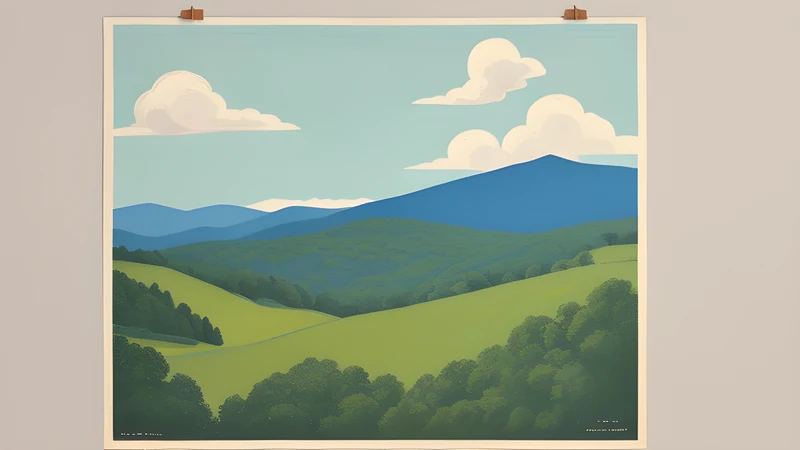
The name chosen for this observance is oddly poetic for a UN resolution. It does not speak of emissions targets or particulate thresholds but of blue skies, the thing a child draws with a single crayon and the thing a city loses so gradually that nobody remembers when it went. The day asks a modest question with a difficult answer: whether the ordinary right to look up and see clearly is one a crowded, energy-hungry world is willing to organise itself to protect. The 1952 fog cleared because London decided, collectively, that it must. Blue skies, the day insists, are always a choice being made somewhere, by someone, on everyone’s behalf.
Related Content