International Day for Mine Awareness and Assistance in Mine Action
<p>In January 1997 Diana, Princess of Wales, walked in a flak jacket and visor down a cleared lane through a minefield outside Huambo, in Angola, with cameras following every step. The images travelled the world, and within months the political logjam around anti-personnel mines broke. By December that year the Ottawa Treaty banning the weapons had been signed by 122 countries. That sequence, a hidden weapon dragged into global view and a treaty that followed, is the spirit the International Day for Mine Awareness and Assistance in Mine Action, held every 4 April, exists to sustain: the refusal to let the world forget about a danger that lies, quite literally, out of sight.</p>
<h2 id="origins-a-treaty-then-a-day">Origins: a treaty, then a day</h2><div class="ad-unit ad-in-article" aria-label="Advertisement">
<span class="ad-label">Advertisement</span>
<ins class="adsbygoogle" style="display:block;text-align:center"
data-ad-client="ca-pub-3726833845844946"
data-ad-slot="3291553914"
data-ad-format="auto"
data-full-width-responsive="true"></ins>
<script>(adsbygoogle = window.adsbygoogle || []).push({});</script>
</div>
<p>The observance itself came later than the campaign that inspired it. On 8 December 2005 the United Nations General Assembly adopted resolution 60/97, declaring that 4 April each year would be the International Day for Mine Awareness and Assistance in Mine Action. The resolution called on member states to build up national mine-action capacities in countries where mines and explosive remnants of war threaten civilian lives or block social and economic development.</p>
<p>The deeper roots lie in the 1990s. A loose coalition of survivors, surgeons, deminers and advocacy groups, organised under the International Campaign to Ban Landmines, pressed governments through the middle of the decade for an outright prohibition. The result was the Convention on the Prohibition of the Use, Stockpiling, Production and Transfer of Anti-Personnel Mines and on Their Destruction, signed in Ottawa in 1997 and since ratified by more than 160 states. The same year saw the founding of the United Nations Mine Action Service, UNMAS, which coordinates the UN’s clearance and risk-education work and remains the institutional backbone of the day.</p>
<h2 id="why-these-weapons-are-different">Why these weapons are different</h2>
<p>Landmines and explosive remnants of war are cruel in a particular way: they are indiscriminate and they are patient. A mine laid during a conflict can stay armed for decades, indifferent to the peace treaty signed above it and incapable of distinguishing a soldier from a farmer ploughing a field or a child walking to school. The injuries they inflict are designed to maim rather than kill, on the brutal logic that a wounded combatant burdens an enemy more than a dead one, and that calculus falls hardest on civilians long after the fighting ends.</p>
<p>The harm radiates outward from the individual victim. Contaminated ground cannot be farmed, grazed or built on; it blocks access to water, markets and schools; and it freezes the recovery of whole districts. A single suspected mine in a field can take that field, and sometimes a village’s livelihood, out of use for a generation. The economic and psychological cost spreads far beyond the people directly injured, which is why clearance is treated not as charity but as a precondition for development.</p>
<p>The numbers behind the day are stark. The Landmine Monitor, an annual report produced by the campaign that won the 1997 Nobel Peace Prize, has recorded thousands of casualties from mines and explosive remnants of war each year, the great majority of them civilians and a large and disturbing share of them children, who are drawn to the unfamiliar metal objects they find in fields and ditches. Decades after the conflicts that laid them, devices remain active in scores of countries and territories, from the rice paddies of Southeast Asia to the deserts of North Africa and the hills of the Caucasus. The persistence is the point: a mine does not surrender, demobilise or sign a treaty. It simply waits, sometimes for half a century, for a footstep that cannot tell it apart from solid ground.</p>
<h2 id="the-work-of-clearance-and-care">The work of clearance and care</h2><div class="ad-unit ad-in-article" aria-label="Advertisement">
<span class="ad-label">Advertisement</span>
<ins class="adsbygoogle" style="display:block;text-align:center"
data-ad-client="ca-pub-3726833845844946"
data-ad-slot="3291553914"
data-ad-format="auto"
data-full-width-responsive="true"></ins>
<script>(adsbygoogle = window.adsbygoogle || []).push({});</script>
</div>
<p>Mine action covers more than the dramatic image of a deminer probing the soil. It runs along several tracks at once: clearance of contaminated land, risk education to teach people, especially children, how to recognise and avoid dangerous objects, victim assistance covering medical care, prosthetics and rehabilitation, advocacy to bring more states under the Ottawa Treaty, and the destruction of stockpiles before they can ever be laid. The 4 April observance is structured to give visibility to all of these, not just the clearing of fields.</p>
<p>The physical danger and the long aftermath of injury give the day an unexpected kinship with other awareness observances. The careful, often lifelong process of physical recovery that follows a mine injury, rebuilding mobility, confidence and a sense of self, has much in common with the support that <a href="/specialdate/self-injury-awareness-day/">Self-Injury Awareness Day</a> seeks to extend to those healing from wounds of a different kind. And because the day shares its season with <a href="/specialdate/world-autism-awareness-day/">World Autism Awareness Day</a> on 2 April, the two sit close in the calendar as reminders of how much a fixed date can do to focus public attention and funding on a cause that might otherwise stay invisible.</p>
<h2 id="how-the-day-is-observed">How the day is observed</h2>
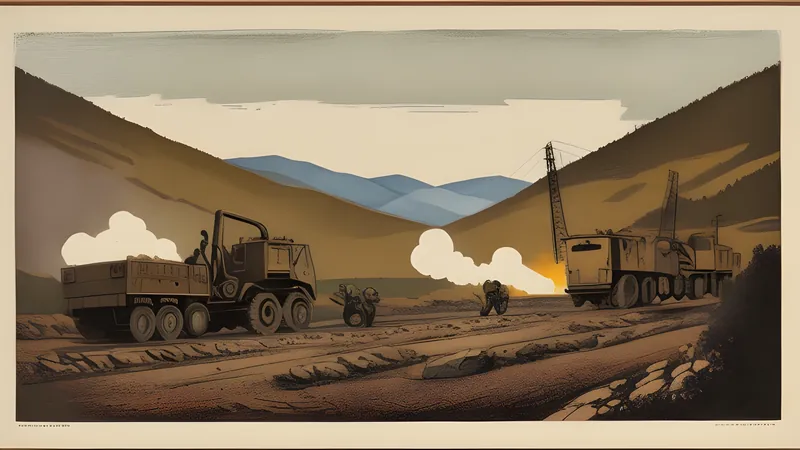
<p>On and around 4 April, mine-action organisations open their work to public view: demonstrations of manual probing, metal detectors, mine-detection dogs and the armoured machines that flail or till suspect ground. Survivors give testimony at public events, putting a human face to the statistics. Schools in affected countries deliver risk-education lessons, often through songs, games and storytelling, because the audience that most needs the message is frequently too young to read a warning sign. Governments and agencies publish annual progress data, and appeals raise the funds that keep deminers in the field, a slow and expensive task that no single year ever completes.</p>
<h2 id="variations-across-the-world">Variations across the world</h2>
<p>The day looks different depending on how heavily a country is contaminated. Cambodia, still among the most mine-affected nations on Earth after decades of conflict, treats it as a national concern, with the famous deminers of provinces like Battambang at the centre of attention. Afghanistan, Angola, Bosnia and Herzegovina, Colombia and Iraq each mark it against the backdrop of their own contaminated landscapes. In donor countries such as the United Kingdom, Norway and Japan, the emphasis shifts to fundraising and political pressure, keeping mine clearance on the agenda of governments far from any minefield.</p>
<h2 id="the-slow-arithmetic-of-clearance">The slow arithmetic of clearance</h2>
<p>What gives the day its particular character is the sheer slowness of the work it honours. Clearing a minefield is not a matter of sweeping it once; it means dividing contaminated land into lanes, advancing a centimetre at a time, investigating every metallic signal, and declaring ground safe only when every square metre has been checked to an exacting standard. A skilled deminer might clear a few dozen square metres in a day. Against that pace stand vast contaminated areas and limited funding, which is why mine action plans are measured in years and decades rather than weeks. The Ottawa Treaty originally set deadlines for states to clear their territory, and many have needed repeated extensions, not through negligence but because the arithmetic is simply punishing. The day’s appeals exist precisely because this is a marathon that drifts off the news agenda the moment a war ends, even as the deminers keep working through fields the world has stopped watching.</p>
<h2 id="symbols-and-the-figure-of-the-deminer">Symbols and the figure of the deminer</h2>
<p>The recurring images of the day are stark: the red triangle or skull marking contaminated ground, the crouched figure of a deminer working by the centimetre, and the prosthetic limb that stands for both injury and recovery. The deminer has become the day’s quiet hero, embodying a discipline of caution in which every patch of suspect earth is treated as if it conceals a device until proven otherwise. Yet the governing symbol is hope, expressed most concretely in the moment a cleared field is formally handed back, safe, to the people who depend on it.</p>
<h2 id="fun-facts">Fun facts</h2>
<ul>
<li>After Princess Diana walked through a cleared Angolan minefield in January 1997, the resulting publicity is widely credited with helping push the Ottawa Treaty to signature by 122 countries before the year was out.</li>
<li>The African giant pouched rat, trained by the charity APOPO, is light enough not to trigger a mine yet can sniff out the TNT inside one, clearing an area the size of a tennis court in about twenty minutes, a job that takes a human with a metal detector days.</li>
<li>Because these “HeroRATs” react to explosive, not metal, they ignore the buried scrap and shrapnel that constantly slow down metal-detector teams.</li>
<li>The Ottawa Treaty bans not only the use of anti-personnel mines but also their production, stockpiling and transfer, and has driven the verified destruction of tens of millions of stockpiled mines that will now never be laid.</li>
</ul>
<h2 id="a-closing-reflection">A closing reflection</h2>
<p>There is something morally clarifying about a weapon that keeps killing after its war is over. A landmine has no politics, no cause and no expiry; it simply waits. That is why the patient, unglamorous work the day celebrates, the probing, the rat handling, the handing-back of fields, carries a weight beyond its scale. Each cleared square metre is a small reversal of a decision someone made to bury harm in the ground, and the day asks us to keep making those reversals long after the cameras, like Diana’s that day in Huambo, have moved on.</p>
Advertisement
Related Content


Advertisement
