International Dance Day
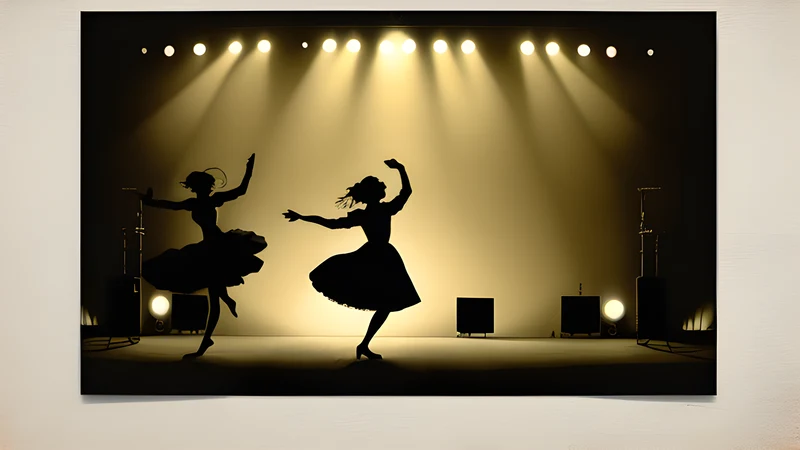
The twenty-ninth of April is the birthday of Jean-Georges Noverre, a French ballet master born in Paris in 1727 who spent his life insisting that dance could carry a story and stir an audience through movement alone. When the International Theatre Institute went looking in 1982 for a date to honour every kind of dance on Earth, it chose his birthday, and International Dance Day has been observed on 29 April ever since, from opera houses to village squares, in the belief that moving the body in time is one of the oldest and most universal things people do.
The reformer whose birthday it is
Noverre earned the tribute. In his day, ballet at the great European courts was a stiff parade of steps, weighed down by elaborate masks, heeled shoes and heavy costumes that hid the dancer’s body and expression. In 1760 he published Lettres sur la danse et les ballets, a manifesto arguing that dance should be a “ballet d’action”, a dramatic art that conveyed emotion and narrative through movement alone. He stripped away the masks, simplified the costumes and demanded that dancers act with their whole bodies. The writer and actor David Garrick called him “the Shakespeare of the dance”, and his reforms laid the groundwork for the expressive ballet that followed.
From a UNESCO committee to a global message
International Dance Day was created by the Dance Committee of the International Theatre Institute, the performing-arts partner of UNESCO, and first observed in 1982. Each year the committee invites a distinguished choreographer or dancer to write an official International Dance Day Message, read aloud at events around the world. Past authors have included some of the towering figures of the art, and the message tradition gives the day a single shared voice while leaving every country free to celebrate in its own forms, whether classical ballet, folk dance, street styles or contemporary experiment.
History older than history
Dance predates writing, and probably predates cities. Rock paintings at the Bhimbetka shelters in central India, some many thousands of years old, show rows of figures with linked arms in what look unmistakably like group dances. Ancient Egyptian tomb paintings depict acrobatic dancers and musicians at banquets and funerals, and in ancient Greece the chorus that gave us the words “choreography” and “chorus” moved and chanted together as an essential part of religious festivals and drama. Nearly every human society on record has danced to mark birth, marriage, death, harvest, war and worship.
The birth of ballet
Ballet as a formal art grew out of the lavish court spectacles of Renaissance Italy and moved to France through royal marriage. It reached its early peak under Louis XIV, himself a keen and capable dancer who took the title role in Le Ballet de la Nuit in 1653, appearing as the rising sun and earning the nickname the Sun King. In 1661 he founded the Académie Royale de Danse in Paris, the first institution dedicated to codifying dance, and the five basic positions of the feet still taught today were formalised in this period. The vocabulary of ballet remains French to this day, a linguistic fossil of the art’s formative century.
Revolutions in modern dance
The early twentieth century tore up ballet’s rulebook. The American Isadora Duncan, dancing barefoot in loose tunics inspired by ancient Greece, rejected the corseted formality of the classical tradition and is often called the mother of modern dance. In Paris in 1913, the Ballets Russes premiered Igor Stravinsky’s The Rite of Spring with choreography by Vaslav Nijinsky so jagged and primal that the first-night audience reportedly erupted into a near-riot. Later, the American choreographer Martha Graham built an entirely new technique around the contraction and release of the torso, creating a language of modern dance that dominated the century. Each of these figures insisted that the body could speak in a new grammar, and audiences slowly learned to read it.
The choreographers who built the repertoire
If Noverre gave ballet its argument, the choreographers who followed gave it its masterpieces. The Frenchman Marius Petipa, working at the Imperial Ballet in St Petersburg for half a century from 1847, created the grand classical repertoire that still fills opera houses, staging The Sleeping Beauty in 1890 and, with his assistant Lev Ivanov, The Nutcracker in 1892 and the definitive Swan Lake in 1895, all to scores by Tchaikovsky. In the twentieth century the Russian-born George Balanchine crossed to the United States, co-founded the New York City Ballet in 1948 and pared ballet back to pure movement and music, forging the lean neoclassical style that shaped American dance. Merce Cunningham, working alongside the composer John Cage, used dice and coin tosses to fix the order of his movements, loosening dance from narrative and even from its accompanying music. The German Pina Bausch built her Tanztheater in Wuppertal from repeated gesture and raw feeling, flooding her stage with soil or water and asking her dancers to speak, weep and confront the audience directly. Each pushed at what a body on a stage was permitted to do.
Capturing a vanishing art
Dance leaves no score the way music does, and for centuries a choreography died with the last dancer who remembered it. Several inventors tried to fix movement on paper, from the stick-figure notations of the French Baroque to the elaborate system the Hungarian Rudolf Laban published in 1928, now called Labanotation, which records the direction, level and timing of every movement on a vertical staff. The Briton Rudolf Benesh devised a rival shorthand in the 1950s that the Royal Ballet still uses to reconstruct lost works. Film and video have since made the old problem less pressing, yet notation survives because a written score reveals the structure of a dance in a way a recording never can, and because a company reviving a ballet a century old often has nothing else to work from. The effort to write dance down is a quiet admission that the art’s impermanence, however beautiful, has always carried a cost.
Dance beyond the stage
Only a fraction of the world’s dancing happens in theatres. Folk traditions carry the identity of nations: the flamenco of Andalusia, the Irish step dance, the whirling dervishes of Sufi Islam, the kathak and bharatanatyam of India, the haka of the Maori, the samba schools of Brazil. In the twentieth century, social and street dance reshaped popular culture, from the ballrooms of the swing era to the block parties of the Bronx where breaking, one of the pillars of hip-hop, was born in the 1970s. International Dance Day deliberately embraces all of it, refusing to rank the ballet barre above the street corner.
Why the day matters
Dance is the art form that requires nothing but a human body, which makes it the most democratic of them all. It needs no instrument, no canvas and no language, and it belongs equally to the trained principal and the wedding guest who cannot sit still. The day exists to celebrate that universality and to argue, gently, for the value of an art that leaves no permanent object behind, existing only in the moment of its making. It also draws attention to the dancers themselves, whose careers are short, whose bodies pay a heavy physical price and who are often among the least secure of professional artists.
How it is celebrated
Theatres, dance schools and companies mark 29 April with open rehearsals, free classes, flash mobs in public squares and gala performances. The official International Dance Day Message is read at events worldwide, and organisations use the date to run workshops that invite the public to try forms they have never attempted. Cities close streets for mass participatory dances, and social media fills with performances shared from studios and living rooms alike. For dancers, whose work is usually confined to the stage, it is a rare chance to spill out into the wider world.
Fun facts
The word “ballet” and the word “ball”, as in a formal dance, share a root in the Italian “ballare”, meaning to dance, which in turn comes from a Greek word for throwing the body about.
Pointe work, in which ballerinas dance on the tips of their toes, only emerged in the nineteenth century and was pioneered by the Italian-born Marie Taglioni, whose ethereal style in La Sylphide in 1832 helped define the Romantic ballet.
The longest dance marathons of the 1920s and 1930s, held during the Great Depression, saw desperate couples shuffle for weeks on end for prize money, some lasting well over a month with only brief rest breaks.
Tarantism, a dancing mania recorded in southern Italy from the medieval period, was believed to be cured by frenzied dancing to fast music, and gave its name to the lively folk dance the tarantella.
The Argentine tango was born in the working-class ports and immigrant quarters of Buenos Aires and Montevideo in the late nineteenth century before it swept the fashionable ballrooms of Paris and London.
Breaking, the acrobatic street style born among the block parties of the Bronx, made its Olympic debut at the Paris 2024 Games, the first time a dance form was contested for medals on the world’s biggest sporting stage.
A closing reflection
A dance vanishes the instant it is finished, leaving nothing but memory and, sometimes, a changed feeling in those who watched. That impermanence is the very heart of the thing; dance insists that a human life is lived in motion and in time, and that some of the most profound expressions we are capable of cannot be pinned down or kept. To dance is to accept that the moment is enough. Those drawn to the wider world of live performance might also look in on World Theatre Day and the spectacle of World Circus Day, where the moving body is celebrated in another key.
Related Content