International Cat Day
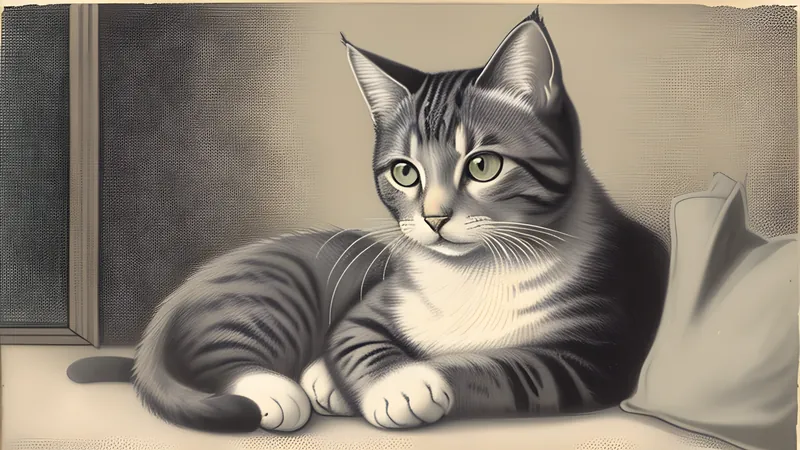
In 2004, French archaeologists led by Jean-Denis Vigne reported a discovery at the Neolithic site of Shillourokambos in Cyprus that quietly rewrote the history of one of our oldest companions. In a grave dating to roughly 7500 BCE, an eight-month-old wildcat had been buried barely forty centimetres from a human, both laid to rest with seashells and polished stones. Some 9,500 years ago, before the pyramids, before writing, somebody on a Mediterranean island cared enough about a cat to bury it like kin. On 8 August, International Cat Day asks the rest of us to take the bond half as seriously, to celebrate the cats who share our homes and to spare a thought for the millions who have none.
Where the day comes from
International Cat Day was created in 2002 by the International Fund for Animal Welfare (IFAW), a global organisation devoted to animal protection. The aim was practical as much as sentimental: to raise awareness of cats, whether cherished pets or unowned strays, and to promote their care. In 2020 custodianship of the day passed to International Cat Care, a not-for-profit founded in 1958 that has spent decades working to improve the health and welfare of domestic cats. Under both stewards the purpose has held steady, which is to celebrate the companionship cats offer while reminding the people who keep them that affection comes with obligations.
That dual character, half festival and half welfare campaign, is worth noting. The day is not merely an invitation to post photographs of sleeping cats, though it certainly produces plenty of those. It is also a deliberate effort to channel that affection towards adoption, neutering and responsible ownership.
A history older than the pharaohs
The Cyprus burial matters because it predates the famous Egyptian cat by some four thousand years. For a long time ancient Egypt was treated as the cradle of the human-cat relationship, and the Egyptians certainly raised it to extraordinary heights. The goddess Bastet was depicted in feline form, cats were kept with reverence, and the dead were sometimes mummified in vast numbers as offerings. Yet the bond clearly began far earlier and far less ceremonially, with wildcats drawn to the rodents that gathered around the first grain stores of early farming settlements in the Near East.
This is why cats are so often said to have domesticated themselves. Unlike the dog, the cat was not shaped by humans for a task; it arrived because the arrangement suited it, found the company tolerable and stayed on its own terms. From those self-invited beginnings the cat earned a place across the ancient world, sailing aboard ships to keep vermin off the cargo, guarding granaries and barns, and gradually settling by the household hearth. The relationship has outlasted empires precisely because it was never really imposed.
Why the day matters
Behind the soft imagery sits a genuine welfare problem. Vast numbers of cats live without homes, exposed to hunger, disease and traffic, and unmanaged populations can balloon quickly given how prolifically cats breed. International Cat Day draws attention to the shelters and rescue groups working against that tide, encourages adoption over impulse buying, and promotes neutering as the humane way to control stray numbers rather than leaving the problem to nature or neglect.
It also nudges existing owners towards their responsibilities, from routine veterinary care to the small daily attentions that keep an animal healthy and content. There is a reason the day pairs naturally with other animal observances that ask the same of us. The case it makes for cats echoes the one made by National Cat Day in the United States, while the broader argument for taking animal companionship seriously runs through occasions like National Dog Day and Dress Up Your Pet Day, all of them turning fondness into something more useful than a feeling.
How it is celebrated
The celebrations are as varied as cats themselves and rarely formal. Many owners mark the day with extra treats, a new toy or simply an afternoon of undivided attention. Shelters frequently hold open days, adoption drives and fundraisers, using the surge of public goodwill to find homes for animals that might otherwise wait months. Online, the day produces a vast, affectionate flood of photographs and stories, which has become its most visible ritual and, conveniently, a low-effort way for charities to reach new supporters.
For the cats, of course, 8 August is much like any other day, distinguished mainly by the unexpected generosity of the humans around them. The contrast is part of the day’s gentle humour: a creature that would never observe such an occasion is nonetheless its undisputed subject.
Cats across cultures
Cats occupy a remarkable range of roles in human imagination. In Japan the beckoning cat, the maneki-neko, sits in shop windows with a raised paw, a familiar charm thought to invite custom and good fortune. In parts of Europe the black cat has long been tangled in superstition, counted as lucky in Britain and unlucky in much of continental folklore, a contradiction that says more about us than about the cats. Egypt revered them; medieval Europe, at its worst, persecuted them; sailors across many nations valued them aboard ship as working mousers and quiet companions on long voyages.
This shifting status reflects something particular about the animal. The cat is at once ordinary and faintly mysterious, domestic yet never quite tamed, which leaves room for each culture to read into it whatever it needs.
The half-wild houseguest
What makes the cat such a curious companion is how little domestication has changed it. The dog was reshaped, over thousands of years, into hundreds of forms bred for herding, guarding, hunting and companionship, its very anatomy bent to human purposes. The domestic cat, by contrast, remains physically and behaviourally close to its wild ancestor, the African wildcat. It hunts the same way, by patient stalking and a sudden pounce; it keeps the same flexible, solitary instincts; and it is perfectly capable of reverting to a self-sufficient life if circumstances demand. The cat on the windowsill is, in a real sense, a wild animal that has agreed to a truce.
That truce is reflected in the cat’s extraordinary physical equipment, most of it inherited rather than bred. A cat’s whiskers are precise sensory organs, roughly as wide as its body, helping it judge whether a gap is passable in the dark. Its eyes contain a reflective layer behind the retina, the tapetum lucidum, which gathers scarce light and lets it see in conditions close to darkness, the same structure that makes cats’ eyes glow when caught in a beam. Its righting reflex, which allows it to twist in mid-air and land on its feet, depends on a vestibular system and an unusually flexible spine that owe nothing to human selection and everything to a hunter’s evolution. We did not engineer these abilities; we simply invited the animal that already had them indoors.
The trouble with too many cats
The welfare argument at the heart of the day rests on an uncomfortable biological fact: cats are formidably good at making more cats. A single unspayed female and her descendants can, in theory, produce an enormous number of offspring within a few years, and unmanaged colonies grow quickly wherever there is food and shelter. This is why neutering, rather than rescue alone, sits at the centre of responsible feline welfare. Catch-neuter-return programmes, in which feral cats are humanely trapped, sterilised and returned to their territory, have become a mainstay of urban animal management precisely because simply removing cats rarely works; others move into the vacated space. International Cat Day’s emphasis on neutering is not killjoy bureaucracy but the most humane lever available, the difference between a stable, healthy population and one perpetually outrunning the shelters trying to help it.
Fun facts
- The oldest known evidence of a human keeping a cat is a roughly 9,500-year-old grave on Cyprus, where a wildcat was buried beside a person, predating Egyptian cat imagery by some four thousand years.
- Cats are often said to have domesticated themselves, having approached early farming settlements for the rodents rather than being bred by humans for a job.
- A group of cats is called a clowder, and a group of kittens a kindle.
- Domestic cats spend a remarkable share of their lives asleep, frequently more than half of each day.
- A cat’s purr falls within a frequency range that some researchers have associated with calming and even tissue-healing effects, though the science remains an area of active study.
A closing reflection
What the Cyprus grave really shows is that the impulse behind International Cat Day is far older than the day itself. Long before anyone thought to put it on a calendar, a person was moved enough by an animal that asks for so little to bury it with care. The cat’s particular gift is companionship offered without demand, a presence content to share our lives strictly on its own terms. To mark a day for cats is partly to celebrate that, and partly to admit that the creatures who choose us deserve, at minimum, to be chosen back.
Related Content