International Carrot Day
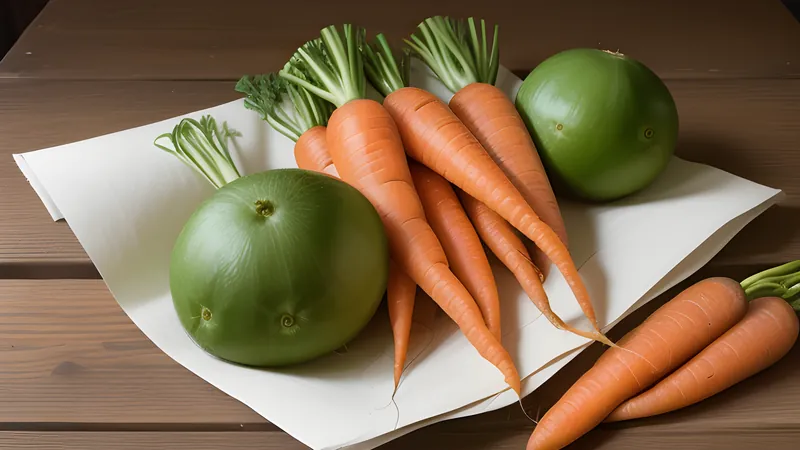
In 2003 a small group of carrot enthusiasts in Sweden decided that the most ubiquitous vegetable in the greengrocer’s deserved a day of its own, and so International Carrot Day was planted in the calendar on 4 April. The idea spread with the unhurried persistence you might expect of the carrot itself: by 4 April 2012 the day was being marked in France, Italy, Sweden, Russia, Australia, the United Kingdom and Japan, with juice stalls, recipe swaps and the occasional carrot-shaped costume. It is a thoroughly unofficial occasion, born of affection rather than institution, and that suits its subject. The carrot is the vegetable nobody campaigns for and almost everybody eats, and once a year it gets to be the centre of attention.
Where the day comes from
The origins of International Carrot Day are refreshingly modest. There is no founding charter, no parent body and no corporate sponsor lurking behind it. The most consistently cited account traces the day to grassroots carrot advocates in Sweden in 2003, whose stated aim was simply to spread knowledge of the carrot and its many virtues. From those low-key beginnings the observance was picked up by gardeners, food bloggers and the growing online ecosystem of “national day” calendars, which is how a quiet Swedish idea ended up being celebrated on three continents within a decade.
What gives the day its charm is precisely this lack of grandeur. It does not commemorate a tragedy, advance a cause or sell a product. It exists because somebody thought a vegetable this useful ought to be appreciated, and enough people quietly agreed. The carrot, in other words, earned its day through sheer reliability.
A root with a long memory
The vegetable being celebrated is far older than its festival. The carrot’s wild ancestors are generally traced to the region of present-day Iran and Afghanistan, where the plant was first brought under cultivation. Those early carrots would surprise a modern shopper: they were typically purple or yellow, slender, frequently forked, and grown as much for their aromatic leaves and seeds as for the root itself. The plump, sweet, uniformly orange carrot is a comparatively late arrival.
The orange carrot is most closely associated with Dutch growers working in roughly the sixteenth and seventeenth centuries, who are credited with refining the sweet, deep-orange varieties that became the European standard. A much-repeated story claims the colour was bred deliberately to honour the Dutch House of Orange, but historians treat this as folklore rather than documented fact; the more sober explanation is that growers selected for sweetness, size and reliability, and the orange types simply happened to excel. Whatever drove it, the result was decisive. The orange carrot proved sturdy and palatable, came to dominate the market, and pushed the older purple, yellow and white types into obscurity until their recent, fashionable revival on heritage-vegetable stalls.
That long migration, from the highlands of central Asia to the kitchen gardens of the world, is the real history the day quietly honours. The carrot did not conquer; it accompanied. It travelled with traders, settlers and cooks, adapting to each new soil and cuisine it met.
Why a vegetable this ordinary matters
It is tempting to dismiss the carrot as too humble to think about, which is exactly why it repays a second look. Few foods are so genuinely democratic. The carrot is cheap, stores well, grows in a wide range of climates and demands no special skill from either grower or cook. In an unglamorous way it has done more to feed people than many flashier crops, precisely because it asks so little and offers so much.
Nutritionally it earns its keep. Carrots are an excellent source of beta-carotene, which the body converts into vitamin A, important for vision and general health. That genuine link gave rise to the enduring belief that carrots help you see in the dark, an idea given a memorable wartime boost when stories circulated crediting carrots for the night-vision prowess of Royal Air Force pilots. The truth was rather more strategic: the carrot tale served partly as cover for newly developed radar, deflecting attention from the real reason British fighters were finding their targets in darkness. Carrots do support healthy eyesight, but they will not grant you the eyes of an owl, and the more dramatic claims belong firmly to legend.
How the day is marked
International Carrot Day is celebrated with a light touch that matches its origins. There are no parades or ceremonies of state. Instead, gardeners use the day as a cue to sow the season’s seed, cooks trade recipes from glazed carrots to carrot cake to fresh juice, and food writers dust off the vegetable’s surprisingly rich backstory. Some communities and cafes organise tastings or playful events, and the early-spring date sits neatly at the start of the growing year in the northern hemisphere, when thoughts naturally turn to what to plant.
The day shares this gentle, food-first spirit with other unfussy edible observances. The same impulse that gives the carrot its moment also produced Carrot Cake Day, which celebrates the most beloved sweet thing ever made from a root vegetable, and stretches to wholesome staples such as Eat a Red Apple Day, another reminder that the most cheerful foods to celebrate are often the plainest ones in the bowl.
The carrot around the kitchen world
The carrot’s versatility is its defining trait. Raw, it offers a crisp, sweet crunch for snacking, grating into slaws or cutting into batons. Cooked, its natural sugars deepen and caramelise, which is why it excels roasted, glazed or simmered slowly into soup. It anchors the aromatic base of countless cuisines, softened alongside onion and celery to underpin stocks, stews and sauces. And it crosses cheerfully into baking, where grated carrot lends both moisture and sweetness to cakes and loaves.
That adaptability has made it a near-universal ingredient. It appears in Indian gajar ka halwa, simmered with milk and cardamom; in North African and Middle Eastern stews; in northern European broths; and in East Asian stir-fries, where its colour and bite earn their place. The carrot rarely takes the lead role, yet it is forever in the supporting cast, dependable enough that cooks reach for it without thinking. Heritage purple, yellow and white varieties have lately returned to greengrocers, bringing a splash of colour to the plate and a reminder that the carrot’s past was far more vivid than its orange present suggests.
Growing the thing itself
Part of the carrot’s appeal, and part of why a spring day suits it, is that it is one of the more forgiving crops for an amateur to grow, though it rewards a little care. It is a cool-season root that prefers loose, stone-free soil, because anything that obstructs the growing tip tends to make the root fork or twist; the comically gnarled carrots that turn up in novelty photographs are usually the work of a buried pebble or a clod of heavy clay. Sown directly where it is to grow rather than transplanted, the seed is small and slow to germinate, which is why gardeners traditionally mix it with faster radish seed to mark the rows.
The plant is a biennial, meaning that in its first year it builds the swollen taproot we eat, storing energy that it would otherwise spend, in a second year, on flowering and setting seed. We harvest it mid-story, before it has any chance to fulfil that botanical ambition. Left in the ground, a carrot will eventually throw up the lacy white flower-head that betrays its kinship with cow parsley and Queen Anne’s lace. Understanding this life cycle explains a great deal about the vegetable: its sweetness is, in a sense, a savings account the plant never gets to spend.
A vegetable that hides its colours
The recent revival of purple, yellow and white carrots is more than a fashion for the unusual. Those pigments are not merely decorative; the purple varieties carry anthocyanins, the same family of compounds that colours blackberries and red cabbage, while the orange owes its hue to carotenoids. In growing the rainbow of heritage types, modern cooks are not inventing novelty so much as recovering the carrot’s older identity, the one it wore for most of its cultivated history before Dutch growers standardised it into orange uniformity. There is a pleasing irony in the fact that the “exotic” coloured carrot on a fashionable menu is, in truth, the original article, and the everyday orange one the relative newcomer.
Fun facts
- The original cultivated carrots were purple and yellow, not orange; the familiar orange root only became dominant after Dutch breeding in roughly the sixteenth and seventeenth centuries.
- The wartime claim that carrots gave British pilots superb night vision was partly a deliberate cover story to hide the use of radar.
- International Carrot Day was founded in Sweden in 2003, and by 2012 was being marked across seven countries on three continents.
- Carrots belong to the same plant family as parsley, fennel, dill and the deadly hemlock, which is why their feathery green tops smell so aromatic and why foragers are warned to be careful with wild relatives.
- The “House of Orange” theory for the orange carrot’s colour is almost certainly a myth invented long after the fact.
A closing reflection
There is something quietly instructive about a vegetable that became a global staple without ever drawing attention to itself. The carrot did not need marketing or mystique; it simply turned out to be useful, agreeable and easy to grow, and that was enough to carry it from the hills of central Asia to nearly every kitchen on earth. A day built around it is really a small argument for the value of dependability, the proposition that the things we lean on most are often the ones we notice least, and that they deserve, just once a year, to be looked at properly.
Related Content