International Bog Day
In 1950, peat cutters in Tollund Fen, Denmark, dug into ground that had not been disturbed for roughly two thousand years and found a man’s body so well preserved that they initially reported it as a recent murder to the local police, before archaeologists established that Tollund Man had died in the Iron Age, his skin, stubble and the rope around his neck intact after two millennia in the acidic, oxygen-starved mud. That preserving power belongs to the bog itself, a habitat most people mentally file alongside wasteland and mosquitoes, and International Bog Day, held every last Sunday of July, exists to argue that peatlands are among the most consequential landscapes on Earth rather than the least.
Origin
International Bog Day grew out of the International Peat Congress, and it has been coordinated since the early 1990s by the International Mire Conservation Group, a network of scientists and conservationists founded in 1986 specifically to share research and protection strategies for peatlands across national borders. The date was deliberately set as a floating one, the last Sunday in July, rather than a fixed calendar date, so that it would fall consistently within the Northern Hemisphere’s peak season for visiting bogs on foot, when the ground is driest and safest to walk and the sphagnum moss and insect-eating plants that define these habitats are at their most visible. The observance is coordinated internationally but delivered locally, through walks, open days and talks organised by wildlife trusts, national parks and peatland research stations in the countries where bogs are most extensive.
History
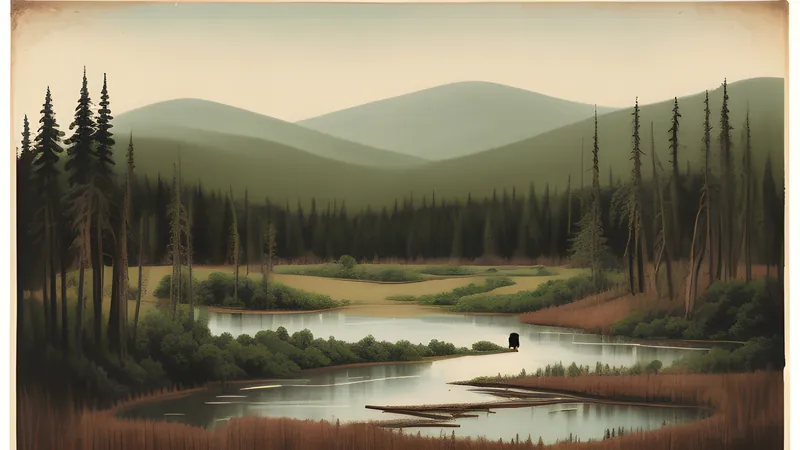
A bog begins where drainage fails. Water collects in a hollow, sphagnum moss colonises the wet ground, and because the moss itself acidifies the water and starves it of oxygen, the plant matter that dies each year does not fully decompose the way it would in an ordinary soil. Instead it compresses, slowly, into peat, and a healthy bog adds roughly a millimetre of new peat a year, meaning a peat layer several metres deep represents thousands of years of accumulated, barely rotted vegetation. That slow accumulation is precisely why bogs preserve organic material so well: the same acidic, low-oxygen chemistry that stalls decomposition of moss also stalls the decomposition of anything else that falls in, including, on occasion, a person.
Bog bodies like Tollund Man are the most dramatic evidence of that preservation, and northern Europe has yielded dozens of them, from Denmark’s Grauballe Man, found in 1952 with his throat cut, to Lindow Man, discovered in an English peat bog in Cheshire in 1984 and now displayed at the British Museum. Most date from the Iron Age, and many show signs of a violent death, leading archaeologists to debate whether they were victims of ritual sacrifice, executed criminals, or something else entirely, a question the bog itself has preserved without fully answering. Denmark’s National Museum in Copenhagen and Silkeborg Museum, home to Tollund Man himself, both draw large numbers of visitors specifically to see these remains, making bog archaeology one of the more unexpected tourist draws to grow out of a habitat otherwise associated with mud and midges. Beyond human remains, peatlands have also preserved pollen records stretching back thousands of years, letting scientists reconstruct ancient climates and vegetation with a precision few other environments allow, and entire prehistoric wooden trackways, built to cross wet ground, have turned up remarkably intact in British and Irish bogs.
People have been cutting peat for fuel for centuries, particularly in Ireland, Scotland and Scandinavia, where turf fires warmed homes long before coal or gas reached rural communities, and the practice remains a living tradition in parts of rural Ireland today even as commercial extraction has declined under conservation pressure. Sphagnum moss itself found a more surprising use in the twentieth century: during the First World War, field medics on both sides used sterilised sphagnum dressings on wounds, since the moss holds many times its own weight in liquid and has mild antiseptic properties, making it a genuinely effective substitute for cotton at a time when cotton was scarce and expensive.
Importance
The reason conservationists have pushed so hard for a dedicated bog day is a statistic that keeps surprising people who hear it for the first time: peatlands cover only around three per cent of the planet’s land surface, yet they store more carbon than all the world’s forests put together, because that slow accumulation of undecomposed plant matter locks carbon away for millennia rather than releasing it back into the atmosphere the way a forest eventually does when trees die and rot. Drained or burned peatlands release that stored carbon rapidly, making degraded bogs a significant and often overlooked source of greenhouse gas emissions, particularly across Southeast Asia’s drained tropical peat swamps and parts of Northern Europe’s historically drained farmland. Conserving and rewetting existing bogs, and restoring degraded ones, has consequently become one of the more cost-effective tools available for climate mitigation, alongside the more familiar targets of forests and oceans.
How it’s celebrated
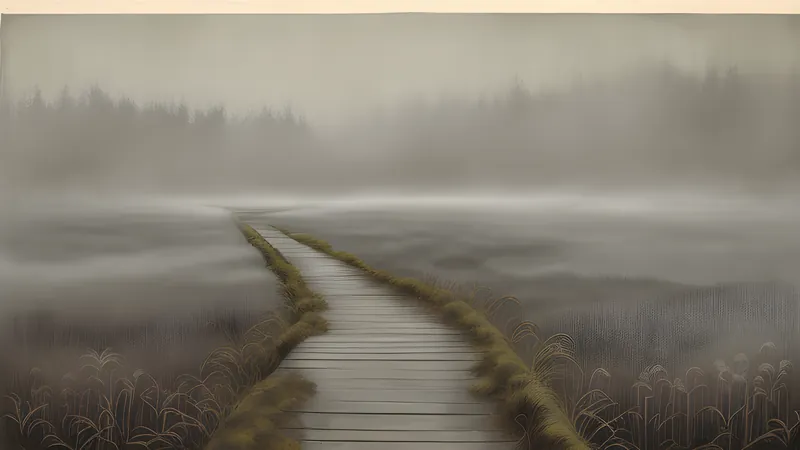
Wildlife trusts and national parks in bog-rich countries mark the day with guided walks across boardwalks laid over the wettest ground, letting visitors see carnivorous plants and rare insects up close without damaging the fragile moss layer underfoot. Scientists and rangers use the day to run public talks on peatland restoration projects, many of which involve deliberately blocking old drainage channels to let water levels rise back to the point where sphagnum can recolonise and resume laying down peat. Photography competitions and citizen-science recording days, where visitors help log plant and insect sightings, are common accompaniments, aimed at building public affection for a habitat that has historically had a poor reputation. Some restoration projects invite volunteers to help with practical work directly, planting sphagnum plugs or building small timber dams to slow drainage, turning the day into hands-on labour rather than passive observation for anyone willing to get their boots muddy.
World variations and cultural context
The observance carries particular weight in countries with a long peat-cutting history and a large surviving bog area, including Ireland, Scotland, Germany, Finland, Estonia and Russia, where national peatland strategies and restoration funding have become serious policy questions rather than niche environmental concerns. Wales adds a note of deliberate irreverence to the wider conservation message: the town of Llanwrtyd Wells has hosted the World Bog Snorkelling Championships since 1985, in which competitors swim two lengths of a water-filled trench cut through a peat bog using flippers but no conventional swimming stroke, a spectacle that has done more to put “bog” into international headlines than any scientific report, even as the organisers use the event to raise money for local conservation.
Traditions and symbols
Sphagnum moss itself, in its startling reds, greens and golds, functions as the day’s unofficial emblem, alongside the carnivorous plants that have evolved to survive the extremely nutrient-poor conditions a bog offers, such as the sundew, whose sticky, glistening leaves trap insects, and the pitcher plant, which drowns them in a pool of digestive fluid. The bog body has become an informal cultural symbol in its own right in Denmark, Ireland and Britain, inspiring poetry, most famously Seamus Heaney’s bog poems of the 1970s, which used figures like Tollund Man as a way of thinking about violence and memory in Ireland’s own troubled twentieth century.
Fun facts
A single sphagnum moss plant can hold roughly twenty times its own dry weight in water, which is what makes a healthy bog behave almost like a giant, slow-draining sponge across a landscape. Tollund Man’s stomach contents, analysed after his discovery, showed his last meal had been a porridge of barley, linseed and various wild seeds, giving archaeologists an unusually direct window into Iron Age diet from a single well-preserved gut. The Ramsar Convention on Wetlands, signed in Iran in 1971, gives peatlands specific protected status internationally, and its own dedicated day, World Wetlands Day, falls each February, making International Bog Day something of a summer companion to that earlier, broader wetlands observance. And the deepest peat deposits recorded in Britain and Ireland run to more than ten metres, representing an unbroken record of plant accumulation reaching back well over ten thousand years, older than the pyramids by a considerable margin and still, in places, growing.
Readers drawn to this kind of overlooked ecosystem might also enjoy World Rewilding Day, which covers a related push to let damaged landscapes recover their own natural processes, or International Beaver Day, celebrating another wetland engineer whose dams create exactly the waterlogged conditions bogs need to form.
A Closing Reflection
A bog asks for patience rather than admiration: it does nothing quickly, adds itself a millimetre at a time, and rewards nobody with an obvious spectacle beyond the odd startling body it gives back after a couple of thousand years underground. That slowness is precisely the point, since it is the same unhurried, oxygen-starved chemistry that locks away carbon for millennia, and a habitat this patient deserves rather more attention than the mud and midges most people still associate with its name.
Related Content