International Beer Day
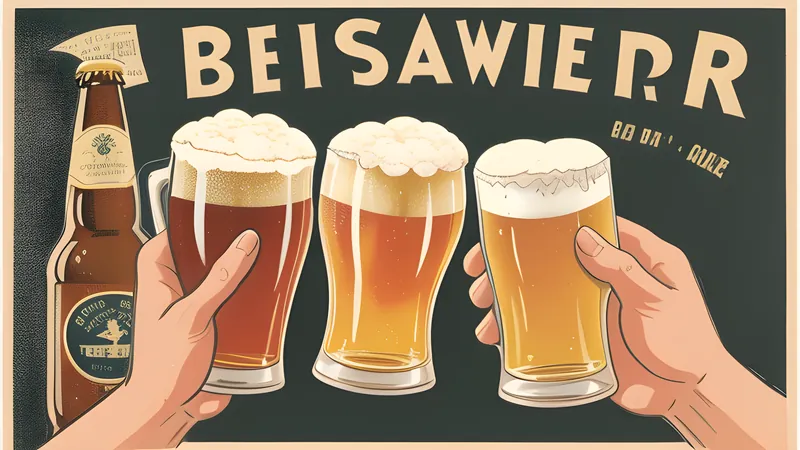
In 2007, in the coastal town of Santa Cruz, California, a man named Jesse Avshalomov and a small group of friends decided the world needed a day to celebrate beer. There was nothing official about it, no committee and no government proclamation, just an idea hatched among people who liked drinking together. They settled on 5 August. What is genuinely remarkable is what happened next: a casual notion conceived in a Californian bar grew, within a handful of years, into an observance marked in dozens of countries and more than two hundred cities, raising glasses across six continents. International Beer Day is now one of the more successful examples of a homemade holiday going global.
How a Local Idea Spread
For its first stretch, from 2007 to 2012, International Beer Day kept to its original date of 5 August. After the 2012 celebration, the founders ran a poll of the day’s growing band of followers and decided to move it to the first Friday in August. The reasoning was practical and a little tongue-in-cheek: a Friday placed the festivities squarely against the weekend, sparing celebrants the inconvenience of a working morning the next day. The shift also gave the date a pleasing flexibility, anchoring it to the rhythm of the week rather than a fixed number on the calendar.
The founders gave the day three explicit purposes, and they have stuck. The first is to gather with friends and enjoy the taste of beer. The second is to celebrate the people responsible for brewing and serving it. The third, the most ambitious, is to unite the world by toasting the beers of all nations together on a single day. It is a modest manifesto, but the third aim is what lifts the day above a simple excuse for a pint.
Four Thousand Years in a Glass
Beer is vastly older than the holiday that honours it, and the history is the genuinely surprising part. Archaeological evidence places fermented grain beverages in Mesopotamia and Egypt many thousands of years ago, making beer one of the earliest products of organised agriculture. The Sumerians left behind the Hymn to Ninkasi, a song of praise to their goddess of brewing dating back roughly four thousand years, which doubles as a working recipe: it describes soaking grain, baking it into a kind of bread, and fermenting the result. It is, in effect, the oldest beer recipe humanity has preserved, written as a prayer.
In medieval Europe, brewing found one of its most important homes in the monasteries. Monks refined techniques and standards that survive in the great Trappist and abbey beers brewed to this day. Two later developments transformed the craft. The widespread adoption of hops, which add bitterness and act as a preservative, changed beer’s flavour and shelf life. Then, in the nineteenth century, the scientific understanding of yeast, particularly through the work of Louis Pasteur, turned brewing from an unpredictable folk craft into something closer to a controlled science. International Beer Day is the latest, lightest chapter in this very long story.
Why It Matters
A day for beer can look frivolous, yet it carries real cultural weight. Its three stated aims amount to a celebration of conviviality itself, the simple social good of people gathering to share a drink. The observance also shines a useful light on the people behind the glass: not only the famous breweries but the small, independent ones, the cellar workers and the bar staff whose labour rarely gets a moment in the sun.
There is a craft dimension too. The day has grown up alongside a worldwide revival of small-scale brewing, in which independent producers experiment with hops, malts and yeast strains to create distinctive flavours. By encouraging drinkers to seek out something they have never tried, the day quietly supports that diversity and pushes back against a market once dominated by a handful of near-identical industrial lagers.
How It Is Celebrated
Celebrations are as varied as the beers themselves. Pubs and bars run tasting sessions, special menus and discounts; craft breweries throw open their doors for tours, tastings and the unveiling of seasonal brews. Friends arrange gatherings at home, comparing bottles collected from far-flung trips. Many drinkers use the occasion to broaden their palate deliberately, reaching for a style they have never sampled, whether a smoky German rauchbier, a sour Belgian lambic or a hazy New England IPA. Online, enthusiasts share photographs of their chosen glass and raise toasts to strangers across continents, which is about as close as the third founding aim gets to literal fulfilment. The day naturally overlaps in spirit with the calendar’s other beery occasions, from the broad cheer of National Drink Beer Day to the more pointed heritage focus of German Beer Day, which honours the country’s centuries-old brewing traditions.
Beer Around the World
Beer wears a different face in almost every country. Germany has its famous purity law, the Reinheitsgebot of 1516, which long restricted brewing to water, barley and hops, and the autumn spectacle of Munich’s Oktoberfest. Belgium boasts an astonishing range of monastic Trappist ales and tart farmhouse beers. The Czech Republic gave the world the crisp golden Pilsner, named after the city of Plzeň, and consistently records the highest beer consumption per head on Earth. Britain treasures its cask-conditioned ales and the social institution of the local pub; Ireland is known for its dark, creamy stouts; and the United States, after decades of bland uniformity, now hosts one of the most restless and inventive craft scenes anywhere. International Beer Day deliberately embraces all of them at once.
The Craft Brewing Revival
It is worth dwelling on the movement that the day grew up beside, because the timing was no coincidence. International Beer Day was founded in 2007, near the height of a craft brewing boom that had been gathering force in the United States since the late twentieth century and was spreading worldwide. For much of the twentieth century, brewing in many countries had consolidated into a handful of giant producers making broadly similar pale lagers, and choice had narrowed dramatically. The craft movement reversed that, with thousands of small breweries reviving old styles and inventing new ones.
This is the context that gives the day’s third aim, uniting the world’s beers on a single day, real meaning. A drinker in 2007 genuinely could, for the first time in generations, choose between a traditional Bavarian wheat beer, an aggressively hopped American IPA, a barrel-aged stout and a revived historical style on the same evening. The day encourages exactly this curiosity, treating the global spread of brewing not as competition between nations but as a shared inheritance to be sampled widely. Its rapid international growth, from one Californian town to hundreds of cities within a few years, mirrored the very diversity it set out to celebrate.
Traditions and Symbols
The emblems of the day are pleasingly plain: the foaming head of a freshly poured glass, the clink of vessels meeting in a toast, and the warm hum of company. The toast is the day’s defining ritual, performed in dozens of languages, from the German “Prost” to the Czech “Na zdraví” and the Irish “Sláinte”. The pint glass, the German stein and the humble bottle all serve as symbols of a holiday whose entire point is sharing.
Fun Facts
- The oldest surviving beer recipe is the Sumerian Hymn to Ninkasi, a song of praise to the goddess of brewing that is around four thousand years old and describes the brewing process step by step.
- Workers who built the pyramids of ancient Egypt are believed to have received part of their wages in beer, making it both a drink and a currency.
- The English word “bridal” derives from “bride ale”, a celebratory beer once brewed for weddings, the sale of which sometimes raised money for the couple.
- International Beer Day moved its date in 2013 after the founders ran a public poll, shifting from a fixed 5 August to the first Friday of the month.
- The Czech Republic, birthplace of Pilsner, has long had the highest per-capita beer consumption of any nation on Earth.
- The German Reinheitsgebot of 1516, often called the world’s oldest food-quality regulation still partly in force, originally limited beer to just water, barley and hops, before the role of yeast was even understood.
A Closing Reflection
What is most telling about International Beer Day is how little of it is really about the liquid. Strip away the tasting notes and the brewery tours and what remains is people deliberately making time to sit down together, which is harder to come by than it once was. Beer has accompanied that impulse for four thousand years, from a Sumerian hymn to a Santa Cruz bar, less as the point of the gathering than as its reliable excuse. The day endures, in the end, not because the world needed another reason to drink, but because it gladly took any reason to gather, and a shared glass has always been one of the easiest reasons there is.
Related Content