International Bat Night
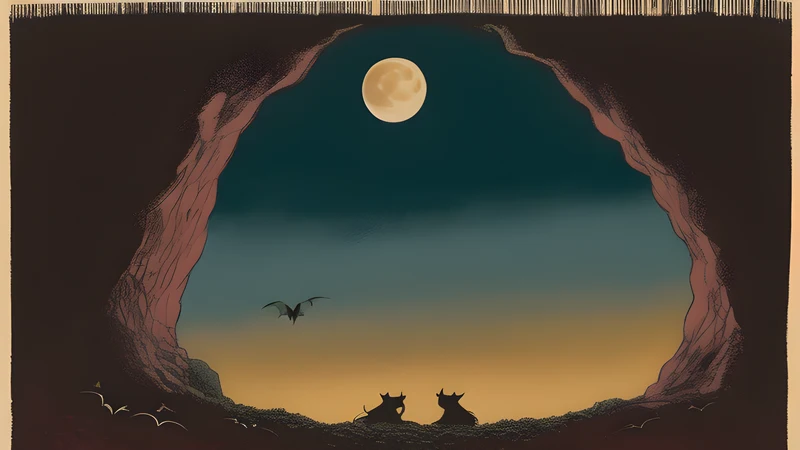
Since 1997 the last full weekend of August has belonged to bats. International Bat Night, organised under the auspices of EUROBATS, the Agreement on the Conservation of Populations of European Bats, began in a handful of countries and now runs in more than fifty, with bat walks, cave visits, workshops and after-dark listening sessions held as summer tips toward autumn and Europe’s bats prepare for the lean months ahead. The timing is practical as well as symbolic, catching the warm late-summer nights when insects are plentiful and bats are at their most active before hibernation.
The only mammals that truly fly
Bats make up the order Chiroptera, a name meaning “hand-wing”, and they are the only mammals capable of true, powered, sustained flight. Their wings are membranes of skin stretched between enormously elongated finger bones rather than feathers, so a flying bat is, quite literally, flying on its hands. There are well over 1,400 known species, which means bats account for roughly one in five of all mammal species on Earth, a share that surprises almost everyone who hears it. They range from the tropics to the edges of the boreal forest, absent only from the most extreme deserts and the polar regions.
The group has traditionally been divided into the large fruit-eating bats, including the flying foxes of the Old World tropics with wingspans reaching one and a half metres, and the smaller, mostly insect-eating bats that navigate and hunt by echolocation. That echolocation is one of nature’s most refined instruments. A hunting bat pours out streams of high-frequency calls, many far above the range of human hearing, and reads the returning echoes to build a detailed acoustic picture of its surroundings, pinpointing a moth in total darkness and adjusting its flight in fractions of a second.
History and the case for the day
Bats have suffered for centuries from a reputation problem rooted in folklore and fear. Associated in European tradition with darkness, witchcraft and, thanks to Bram Stoker’s 1897 novel, with vampires, they were long treated as vermin or omens rather than wildlife worth protecting. Real declines followed the myths. Across the twentieth century, European bat populations fell sharply as roosts in old buildings and hollow trees were destroyed, caves were disturbed, hedgerows were grubbed out and agricultural pesticides stripped away the insects they depend on. By the 1980s the situation was serious enough that European governments negotiated EUROBATS, which came into force in 1994 to coordinate protection across borders for animals that routinely migrate between countries. International Bat Night was launched a few years later as the agreement’s public face, a way to replace superstition with understanding.
The need has only grown. In North America a devastating fungal disease called white-nose syndrome, first detected in 2006, has killed millions of hibernating bats by rousing them from torpor in winter until they exhaust their fat reserves and starve. Some once-common species have collapsed across large parts of the continent. The disease is a stark demonstration of how quickly bat populations, which reproduce slowly, can crash, and of why the awareness the day builds is so practically important.
Why bats matter
Bats are quietly indispensable to ecosystems and to human agriculture. Insect-eating bats are a natural pest-control service on an enormous scale; a single small bat can catch thousands of insects in one night, and the collective appetite of bat colonies saves farmers vast sums in avoided crop damage and pesticide use. In the tropics, fruit and nectar bats are essential pollinators and seed dispersers. The agave that gives us tequila is pollinated by bats, as are wild bananas, and the prized durian depends heavily on bat pollination; countless rainforest trees rely on fruit bats to carry their seeds far from the parent plant. A world without bats would be a world with more insect pests, fewer forests and a diminished harvest.
International Bat Night makes this quiet usefulness visible, and it also addresses the fear directly. By taking people out at dusk to watch bats emerge and to hear their calls translated into audible clicks through a bat detector, the events turn an animal of nightmare into an object of curiosity and delight.
How it is celebrated
The signature activity is the bat walk. As darkness falls, groups gather at parks, rivers, woodlands and old buildings, often equipped with handheld bat detectors that convert the bats’ ultrasonic calls into sounds people can hear, each species with its own recognisable rhythm. Naturalists explain how to tell a pipistrelle’s chatter from a noctule’s slower pulses. Museums, nature reserves and conservation groups run daytime events too, with talks, craft activities for children, cave and mine visits where safe, and demonstrations of the boxes and roosts people can install to help local bats. The last-weekend-of-August timing gives organisers warm evenings and active bats, and the international coordination means a single weekend generates hundreds of events across the continent and beyond.
The extremes of the bat world
Bats include some of the most extraordinary mammals alive. Kitti’s hog-nosed bat, also called the bumblebee bat, weighs around two grams and is a strong contender for the smallest mammal in the world, small enough to perch on a fingertip, and lives in limestone caves in Thailand and Myanmar. At the other extreme, the great flying foxes hang in noisy daytime camps in the thousands. The largest known bat gathering on Earth is at Bracken Cave in Texas, where an estimated fifteen to twenty million Mexican free-tailed bats stream out each summer evening in a column so dense it shows up on weather radar. And then there are the vampire bats of Latin America, the only mammals that feed entirely on blood, whose saliva contains a potent anticoagulant that researchers named “draculin” after the count himself.
Roosts, seasons and the shape of a bat’s year
A European bat lives its year in two very different halves, and understanding that rhythm explains why late August was chosen for the day. Through spring and summer, females gather in warm “maternity roosts”, in attics, church towers, hollow trees and bat boxes, to give birth and raise their single pup, usually just one a year, which is why bat populations recover so slowly from any loss. As summer fades, the bats disperse, feed hard to build fat, and begin moving toward the cool, humid, stable caves, cellars and mines where they will hibernate through the insect-free winter, dropping their body temperature close to freezing and slowing their heartbeat to a crawl. The last weekend of August catches them at their busiest and most visible, mating, feeding and swarming around hibernation sites before the cold shuts everything down.
That dependence on specific, undisturbed roosts is the crux of bat conservation. A colony can be wiped out by a single roof renovation at the wrong time of year, a blocked cave entrance or a disturbed hibernaculum, and because the animals return faithfully to the same sites, the loss of one roost can end a lineage that used it for generations. This is why bats enjoy strong legal protection across Europe, why builders and homeowners are often required to check for roosts before work, and why so much of the practical advice shared on International Bat Night concerns simple things: leaving a loft undisturbed, putting up a bat box, keeping a garden pond and letting the hedges grow.
Reading the night with sound
The bat detector has done more for the animal’s public image than any poster. These handheld devices pick up the ultrasonic hunting calls that bats broadcast, calls pitched far above human hearing, and shift them down into clicks, chirps and raspberries that a person can suddenly hear. On a bat walk the effect is transformative: an apparently silent riverbank fills with the invisible chatter of animals that were there all along. Each species calls at a characteristic frequency and rhythm, so an experienced ear can name a common pipistrelle at around 45 kilohertz, a soprano pipistrelle a little higher, or the deep, irregular pulses of a noctule hunting high overhead. Learning to identify bats by sound turns a vague fluttering shape into a named, knowable animal, and that shift from mystery to familiarity is exactly what the whole night is designed to achieve.
Fun facts worth hanging around for
Bats are not blind. The old phrase “blind as a bat” is simply wrong; every bat species can see, and the large-eyed fruit bats have excellent vision, relying on sight rather than echolocation to find their food.
Hanging upside down costs them nothing. A bat’s foot tendons are arranged so that its weight pulls the claws closed automatically, meaning a roosting bat can hang for hours, or even sleep and die, still gripping the ceiling without spending any muscular effort.
Vampire bats share meals and remember favours. A vampire bat that fails to feed will be given regurgitated blood by a roost-mate, and studies show they preferentially help individuals who have helped them before, one of the clearest examples of reciprocal altruism in the animal world.
They live far longer than their size suggests. Most small mammals burn out quickly, yet some tiny bats survive for thirty years or more in the wild, and understanding how they resist ageing and tolerate viruses without falling ill has become a serious field of medical research.
A closing reflection
Few animals have been so misjudged for so long. The bat that flickers over a summer river at dusk is a slow-breeding, long-lived, insect-devouring, flower-pollinating marvel rather than an omen or a pest, one that props up ecosystems and farms alike, and that is genuinely in trouble across much of its range. International Bat Night works by the oldest method of changing minds, which is simply to introduce people to the real animal on a warm evening with a detector in hand. The bat’s nocturnal world overlaps with the myths explored on World Dracula Day, and its status as a small, overlooked and declining creature places it alongside the garden neighbours of World Hedgehog Day and the vanishing amphibians of World Frog Day. Step outside on the last weekend of August, look up as the light goes, and the dark turns out to be full of something worth saving.
Related Content