International Bagpipe Day
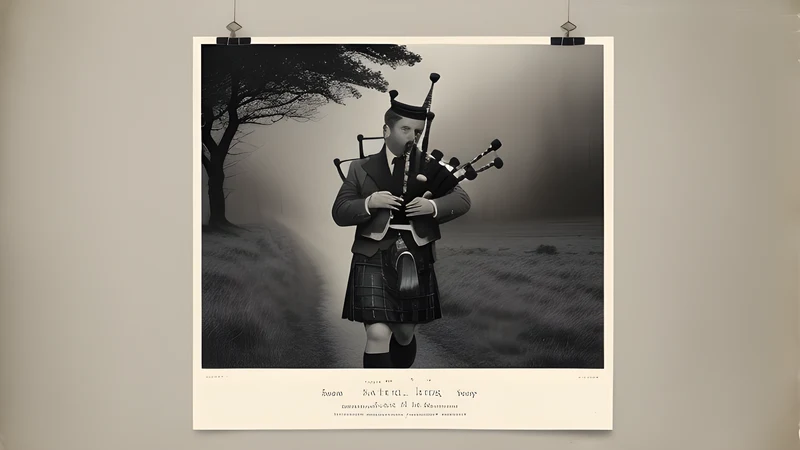
In 1746, in the aftermath of the Jacobite defeat at Culloden, a piper named James Reid stood trial for treason at York. Reid’s defence was that he had carried no weapon, only his pipes. The court disagreed. A Highland regiment, it ruled, never marched without a piper, and so the bagpipe was “an instrument of war” — and Reid was hanged. That grim verdict is one of the reasons the instrument became so bound up with Scottish identity, and it is exactly the kind of story that International Bagpipe Day, held every 10 March, exists to unearth. The day is a reminder that the drone and chanter belong to a broad belt of Europe, North Africa and the Near East rather than to any single country, and that the Great Highland bagpipe is only the loudest member of a very large family.
What the Day Marks
International Bagpipe Day was launched in 2012 by the Bagpipe Society, a British organisation founded in 1986 to support pipers of every tradition rather than the Highland pipe alone. The society fixed the date on 10 March and paired the first celebration with an International Bagpipe Conference held in London, gathering players, makers and scholars from across the continent. The intent was deliberately corrective. To much of the world the bagpipe means a kilted soldier and a lament, yet Europe holds dozens of distinct piping traditions, many of them nearly extinct, and the day was meant to give them a shared moment of visibility.
Since then the observance has spread through folk-music networks, conservatoires and piping clubs, marked with concerts, workshops, sessions in pubs and a good deal of activity online. There is no central authority and no fixed programme, which suits an instrument whose history is one of local variation rather than standardisation. The society deliberately chose an early-March date, clear of the crowded Celtic-festival season around St Patrick’s and St Andrew’s, so that the humbler regional pipes would not simply be drowned out by the Highland repertoire once again.
A Very Long History
The bagpipe is genuinely ancient, though separating fact from romantic invention takes some care. The core idea — a reservoir of air, usually an animal skin, feeding one or more reed pipes so a player can sustain a continuous sound while breathing — appears in the classical world. The Greek writer Aristophanes joked about pipers from Thebes in the fifth century BC, and Roman sources describe the tibia utricularis, a bag-fed pipe. The emperor Nero is reported by Suetonius and by Dio Chrysostom to have promised to appear in public as a bagpiper, which suggests the instrument was known in first-century Rome even if the story is coloured by hostility to Nero.
By the medieval period the bagpipe was everywhere in Europe. It turns up in cathedral carvings, in the margins of illuminated manuscripts, and in literature: Geoffrey Chaucer, writing around 1387, gives his coarse, brawling Miller a bagpipe to lead the Canterbury pilgrims out of town. For centuries it was a peasant and townsfolk’s instrument, played at weddings, fairs and dances the length of the continent, long before it acquired martial dignity in the Highlands. Painters recorded its low reputation as much as its music: Pieter Bruegel the Elder put pipers at the centre of his sweaty village weddings in the 1560s, red-faced men cheek by jowl with the feasting.
The Scottish association hardened in the seventeenth and eighteenth centuries, as the Great Highland bagpipe and its refined solo repertoire, the pìobaireachd or ceòl mòr, developed under piping dynasties such as the MacCrimmons of Skye, who were said to run a college of piping at Boreraig for the MacLeod chiefs. That “big music” — slow, theme-and-variation laments and salutes lasting many minutes — is arguably the most sophisticated art music any bagpipe ever produced. After Culloden the pipes carried a charge of rebellion, and though the notion that they were formally “banned” by the Disarming Act is overstated, the Reid case shows how politically loaded the instrument had become. The nineteenth-century Highland regiments then carried it across the British Empire, which is why a shepherd’s reed-pipe ended up on parade grounds from Ontario to the Punjab.
The Whole European Family
Set the Highland pipe aside and the map opens up. Ireland has the sweet, bellows-blown uilleann pipes, played sitting down and capable of far more melodic subtlety than their Scottish cousin, with regulators that let a player sound chords under the tune. Northumberland has its own bellows-blown smallpipes, closed at the end so each note sounds crisp and separate. Galicia and Asturias in northern Spain keep the gaita, a source of fierce regional pride that ties the Atlantic coast of Spain to a wider Celtic imagination. Brittany fields the biniou, usually paired with the reedy bombarde. Bulgaria has the gaida, its low kaba gaida from the Rhodope mountains producing a huge, buzzing drone; Italy the zampogna of the southern shepherds, heard at Christmas as they come down from the hills; France the musette of the baroque court and the rustic cabrette of the Auvergne.
Sweden, once thought to have lost its säckpipa entirely, revived it in the twentieth century from a handful of surviving instruments and old descriptions — a rare case of a national bagpipe pulled back from actual extinction. Poland keeps the goat-headed koza and the wheezing dudy; Hungary the duda; Estonia the torupill. Each has its own reeds, scales and social setting, and much of the point of International Bagpipe Day is to remind listeners that this diversity exists and is worth protecting before the last player of some village variant dies without a pupil.
How It Is Celebrated
Because the day grew out of the folk revival rather than officialdom, it is celebrated informally. Piping societies host recitals and open workshops; music schools run taster sessions; players post recordings of regional instruments most listeners have never heard. Museums with early instruments sometimes bring them out, and makers use the moment to talk about the craft of turning wood, sourcing cane for reeds and curing skins for bags. In cities with strong piping communities the day may pass with a pub session; elsewhere it lives mainly online, where a Galician gaiteiro and a Bulgarian gaidar can trade tunes across a continent that once knew both.
It sits comfortably alongside the calendar’s other instrument-and-music observances, such as World Accordion Day, and among the Scottish and Celtic days — Burns Night and Saint Andrew’s Day — where the Highland pipe most often gets its public airing.
The family reaches well beyond Europe. North Africa has the mizwad of Tunisia and the Libyan zukra; the Gulf keeps the habban or jirba; and Turkey the tulum of the Black Sea coast, danced to in tight circles with a driving, breathless pulse. What unites this whole scattered clan is a piece of practical engineering — a bag that stores air so the reeds never stop — solved independently, or borrowed and adapted, wherever shepherds needed a loud instrument that could be played for hours in the open.
Why It Still Matters
The case for a bagpipe day is really a case about how folk instruments die. They rarely vanish in a single dramatic act. They fade when the dances that needed them go out of fashion, when the last maker retires without an apprentice, and when a single dominant style — in this case the amplified, standardised Highland pipe of competitions and films — crowds everything else out of public memory. Sweden’s near-loss of the säckpipa is the warning; its revival is the encouragement. A fixed date on the calendar gives the surviving traditions a reason to teach a beginner, record an old player, or simply be heard by someone who assumed a bagpipe could only mean one thing.
Fun Facts
The Great Highland bagpipe has no volume control and, being tuned to a fixed scale with sustained drones, cannot easily play in tune with a piano or most orchestral instruments — one reason pipe bands usually perform alone. Its chanter scale is close to, but not exactly, the modern tempered scale, which is why a lone piper can sound faintly “off” to ears trained on the keyboard.
The drones you hear are not melody. On the Highland pipe, three drones sound a fixed chord throughout, and every tune is played over that unbroken background, which is why bagpipe music has its distinctive relentless quality and why a piper can never pause for breath mid-phrase.
Bulgaria’s kaba gaida was chosen to represent human music to the cosmos: a Rhodope shepherd’s song, “Izlel e Delyo Haydutin,” sung over the gaida, was included on the Golden Record carried aboard the two Voyager probes launched in 1977 and now travelling beyond the solar system.
Pakistan is among the largest manufacturers of bagpipes on earth, a direct legacy of the British Indian Army, and the Pakistani and Indian armed forces maintain pipe bands to this day — proof of how completely an instrument can be adopted far from the moors it is now imagined to belong to.
A Closing Reflection
The hanged piper of York believed his pipes were only music. The court insisted they were a weapon, and in doing so it accidentally paid the instrument the highest compliment: that a bag of air and a few reed pipes could carry enough meaning to frighten a state. International Bagpipe Day asks for something gentler than fear — attention. Behind the one drone everyone recognises stands a whole continent of others, quieter, stranger and in several cases only just saved from silence, and the day exists so that they too get heard.
Related Content