Icelandic National Day
On 17 June 1944, some twenty-five thousand people gathered on the rain-soaked plain of Þingvellir, in a natural amphitheatre of rifted lava where Iceland’s medieval parliament had once met. The weather was foul, the speeches were drowned by wind, and the regent Sveinn Björnsson stood to be sworn in as the first president of a brand-new republic. At that moment Iceland’s six-hundred-year link to the Danish crown was severed for good. The date has been Iceland’s National Day, Þjóðhátíðardagurinn, ever since, and the rain has become part of the story Icelanders tell about it.
A birthday chosen on purpose
The choice of 17 June was not about the weather or the season. It was the birthday of Jón Sigurðsson, born on 17 June 1811 in the remote Westfjords, the scholar and statesman who became the leading figure of Iceland’s nineteenth-century independence movement. By proclaiming the republic on his birthday, Icelanders deliberately tied the founding of their state to the man most associated with the long campaign that made it possible. Jón had been dead since 1879, so the honour was posthumous, a way of folding the entire independence struggle into a single date.
Jón Sigurðsson was no revolutionary. He argued his case from the archives of Copenhagen, where he spent most of his working life as a scholar of the old Icelandic manuscripts, making the historical and legal argument that Iceland had once governed itself and could do so again. His method was patient and constitutional rather than violent, and that temperament is part of why he became a national symbol rather than a martyr.
Six centuries under foreign crowns
Iceland had not always answered to Denmark. The island was settled by Norse and Celtic seafarers from the late ninth century, and around the year 930 the settlers founded the Alþingi at Þingvellir, an open-air assembly that is often described as one of the oldest parliamentary institutions in the world. For roughly three centuries Iceland was an independent commonwealth, before internal feuding led it to accept Norwegian rule in the 1260s. When the Norwegian and Danish crowns merged, Iceland passed to Denmark, and there it stayed.
The nineteenth century brought a slow loosening. Iceland regained a consultative Alþingi in 1845 and a constitution in 1874, granted by the Danish king Christian IX on the thousandth anniversary of the island’s settlement, a date Icelanders had themselves chosen to press their case. In 1918 the country became a sovereign state in a personal union with Denmark, sharing only the king, the Act of Union setting a term of twenty-five years before either side could ask to revise it.
The Second World War provided the final push. Germany occupied Denmark in April 1940, cutting Iceland off from its monarch overnight. British forces landed in Iceland a month later to forestall a German occupation, and the United States took over the garrison in 1941, drawing the remote island into the Atlantic war. With the king unreachable in occupied Copenhagen and the union’s twenty-five-year term expiring, the practical and the political aligned. Icelanders held a referendum in May 1944, voting both to dissolve the union and to adopt a republican constitution. The result was overwhelming: 98.4 per cent voted to end the union, with only 377 votes cast against. Hence the gathering at Þingvellir the following month.
Why the day carries such weight
For a country whose population in 1944 numbered only around 120,000, the establishment of an independent state was an extraordinary assertion. National Day celebrates that political fact, but it reaches for something larger: the survival of a distinct Icelandic culture against the pressures of isolation, a punishing climate and centuries of foreign rule. The achievement Icelanders point to is not only that they became sovereign but that they kept their language, their literature and their sense of themselves intact long enough to do so.
That cultural thread runs back to the same place as the political one. Þingvellir is where the commonwealth assembly met, where the conversion to Christianity was decided around the year 1000, and where the republic was proclaimed in 1944. To stand there on National Day is to stand on the ground that holds the whole national story, which is why the site, rather than the modern capital, was chosen for the founding ceremony.
How it is celebrated
The day is marked across the country with parades, music, speeches and street entertainment. The procession in each town and village is traditionally led by a brass band, sometimes preceded by riders on the small, sturdy Icelandic horse, and followed by flag-bearing scouts. Children carry the blue, white and red flag, and the streets fill with balloons, sweets, games and outdoor stalls.
The day’s most distinctive figure is the Fjallkona, the “Lady of the Mountain”, a woman in the Icelandic national costume who personifies the country and recites poetry to the crowd. The role is an honour, often given to a respected actress or public figure, and the custom dates back to the independence era, when the Fjallkona appeared as an allegorical image of the nation before she ever stepped off the page and into the parades. The tradition gives the celebration a literary heart in keeping with a nation that takes its poets seriously. Because 17 June falls close to the summer solstice, the festivities unfold under near-perpetual daylight, the northern sun barely setting, so the gatherings can run long into what would elsewhere be the night.
The capital, Reykjavík, holds the largest celebrations, but the day belongs as much to the small fishing towns and inland villages, where the whole community turns out for the same parade, the same band and the same speeches. For a dispersed population, the simultaneity matters: the sense that the entire country is doing the same thing on the same long, bright day is part of what the occasion is for.
Symbols of the day
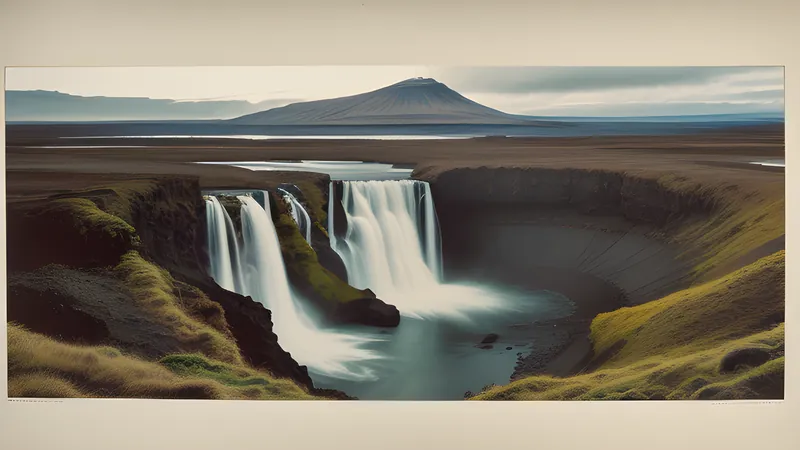
The flag flies everywhere: a white-fimbriated red Nordic cross on a blue field, blue for the sea and sky, white for the snow and ice, red for the island’s volcanic fire. The design was not officially adopted as the national flag until 1944, the same year as independence, so the banner and the republic share a birthday. Statues of Jón Sigurðsson, especially the one facing the parliament building on Austurvöllur square in Reykjavík, become focal points for wreaths and tributes, and it is in front of that statue that the formal speeches are often given. The Fjallkona embodies the land as a guardian figure, and behind all of it stands the real landscape of glaciers, volcanoes and waterfalls that gives the celebration its backdrop.
Iceland among the Nordic nations
National Day places Iceland within a wider Nordic pattern of midsummer celebration, flags and communal gathering, yet its particular flavour is bound up with its remoteness and its outsized cultural achievements. Unlike Norway’s Constitution Day on 17 May, which Icelanders sometimes echo in their own street processions, Iceland’s day marks not a constitution but a full break with the crown, a distinction that gives 17 June a sharper edge of self-determination. The day also reaches back into Iceland’s own calendar of heritage observances. The same pride in language and the medieval sagas that animates 17 June surfaces in deep winter at the midwinter feast of Icelandic Thorrablot, where communities eat the preserved foods of their ancestors. Both occasions, summer and winter, turn on the same conviction: that a small, scattered people held together through their words. That conviction connects naturally to the wider celebration of linguistic heritage marked on International Mother Language Day, a cause Icelanders, fierce guardians of their tongue, take particularly to heart.
Fun facts
- The republic was declared at Þingvellir in driving rain, and the bad weather of 17 June 1944 has become a fond part of the national memory, with Icelanders half-joking that rain on National Day is only appropriate.
- The 1944 referendum passed with 98.4 per cent in favour and just 377 votes against, one of the most lopsided results in the history of national self-determination.
- The Icelandic language has changed so little over the centuries that modern Icelanders can read the medieval sagas, written around 800 years ago, with relative ease.
- The Alþingi, founded at Þingvellir around the year 930, is often called the oldest surviving parliament in the world, predating England’s by centuries.
- Because the date sits near the solstice, National Day is celebrated under the “midnight sun”, when the sky never fully darkens and the festivities can carry on through what passes for night.
A closing reflection
It is telling that Iceland dates its statehood not to a battle or a revolution but to a scholar’s birthday and a rain-lashed reading of poetry on an ancient assembly ground. The independence Icelanders mark on 17 June was won less by force than by argument, archive and stubborn cultural memory, the long insistence that a people who could still read their own thousand-year-old stories had a claim to govern themselves. The Lady of the Mountain reciting verse in the rain is not a quaint flourish on the day; she is the whole point of it.
Related Content