Holi
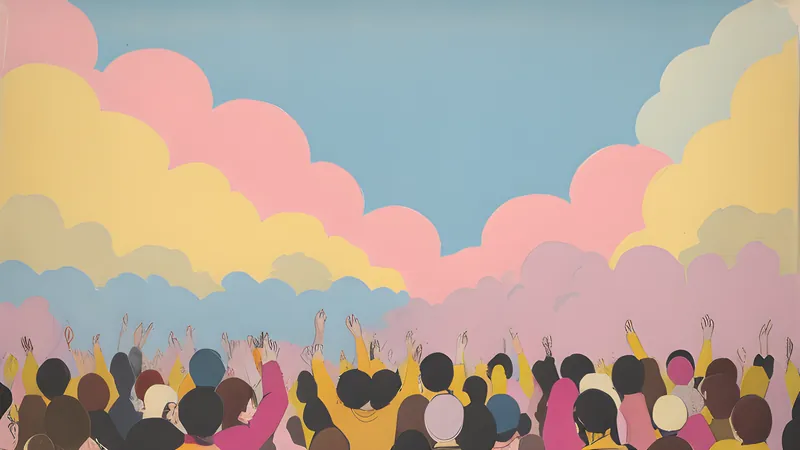
On the full-moon day of the Hindu month of Phalguna, which falls in late February or March, the streets of towns across northern India vanish under clouds of coloured powder. Strangers smear crimson, green and gold across each other’s faces, water balloons fly from rooftops, and the ordinary rules of caste, age and status are suspended for a day of licensed chaos. This is Holi, the festival of colours, one of the oldest and most exuberant celebrations in Hinduism. It marks the arrival of spring and the triumph of good over evil, and it is bound up with a cluster of legends — a fireproof demoness who burned, a blue-skinned god who was shy of a fair-skinned girl, and a devotee whose faith survived every attempt to kill him.
Why the Date Moves
Holi is fixed to the Hindu lunisolar calendar rather than the Gregorian one, which is why it drifts through late winter and early spring. It falls on the full moon, or purnima, of the month of Phalguna, the last month of the traditional Hindu year, placing it most often in March and occasionally in the closing days of February. Because the Hindu calendar reconciles lunar months with the solar year by periodically inserting a leap month, the Gregorian date shifts from year to year but stays anchored to the same seasonal moment, the cusp between winter and spring.
The festival runs across two days. The evening of the full moon brings Holika Dahan, when bonfires are lit, and the following morning brings the riotous play of colours known as Rangwali Holi or, in some regions, Dhulandi. In parts of the country the celebration stretches over many more days, most famously in the Braj region around Mathura and Vrindavan, where the god Krishna is said to have grown up.
The Legends Beneath It
The festival’s name and its opening bonfire come from the story of Holika, and it is one of the oldest surviving tales attached to the day. A tyrant king, Hiranyakashipu, had won a boon that made him almost impossible to kill and demanded worship as a god. His own son, Prahlada, refused and remained devoted to the god Vishnu. Enraged, the king ordered his son destroyed, and his sister Holika, who possessed a cloak or boon that made her immune to fire, sat in a blaze with the boy on her lap to burn him alive. The plan reversed itself: the protection failed her and passed to the faithful Prahlada, so that Holika burned and the boy walked out unharmed. The bonfires of Holika Dahan re-enact her destruction and the survival of devotion, and Vishnu himself is said to have finished the tyrant off in his fearsome man-lion form, Narasimha.
The colours belong to a gentler legend, that of Krishna. As a baby Krishna was poisoned by the demoness Putana and his skin turned dark blue, and growing up he fretted that the fair-skinned cowherd girl Radha, and the other gopis, would never love someone so differently coloured. His mother Yashoda, half teasing, told him to go and colour Radha’s face whatever shade he pleased. He did, the playful daubing became mutual, and the drenching of loved ones in colour became the festival’s signature act. This is why the Braj country of Krishna’s boyhood keeps the most elaborate Holi of all, including the Lathmar Holi of the village of Barsana, where women drive the men off with long sticks in a boisterous ritual battle.
The Deep History
Holi is genuinely ancient. It is mentioned in Sanskrit texts including the Puranas and appears in the poetry and drama of classical India; the seventh-century emperor and playwright Harsha refers to it, and the great Sanskrit poet Kalidasa describes spring festivities of the kind. A stone inscription from Ramgarh in the state of Vindhya Pradesh, dated to the centuries before the common era, is often cited as an early reference. By the medieval period the festival was firmly established across the subcontinent and was recorded, sometimes with astonishment, by foreign visitors.
The Mughal court embraced it with enthusiasm despite being Muslim. The emperor Akbar, who reigned from 1556 to 1605, is recorded celebrating Holi, and later emperors kept it up. Jahangir is described playing Holi at court, and the pleasure-loving Bahadur Shah Zafar, the last Mughal emperor, wrote verses about the festival in the nineteenth century, when the day at the Red Fort in Delhi was known as Eid-e-gulaabi, the pink festival, for the coloured water sprayed from silver syringes. Miniature paintings from Mughal and Rajput workshops show princes and gods alike drenched in colour, evidence of how thoroughly the festival crossed courtly and religious lines.
How It Is Celebrated
The night before, communities gather around bonfires for Holika Dahan, often circling the flames, offering grains and coconuts, and in some places roasting food in the embers to carry home. The next morning the restraint ends. People pour into the streets armed with gulal, the dry coloured powders, and with water — in pumps, balloons, buckets and the water guns called pichkaris. No one is exempt; the whole point is that on this one day everyone is fair game, and social barriers dissolve in the general dousing. Groups move from house to house, faces daubed beyond recognition, and the greeting “Bura na mano, Holi hai” — “don’t take offence, it’s Holi” — licenses the mischief.
Food is central. The fried pastry gujiya, stuffed with sweetened milk solids and nuts, is the festival’s signature sweet, and households prepare malpua, dahi bhalla and mountains of savoury snacks. The drink of the day is thandai, a cold, spiced milk sometimes prepared with bhang, a preparation of cannabis with a long ritual association with the god Shiva, though this is far from universal and increasingly restricted. Music, drums and dancing carry the celebration through the day, and by evening, scrubbed more or less clean, people visit friends and relatives to exchange sweets and repair any quarrels, for Holi is also a day for mending relationships and forgiving debts.
The Braj country around Mathura and Vrindavan, Krishna’s boyhood landscape, keeps the longest and most elaborate Holi of all, stretching over more than a week. Beyond the stick-battle at Barsana, the temples of Vrindavan and Nandgaon hold their own celebrated colour-play, and at the Banke Bihari temple the deity is doused in gulal alongside the worshippers. Widows in Vrindavan, long forbidden by custom from taking part in colourful festivities, have in recent years been brought back into the celebration in a deliberate and much-photographed reversal of that old exclusion. Elsewhere the emphasis shifts: in the Kumaon hills of Uttarakhand, Holi is above all a musical festival, with classical baithaki songs sung in gatherings through the fortnight before the colours fly.
Beyond the Heartland
Holi is strongest in northern and eastern India and in Nepal, but it travels widely. In West Bengal and among followers of the reformer Chaitanya it is kept as Dol Jatra or Dol Purnima, with images of Krishna and Radha carried in swinging palanquins. In the diaspora it has become one of the most visible Hindu festivals abroad, celebrated with public colour-throwing events in Britain, the United States, the Caribbean nations of Trinidad, Guyana and Suriname, Fiji, Mauritius and South Africa, wherever the descendants of indentured labourers and later migrants carried it. The secular “colour run” races now popular around the world borrow directly from Holi’s clouds of powder, usually without the legends attached.
Fun Facts
The coloured powders were traditionally made from natural sources — flame-of-the-forest blossoms for orange, turmeric for yellow, indigo for blue — though cheap synthetic dyes, some of them harmful, later took over, prompting a modern revival of herbal colours. Holi is a national holiday in India and Nepal and an official one in Suriname and parts of the Caribbean. In the town of Barsana, the Lathmar Holi stick-battle between the women of Barsana and the men of nearby Nandgaon draws crowds from across the country and predates any modern staging by centuries. And the festival’s association with cannabis-laced thandai is old enough that the drink features in accounts going back generations, tied to Shiva’s own legendary fondness for bhang.
A Closing Reflection
There is a quiet radicalism in a day when a servant may fling powder in a landlord’s face and be thanked for it. Holi’s suspension of hierarchy is not incidental decoration around a spring rite; it is the point. For one day the ordinary machinery of who outranks whom is switched off, and a society famously conscious of rank agrees to forget it. That the festival remembers Prahlada’s defiance of a tyrant and Holika’s fiery comeuppance only sharpens the message: the powerful do not always win, and the meek are worth protecting. Like Diwali, which lights the darker half of the year, and Lunar New Year with its sweeping-out of the old, Holi uses the turn of a season to argue that the world can be renewed — and, for a few hours under the coloured dust, that everyone stands level.
Related Content


