Hanukkah
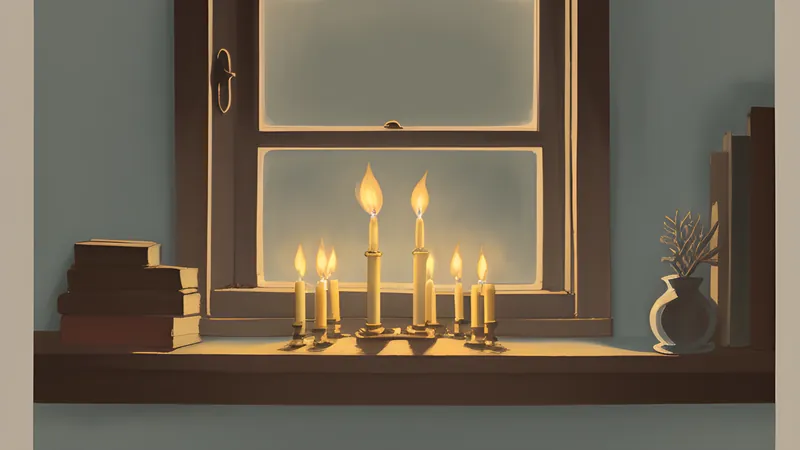
In 164 BCE, a band of Jewish rebels led by Judah Maccabee retook the Temple in Jerusalem from the forces of the Seleucid king Antiochus IV, and set about cleansing a sanctuary that had been deliberately desecrated — its altar defiled, a statue of Zeus installed, and the practice of Judaism outlawed on pain of death. The rededication of that Temple, and the eight-day festival the rebels then proclaimed, is what Jews around the world still celebrate as Hanukkah, the “Festival of Lights”. Beginning on the twenty-fifth day of the Hebrew month of Kislev and running for eight nights, it is marked above all by the kindling of a candle each evening on a special nine-branched lamp, so that a single flame on the first night grows to a blaze of eight by the last.
Why the Date Moves
Hanukkah always begins on 25 Kislev in the Hebrew calendar, but the Hebrew calendar is lunisolar, and its months do not line up with the Gregorian ones. Kislev falls in late autumn, so the festival’s civil date drifts across late November and December from year to year — sometimes overlapping with Christmas, occasionally arriving as early as before American Thanksgiving, a rare alignment nicknamed “Thanksgivukkah” when it happened in 2013. The Hebrew calendar keeps its festivals in their proper seasons by inserting an entire extra month seven times in every nineteen-year cycle, which is why the same fixed Hebrew date can wander through several weeks of the Gregorian year. The representative date given here stands in for a start that must be recalculated against the Hebrew calendar annually, much as the dates of Easter Sunday, Diwali and Vesak shift with their own lunar reckonings.
Where the Day Comes From — the Maccabean Revolt
Hanukkah is one of the few Jewish festivals commemorating an event securely datable by ordinary history rather than by scripture alone. In the second century BCE, the land of Judea lay under the Seleucid Empire, one of the successor kingdoms carved out of Alexander the Great’s conquests. Around 175 BCE the throne passed to Antiochus IV, who styled himself Epiphanes, “God made manifest”. For reasons still debated by historians — a mix of imperial politics, a grab for the Temple’s treasury, and factional strife among the Jews themselves — Antiochus moved to suppress Jewish religious practice. He banned circumcision, the Sabbath and the reading of the Torah, plundered the Temple, and had it rededicated to the Greek god Zeus, sacrificing pigs upon its altar.
The revolt began, according to the account, in the town of Modiin, when an elderly priest named Mattathias refused to make a pagan sacrifice and killed both the royal official and a Jew about to comply. He and his five sons fled to the hills and led a guerrilla war; after Mattathias died, leadership passed to his son Judah, nicknamed Maccabee, from a word often taken to mean “the hammer”. Against the odds, the rebels defeated far larger Seleucid armies, entered Jerusalem, and on 25 Kislev in 164 BCE cleansed and rededicated the Temple — hanukkah meaning, precisely, “dedication”. The story is preserved in the First and Second Books of Maccabees, works written close to the events and included in the Catholic and Orthodox Bibles though not in the Hebrew scriptures.
History and the Miracle of the Oil
The best-known explanation for the festival’s eight days — the miracle of the oil — appears nowhere in the Books of Maccabees, which attribute the eight-day length instead to a delayed celebration of the harvest festival of Sukkot, which the rebels had been unable to keep during the fighting. The famous legend surfaces several centuries later, in the Talmud. There it is told that when the Maccabees came to relight the Temple’s golden lampstand, the menorah, they found only a single small jar of consecrated olive oil bearing the seal of the high priest, enough to burn for one day — yet it burned for eight, long enough for a fresh supply to be prepared and sanctified.
Historians read this as a later rabbinic emphasis, shifting the festival’s meaning from a military and national victory toward a story of divine providence and the endurance of the light of faith. Both readings survive in the observance: Hanukkah celebrates a rare Jewish military triumph and religious freedom won by force, and it celebrates a miracle of light. The tension between the two — the hammer and the little jar of oil — runs through the festival’s whole history and into its modern meanings.
Why It Matters
In the strict ranking of the Jewish calendar, Hanukkah is a minor festival: it is not one of the biblically ordained holy days, work is permitted throughout, and its liturgical demands are light. Yet it has grown into one of the most widely observed and best known of Jewish holidays, and its themes have unusual reach. At its heart is religious freedom — the right of a people to keep their own faith against an empire determined to erase it — which has made Hanukkah resonate far beyond its origins, and given it a place in the modern Jewish story as a festival of survival and identity.
Its prominence in the English-speaking world owes something to the calendar. Because it falls near Christmas, Hanukkah has, particularly in North America, taken on a larger public role than its religious rank alone would grant, becoming a season of gift-giving and of visible Jewish presence in a wider culture. That elevation is a modern development, and some observers regret the way proximity to Christmas has reshaped it; but the festival’s core — the growing light against the longest nights of the year — needs no borrowing to explain its appeal.
How It Is Celebrated
The central act of Hanukkah is the lighting of the hanukkiah, the nine-branched lamp often loosely called a menorah. Eight of its branches stand for the eight nights; the ninth, usually set apart or raised, holds the shamash, the “servant” candle used to light the others. On the first night one candle is kindled, on the second two, and so on, until on the eighth all eight blaze together, the flames added from right to left but lit from left to right. Blessings are recited, and the lamp is placed in a window or doorway so that its light is seen from outside — the tradition speaks of “publicising the miracle”.
Because the miracle turns on oil, food fried in oil is the festival’s culinary signature. In eastern European tradition the emblem dish is the latke, a fried potato pancake served with apple sauce or sour cream; in Israel it is the sufganiyah, a jam-filled doughnut, eaten by the million in the weeks around the holiday. Children play with the dreidel, a four-sided spinning top marked with the Hebrew letters nun, gimel, hey and shin — an acronym for “a great miracle happened there” — gambling for small coins or chocolate coins called gelt. Gift-giving, especially to children, has become widespread, most strongly where the festival sits close to Christmas.
Variations Across the World
The festival’s foods trace the map of the Jewish diaspora. Ashkenazi Jews of northern and eastern Europe gave the world the potato latke; Sephardi and Mizrahi communities fry their own oil-rich sweets and pastries, from the Italian-Jewish fritters to the syrup-soaked treats of North Africa and the Middle East. In Israel, Hanukkah is a national season: the giant hanukkiah is lit at public sites, torch-relay runs carry a flame from Modiin — the Maccabees’ own town — to Jerusalem, and the doughnut becomes briefly a staple of every bakery. In the United States, the National Menorah has been lit near the White House each year since 1979, and enormous public hanukkiahs now stand in city squares across the world, an assertion of the festival’s old instruction to let the light be seen.
Symbols and Their Meaning
The hanukkiah is Hanukkah’s defining object, the growing row of flames enacting the festival’s theme of light increasing against the dark — and the shamash, the humble servant candle that lights all the rest yet keeps its own place, carries a quiet lesson of its own. The single jar of oil stands for endurance, sufficiency and the faith that a little, rightly kept, can outlast expectation. The dreidel, tradition holds, recalls a time when Jews forbidden to study the Torah would keep a spinning top to hand, ready to feign a game if soldiers approached — turning a child’s toy into a memory of persecution outwitted. The eight days themselves have become a symbol, a stretch of celebration long enough to hold both the victory and the miracle.
Fun Facts
- The miracle of the oil appears nowhere in the earliest sources; the Books of Maccabees explain the eight days as a delayed harvest festival, and the famous one-jar legend is first recorded centuries later in the Talmud.
- Hanukkah is a minor festival in Jewish law — work is fully permitted throughout — yet it has become one of the most recognised Jewish holidays in the world, largely because of its nearness to Christmas.
- The letters on the dreidel — nun, gimel, hey, shin — spell out Nes Gadol Hayah Sham, “a great miracle happened there”; in Israel the last letter is changed to pey, so it reads “a great miracle happened here”.
- “Thanksgivukkah”, the overlap of Hanukkah’s first day with the American Thanksgiving, occurred in 2013 and, by one calculation, will not recur for tens of thousands of years, given the slow drift between the two calendars.
- The festival celebrates a military victory won by force of arms, making it unusual among Jewish holidays — a fact that gave it particular resonance for the early Zionist movement, which prized the Maccabees as a model of Jewish self-defence.
A Closing Reflection
Hanukkah holds two stories in one hand and refuses to choose between them. One is a story of the hammer — a small people taking up arms against an empire and winning back the right to be themselves. The other is a story of the jar — a scrap of oil that should have lasted a day and lasted eight, a quiet sign that faith is provided for beyond its own resources. A festival could have been built on either alone, and each would have made sense. That Hanukkah keeps both, and lights the same candles for both, may be the truest thing about it: the long midwinter dark is met with a growing row of small flames, added one a night, until the window is full of light.
Related Content