Handwriting day
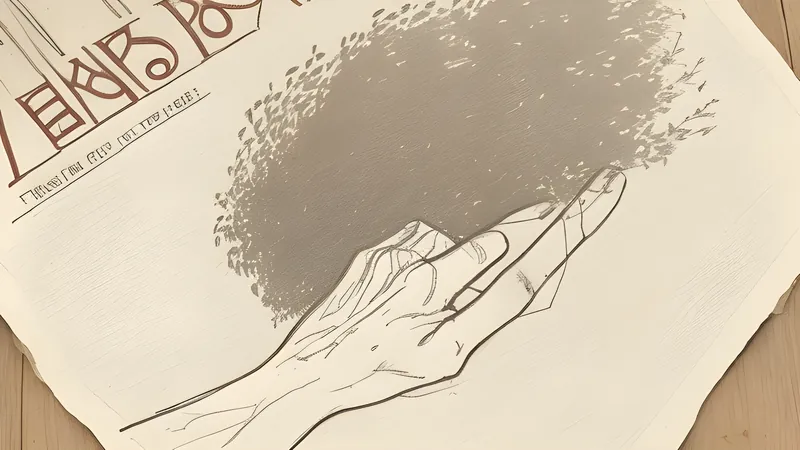
In 1977, a trade body called the Writing Instrument Manufacturers Association, worried that the typewriter and the telephone were quietly killing off its market, picked a date on which Americans might be persuaded to pick up a pen again. They chose 23 January, the birthday of John Hancock, the Massachusetts merchant whose signature on the Declaration of Independence in 1776 was so large and so flamboyant that “to put your John Hancock” on something has meant to sign your name in American English ever since. From that frankly commercial beginning, National Handwriting Day has grown into a yearly nudge to remember what is lost when every word we exchange is typed.
The day celebrates penmanship: the act of forming letters by hand, the loops of cursive, the deliberate strokes of a fountain pen, and the small, irreplaceable evidence of a particular person that a handwritten page carries. It is not a plea to abandon screens but an invitation to set one down for an afternoon and write something the slow way.
Who started it, and why 23 January
The Writing Instrument Manufacturers Association, an American industry group founded to represent makers of pens, pencils and markers, launched National Handwriting Day in 1977. The motive was unashamedly to sell more pens, yet the date was chosen with some care. Hancock, born on 23 January 1737, served as president of the Second Continental Congress and was the first delegate to sign the engrossed Declaration. Legend has it he signed boldly so that King George III could read it without his spectacles; the story is almost certainly embroidered, but the signature itself is genuinely enormous, and it fixed his name in the language.
Decades on, the association still promotes the day, though its tone has shifted. What began as a marketing exercise now reads more like a quiet rearguard action on behalf of cursive in schools and the handwritten letter at home, at a time when both are in retreat.
A short history of writing by hand
Handwriting is among the most consequential things our species ever devised. The earliest scripts, Mesopotamian cuneiform pressed into wet clay and Egyptian hieroglyphs carved and painted on stone and papyrus, appeared more than five thousand years ago and let people record harvests, debts, laws and prayers for the first time. From those beginnings, alphabets multiplied. The Phoenicians spread a compact consonantal alphabet around the Mediterranean; the Greeks added vowels; and the Romans handed the Western world the Latin letters you are reading now.
Through the medieval centuries, monks in scriptoria copied every book by hand, and the script itself evolved. The tangled hands of the early Middle Ages gave way, under the patronage of Charlemagne around 800, to Carolingian minuscule, a clear, rounded script with spaces between words and recognisable lower-case letters; it is the ancestor of most modern Roman typefaces. When Johannes Gutenberg’s printing press arrived in the 1450s, it did not abolish handwriting so much as change its job. Print took over books; the pen kept letters, ledgers and ornament. Copperplate, the looping engraver’s hand, and the chancery italic of the Italian Renaissance flourished in correspondence and record-keeping, and for generations a “good hand” was a mark of education and a route to clerical employment.
Why it still matters
There is a practical case and a sentimental one, and both hold. On the practical side, research into how children learn has repeatedly found that writing letters by hand, rather than typing them, helps young learners recognise and remember those letters more reliably. Forming a shape with your own hand engages motor planning, vision and memory together in a way that tapping a uniform key does not, and studies of note-taking among older students suggest that writing notes longhand, because it is slower, forces a kind of summarising that aids recall.
The sentimental case is just as real. A typed message is identical whoever sends it; a handwritten one is unmistakably the product of a single hand on a single day. That is why a condolence card, a love letter or a recipe in a grandparent’s writing carries a weight that no email matches. It is also why a signature still means something: the whole reason Hancock’s name became a byword was that a personal mark on a document is treated as a binding act of will, the same principle that makes a hand-marked ballot the foundation of an event like India National Voters’ Day. Handwriting also preserves access to the past: archives of letters, diaries and manuscripts can only be read by people who can decipher older hands, which is why palaeography, the study of historical scripts, remains a working discipline for historians.
How the day is marked
The celebrations are deliberately modest and accessible. The classic gesture is to use 23 January to write an actual letter to a friend or relative and post it. Others dust off a fountain pen, mix a new bottle of ink, or try their hand at calligraphy and lettering. Schools sometimes run penmanship lessons or competitions, and stationery shops and craft groups host workshops in italic, brush lettering and hand-bound notebooks. Reviving the pen pal, especially across generations, is a recurring theme.
Because the day is bound up with self-expression and unhurried attention, it sits comfortably beside observances that ask people to slow down and look after their minds. The quiet, reflective focus of putting pen to paper has been linked by some therapists to lower stress, which gives the day a gentle overlap with wellbeing campaigns such as World Suicide Prevention Day, where the simple act of writing to someone, or journaling for oneself, can be more than a hobby.
Variations and curiosities of script
Handwriting is not one thing but a whole family of practices that differ by language and culture. East Asian calligraphy, written with a brush and ink, is treated as a fine art on a par with painting, and a single character may be rendered in radically different styles. Arabic script, written right to left and prized for its flowing forms, gave rise to some of the most elaborate calligraphic traditions in the world precisely because figurative images were often avoided in religious contexts. The pointed-pen copperplate of the West and the broad-nib styles of medieval Europe each demand their own tools and posture. Even the modern signature, a personal flourish that need not spell anything legibly, is a tiny surviving piece of this older world, and it still carries particular legal force.
The decline, and the quiet pushback
The anxiety that birthed the day in 1977 has only sharpened. In the United States, the Common Core education standards introduced from 2010 did not require cursive instruction at all, and many schools dropped it; a string of states, including California, Texas and others, have since passed laws putting it back into the curriculum, an unusually direct legislative argument about whether children should be taught to join their letters. In England, by contrast, the national curriculum has long expected pupils to develop a “fluent, joined” hand, and handwriting remains a marked part of early schooling.
Meanwhile, some of the romance has migrated into hobby and craft. The fountain pen, written off as obsolete in the age of the biro, has enjoyed a steady revival among enthusiasts who prize the feel of a flexible nib and the range of shading inks. Modern calligraphy and “hand-lettering” have found huge audiences online, where slowing down to form a single beautiful line is offered as an antidote to the speed of everything else. National Handwriting Day now sits at the meeting point of these currents: part nostalgia, part educational argument, part craft revival, all of it circling the same stubborn fact that a handwritten line carries information a keyboard cannot.
Fun facts
- The phrase “John Hancock”, meaning a signature, comes directly from the 23 January birthday boy; his autograph on the Declaration measures nearly five inches wide.
- The fear of writing has a name, graphophobia, and a related dread of writing in front of others, scriptophobia.
- Graphology, the attempt to read personality from handwriting, is widely dismissed by scientists as pseudoscience, yet it was used by some European employers well into the twentieth century to screen job applicants.
- Carolingian minuscule, the script standardised under Charlemagne around the year 800, is the reason we have lower-case letters and spaces between words at all.
- The Declaration of Independence that Hancock signed was hand-engrossed on parchment by a single clerk, Timothy Matlack, in an elegant round hand.
Tools of the trade
The history of handwriting is partly a history of its instruments. For most of recorded time the dominant Western writing tool was the quill, a flight feather (usually goose) cut to a point and slit to channel ink, which demanded constant re-cutting with a small “pen-knife” — the origin of that word. The metal nib, mass-produced in Birmingham from the 1820s and 1830s by makers such as Joseph Gillott and Josiah Mason, made the city the centre of the world’s pen trade and put a cheap, durable writing point in millions of hands. The fountain pen, with its self-contained ink reservoir, was perfected by Lewis Waterman in the 1880s, and the ballpoint, patented by the Hungarian journalist László Bíró in 1938 and produced at scale after the Second World War, finally freed writers from the inkwell altogether. Each new tool changed not just the convenience of writing but the shape of the script people produced with it.
A closing reflection
A date invented to sell pens has outlived its own sales pitch, which tells you something about what people quietly value. We did not keep handwriting because it is efficient; by almost every measure it is not. We kept it because a line of script is a fossil of a moment, the speed of a hand, the press of a mood, a person caught mid-thought. Type erases all of that in the name of clarity, and clarity is worth a great deal. But once a year it is worth remembering that the messy, slanting, imperfect line you leave on a page is, in the most literal sense, you, and that no font has ever managed to be anyone.
Related Content


