Gingerbread House Day
In 1812, the Brothers Grimm published a tale about two abandoned children who stumble through a dark forest and find a cottage made of bread, with a roof of cake and windows of clear sugar. Hansel and Gretel gave Europe an image it could not shake: a house you could eat. Within a few years, German bakers in the gingerbread towns of Nuremberg and beyond were turning that image into reality, building and decorating small houses of spiced lebkuchen. Two centuries later, on 12 December each year, that craft has its own day. Gingerbread House Day celebrates a confection that is part biscuit, part architecture and entirely a creature of midwinter.
Where the day comes from
Gingerbread House Day, fixed on 12 December, is a modern observance, and like many food-themed days its precise founding is not well documented. No committee minutes or founding proclamation survive to tell us who first marked it or why that particular date was chosen. What the day does well is give a name and a slot in the calendar to something families across Europe and North America were already doing in the weeks before Christmas. The gingerbread house itself, by contrast, has a long and traceable history, and the day leans on that older story for its meaning.
A history older than the day
Gingerbread as a spiced, sweetened cake or biscuit has been baked across Europe since the Middle Ages. Medieval monks and guild bakers were making ginger-spiced cakes and cookies for religious festivals as early as the fifteenth century, and dedicated gingerbread guilds eventually formed in towns such as Nuremberg, which became famous for its lebkuchen. These early gingerbreads were often pressed into carved wooden moulds to form figures, hearts and decorative shapes, sometimes gilded or painted.
The decorated house is a more specific, and more recent, development. The tradition of building ornamented gingerbread houses took hold in Germany in the early nineteenth century, and its surge in popularity is tied directly to the Grimms. When Hansel and Gretel appeared in their 1812 collection of folk tales, the witch’s edible cottage captured the public imagination, and German bakers began producing fairy-tale houses of lebkuchen, hiring artists and craftsmen to decorate them with icing and sweets. Whether the story inspired the houses or simply gave a name to something already emerging is a genuine chicken-and-egg question, but the two have been entwined ever since. German immigrants, particularly the Pennsylvania Dutch, carried the custom across the Atlantic, and it became a fixture of the American Christmas.
Why it matters
The gingerbread house occupies an unusual place in the kitchen: it is a piece of food that is constructed as much as cooked. That changes the nature of the activity. Where most baking ends at the oven door, a gingerbread house only begins there — the real work is assembly and decoration, which demands patience, a steady hand and a tolerance for collapse. Crooked walls, sliding roofs and the occasional total structural failure are part of the experience rather than a sign of having done it wrong.
That tolerance for imperfection is much of the point. The day celebrates a hands-on, collaborative tradition at exactly the time of year when people are most inclined to gather indoors against the cold. It also keeps a centuries-old European craft alive in ordinary homes, linking a modern kitchen table strewn with sweets and icing to the guild bakers of medieval Nuremberg.
How it is celebrated
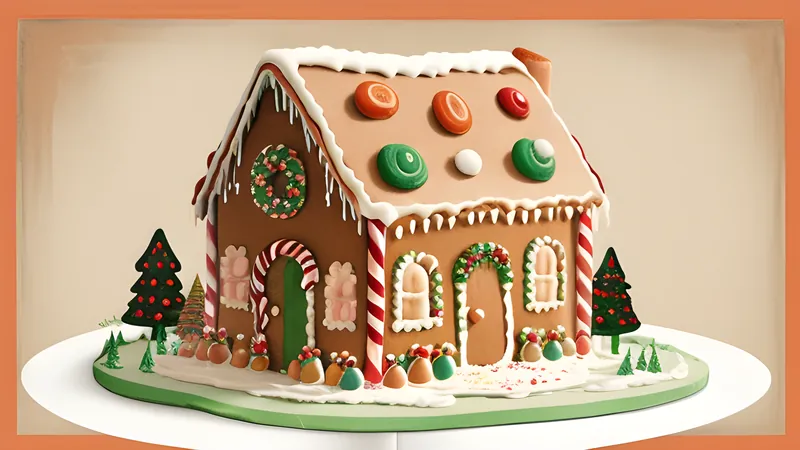
The day is marked by doing. Builders either bake the components from scratch — rolling and cutting spiced dough into walls and roof panels, then baking them firm — or start from a kit. The pieces are joined with stiff royal icing, which dries hard and acts as edible mortar; getting the walls to stand long enough to set is the first real test. Then comes the decorating, which is the joyful heart of it: piped snow along the eaves, sweets pressed into the icing, frosted trees, and sometimes panes of “glass” made by melting boiled sweets and letting them set in the window openings. Schools, families and community groups host building sessions, while bakeries and competitions show off creations of astonishing intricacy.
The day also sits within a wider December calendar of festive food, alongside observances such as US National Gingerbread Day, which honours the spiced biscuit in all its forms rather than the house specifically. The kinship is obvious: one celebrates the material, the other what you build from it.
Around the world
Decorated gingerbread takes different forms across cultures. In Scandinavia, thin and crisp pepparkakor are baked, sometimes assembled into houses and sometimes hung on the tree as ornaments; Bergen in Norway has hosted a vast communal gingerbread town, the Pepperkakebyen, built each year from hundreds of contributions. Central and Eastern European traditions feature their own honey-spiced gingerbreads, often elaborately iced, as with the Czech and Polish styles. In North America the gingerbread house has become a firmly established Christmas project, complete with public displays and fierce competitions. The shared pleasure beneath all these variations is the same: turning spiced dough and sugar into a small, edible work of art. The festive instinct to build with food rather than simply eat it is not so different from the careful craft behind a good extra virgin olive oil — both are reminders that even staples can become objects of pride and artistry.
The craft behind a house that stands up
For all its whimsy, a gingerbread house is a small engineering problem, and the people who build the spectacular ones treat it as such. The dough itself is formulated differently from a soft, eatable gingerbread: construction gingerbread is rolled thicker and baked longer and drier so the panels are rigid and will bear weight without bowing. Builders often cut their templates from card first, the way a carpenter would, and some bake the panels a day ahead so they can dry and harden fully before assembly begins.
The mortar matters even more than the walls. Royal icing — egg white whisked with icing sugar until stiff — is the standard adhesive because it sets rock-hard and dries opaque white, but it sets slowly, which is why first-time builders so often watch a roof slide gently off its walls. Professionals and competition entrants sometimes cheat with melted, caramelised sugar, which grabs almost instantly and holds like cement, at the cost of burnt fingers. The translucent windows that make the best houses glow are made by crushing boiled sweets, filling the window openings before baking, and letting the sugar melt and re-set clear in the oven. None of this is strictly necessary for an afternoon’s fun with the children, but it is why the showpiece houses in hotel lobbies and competitions can rise into genuine miniature architecture rather than collapsing heaps of biscuit.
Traditions and symbols
The classic gingerbread house — snow-capped roof, gumdrop path, glowing windows — is the unmistakable emblem of the day. Royal icing serves double duty as glue and as decoration, piped into icicles and lattices. The spices give the biscuit its character: ginger above all, joined by cinnamon, cloves and nutmeg, filling a kitchen with the smell most people associate with the season. The whole creation is a small enactment of the midwinter mood, a snug, lit-up little home built in miniature against the dark and cold outside.
Fun facts
- The largest gingerbread house ever recorded was built at the Traditions Club in Bryan, Texas, in 2013. It stretched 60 feet long, 42 feet wide and over 10 feet tall, and consumed roughly 7,200 pounds of flour, 7,200 eggs and more than 22,000 pieces of sweets.
- That Texas record-breaker was not just for show: visitors paid a donation to meet Santa inside it, raising money to help build a new trauma centre at a local hospital.
- The Grimms’ witch’s cottage in the 1812 Hansel and Gretel was originally described as made of bread, with cake and sugar trimmings — the all-gingerbread version is a later refinement of the image.
- Nuremberg’s reputation for lebkuchen is old enough that the city’s gingerbread bakers had their own guild, and the town remains so associated with the craft that its lebkuchen carries protected status under EU law.
- Melting boiled sweets into translucent “glass” for the windows is a genuine baker’s trick, not just a decorative idea — the sugar liquefies and re-sets clear in the oven.
A closing reflection
There is something quietly defiant about spending an afternoon building a house that is fragile, beautiful and explicitly meant to be destroyed and eaten. The gingerbread house resists the modern instinct to make things efficiently and keep them; it rewards slowness, accepts collapse and ends in crumbs. The leaning wall, the sticky fingers, the argument over where the gumdrops go — these are not flaws in the project but the whole of it. Long after the biscuit is gone, what tends to survive is the memory of having made it together, which may be the most durable thing a structure of sugar and spice could ever produce.
Related Content