Fruitcake Toss Day
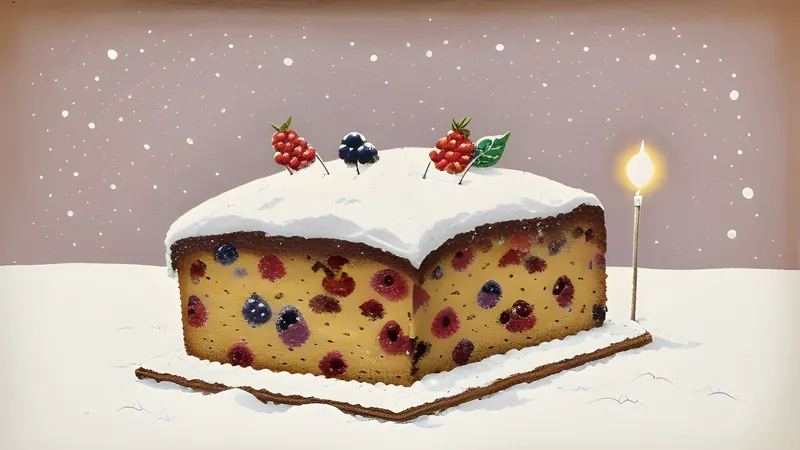
Sometime in the mid-1990s, a handful of residents of Manitou Springs, Colorado, were nursing drinks at a bar called the Ancient Mariner and complaining, as people do in early January, about the fruitcakes they had been given for Christmas. Nobody wanted to eat them. After a few rounds, the grumble curdled into an idea, and the group trooped out into a nearby park to fling the offending loaves as far as they could. That cheerfully petty act of revenge against an unwanted gift grew into the Great Fruitcake Toss, and it is the spiritual heart of Fruitcake Toss Day, observed each 3 January, when the dense, candied survivors of the holidays are launched, hurled, catapulted and flung for the sheer absurd joy of it.
Where the day comes from
The Manitou Springs event began in earnest in 1996, with the first toss reportedly held on 3 January of that year, which is almost certainly why the date stuck to the observance. The timing is no accident either. Early January is the precise moment when leftover fruitcake reaches peak supply and minimum demand: gifted in good faith over Christmas, declined politely at every meal since, and now cluttering the kitchen counter with no plausible future. A field and a strong arm offered a solution.
What turned a private joke into a public ritual was the fruitcake’s long-running reputation as the gift nobody loves. The American comedian Johnny Carson built a recurring bit around it on television, joking that there was really only one fruitcake in the entire world, endlessly regifted from household to household and never actually eaten. The image of a single immortal cake, forever in circulation, gave the whole gag its shape and its staying power. By the time the people of Manitou Springs walked into that park, the cultural groundwork had been laid for decades.
How the toss grew up
The Manitou Springs event did not stay a back-of-the-bar lark for long. The town adopted it, partly as a way to draw visitors into the downtown shops during the dead weeks after the holidays, and it acquired the trappings of a proper festival: marked landing zones, distance categories, and an escalating arms race of launching equipment. Bare hands gave way to slingshots, slingshots to trebuchets, and trebuchets to pneumatic air cannons capable of sending a fruitcake an extraordinary distance across the open ground.
That escalation had consequences. At one point an air cannon launched a fruitcake clean into the window of a nearby home, which is roughly the moment a quirky community event learns it needs a safer venue. The toss was relocated and carried on, and by the late 2010s it had run for well over two decades, a small-town institution that began with nothing more than mild seasonal resentment and a few drinks. The precise route by which other towns and households adopted the 3 January date is, like most modern joke-holidays, undocumented, but the Manitou Springs original is the clear ancestor.
Why a silly day is worth keeping
Beneath the obvious comedy, the day does something quietly useful. The festive season leaves households overfed, overspent and a little frayed, and there is real catharsis in flinging a brick-shaped symbol of that excess across a frozen field. It is also, almost by accident, communal. The Manitou Springs toss pulls neighbours and families outdoors into the cold to laugh together at the same daft thing, which is no small feat in the flattest, greyest stretch of the calendar.
For a certain kind of person, the day is also an irresistible engineering brief. Building a trebuchet that can hurl a four-pound cake accurately is a genuine problem in physics and carpentry, and the toss gives backyard tinkerers a deadline and an audience. The result is a holiday that rewards both the person who simply wants to lob a cake over a fence and the one who spends December machining a counterweight.
How it is celebrated
At its simplest, the day needs nothing more than a leftover fruitcake, a willing arm and an open space. Two people, a tape measure and a bit of competitive spirit will do. More ambitious tossers build launchers, hold distance contests, and award prizes for the longest flight, the best aim, or the most ridiculous apparatus. Some events weigh and inspect the cakes beforehand, treating the projectile with mock solemnity. A gentler custom has caught on among the thoughtful: gathering the scattered crumbs afterwards and leaving them out for birds, so that the day’s one casualty at least feeds something.
The cake the rest of the world actually eats
Fruitcake Toss Day is a distinctly American joke, and it is worth remembering that the cake it mocks is, almost everywhere else, treasured rather than thrown. In Britain the rich, brandy-fed Christmas cake, layered with marzipan and royal icing, is a centrepiece, not a punchline. Italy has its panforte, a dense Sienese slab of honey, nuts and candied fruit with roots in the medieval city. Germany bakes stollen, the powdered-sugar loaf of Dresden. The Caribbean has its dark, rum-soaked black cake, served at weddings and Christmas alike. Against all of these, the tossing custom reads as a sly inversion: a celebration of the one version of the cake that nobody seems to want to finish.
If you enjoy days that take a maligned food and have a bit of fun at its expense, the same impulse runs through National Fruitcake Day, which earnestly defends the cake that the toss so cheerfully abuses. And the toss sits comfortably alongside other knowingly silly observances such as Talk Like a Pirate Day, a day whose entire premise is that absurdity, shared, is its own reward.
The strange durability of the projectile
Part of what makes the joke work is that the fruitcake is, genuinely, almost indestructible, and the science behind that is real rather than comic exaggeration. A traditional fruitcake is packed with sugar and dried fruit, both of which bind up the water that bacteria and mould need to grow, and it is frequently brushed or soaked with brandy, rum or other spirits, which act as a preservative and an antimicrobial. The result is a foodstuff that ages rather than spoils, sometimes for decades. America’s oldest known example, baked in 1878, has outlasted four generations of the family that keeps it, which is precisely why it makes such a satisfying object to hurl: a cake that refuses to rot is a cake that refuses to be thrown away politely, so it gets thrown literally instead.
That same density is what allows an air cannon to send one flying for hundreds of metres without it disintegrating in mid-air. A lighter, fresher cake would burst apart under the pressure; the fruitcake’s brick-like construction is the very thing that makes it both a poor dessert and an excellent missile. The day’s central joke, in other words, is built on a genuine quirk of food chemistry, which is a more honest foundation than most invented holidays can claim.
Symbols of the day
The fruitcake itself is the central emblem, dense and brick-like thanks to its load of sugar, dried fruit and frequent dousing in spirits, which also explains its near-supernatural shelf life. The catapult and the snowy launch field have become visual shorthand for the day, as has the tape measure stretched flat across the white ground. Hovering over all of it is Carson’s affectionate myth of the single, eternal fruitcake, forever passed along, forever uneaten, and now, on one morning a year, finally given something to do.
Fun facts
- The Manitou Springs toss had to find a new venue after a pneumatic cannon launched a fruitcake straight through the window of a nearby house.
- America’s oldest known fruitcake was baked in 1878 by Fidelia Ford and has been kept by her descendants ever since; well past its 140th year, it is treated as a family heirloom rather than food.
- That same heirloom cake travelled from Michigan to a Burbank television studio in 2003 so that Jay Leno could taste it on air; he reported it smelled good but had crystallised.
- The toss began not as a marketing idea but as a few drinkers at the Ancient Mariner deciding, on the spot, to go and throw their unwanted gifts into a park.
- Competition cakes fired by air cannon have travelled distances no human arm could ever match, turning a dessert into a genuine projectile.
A closing reflection
There is a particular kind of freedom in a day whose only point is that nothing about it matters very much. After weeks of obligation, careful gift-giving and meals that went on too long, a morning spent hurling an unwanted cake across a frozen field is a small, bracing reset. The fruitcake spends its entire existence being too dense, too sweet and too durable to enjoy. For one absurd morning in January, those exact qualities make it the perfect thing to throw, and the gift that nobody wanted finally finds the one purpose it was always strangely suited for.
Related Content