Finnish Juhannus
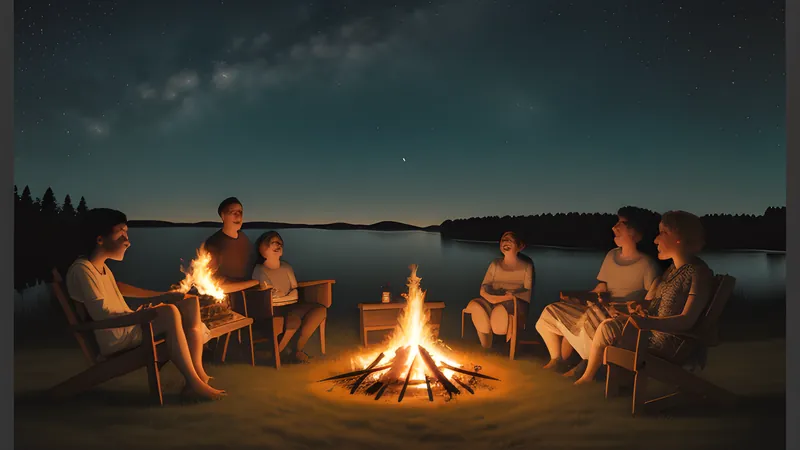
The oldest written account of a Finnish midsummer bonfire comes from Turku in 1645, but the fires it describes were already ancient by then. On the night of Juhannus, somewhere on a Finnish lakeshore, a tall stack of timber catches and throws its light across water that mirrors a sky which never fully darkens. This is the brightest weekend of the Finnish year, when the cities empty almost overnight and the country decamps to its summer cottages to mark the solstice with fire, sauna steam and the particular hush of a night that refuses to end. The day is named here as 24 June, the festival’s traditional fixed date; since 1955 the public holiday has floated to the Saturday between 20 and 26 June, with the eve, juhannusaatto, falling the day before.
A festival older than the saint it is named for
Juhannus long predates Christianity in Finland. In a country that reaches above the Arctic Circle, the summer solstice was the great pivot of the year — the peak of the light, after which the days begin their slow retreat towards another long winter. The pre-Christian celebration was called Ukon juhla, the feast of Ukko, the Finnish god of thunder, weather, sky and harvest. For people whose survival depended on agriculture, the rituals of the season aimed squarely at fertility, good crops and protection against misfortune in the months ahead.
The name “Juhannus” arrived with the Church. The Roman Catholic Church fixed the date of the festival to the Nativity of John the Baptist — Johannes Kastaja in Finnish — and dated that feast to 24 June, a placement settled in the Western calendar in the fourteenth century. The Christian name and saint settled over the older seasonal observance without ever displacing its essential character. The bonfires kept burning; only their official reason changed.
From farm calendar to summer cottage
For most of its history Juhannus was a rural, agrarian event, woven into the rhythms of farming. The kokko bonfire dominated the lake districts of the east and centre, lit on shores and islands where the flames doubled themselves in still water. In the coastal and western regions, where Finland’s long shared history with Sweden left a deeper mark, the custom leaned instead towards raising a decorated midsummer pole, closer to the Swedish midsommarstång.
Two changes made the modern holiday. In 1955 the date was formally shifted to a Saturday, guaranteeing a dependable long weekend rather than a feast that might land midweek. And across the twentieth century, as Finns moved into towns and cities, Juhannus became inseparable from the mökki — the summer cottage — and from the mass exodus out of the urban centres that now defines the whole occasion. The festival that once celebrated the farming year became the festival of escaping the desk for a few luminous days by the water.
There is a further layer to the day’s calendar. Juhannus is also Finland’s official Flag Day, the Suomen lipun päivä, a status it acquired in the twentieth century so that the midsummer holiday and the national flag honour one another. That pairing is why the flag treatment at Juhannus is unlike any other day in the Finnish year, and why the festival carries a faint patriotic charge beneath its overwhelmingly natural and domestic character. Light, fire, water and the blue-and-white flag converge on the same bright weekend — the summer counterpart to the candlelit, midwinter solemnity of Finnish Independence Day, the two poles of the Finnish year set six months and a whole climate apart.
Why it matters
Juhannus expresses something close to the centre of how Finns relate to their country: a bond with nature, with silence and with the brief, blazing northern summer. After months of darkness, the festival is a release into light. Yet for all its national scale, it is a strikingly private celebration — not a day of parades and crowds but of small gatherings at the cottage, of sauna and swimming and unhurried hours by the lake. The contrast with louder national festivals is the point. Juhannus is collective and intimate at once: everyone is celebrating, but almost nobody is doing it in public.
The festival also marks the brief, intense apex of a season Finns wait through the whole long winter to reach. In the far north of the country, around Lapland, the sun does not set at all for weeks around the solstice, hanging low at midnight in a phenomenon often called the midnight sun; even in the south, true darkness vanishes for a stretch of the year. Juhannus sits at the very crown of that light, and part of its emotional weight comes from the knowledge that the days will start shortening immediately afterwards. It is a celebration with a faint undertone of farewell — the year’s high tide, marked even as it begins to ebb.
How it is celebrated
The archetypal Juhannus unfolds at a lakeside cottage among family and close friends. The sauna is heated and beaten with fresh birch vihta whisks, the bathing followed by a plunge into the cool lake. As the long evening settles, the bonfire is lit on the shore. Grilled sausage — the unofficial national food of the day — and the season’s new potatoes are eaten, and drink flows generously. Then comes the part that resists description: sitting in the luminous twilight, watching the fire and the unmoving water, savouring the strangeness of a night that will not turn dark.
The geography of the festival is striking in its scale. Finland has well over half a million summer cottages for a population of around five and a half million, and at Juhannus a vast share of them fill at once. The roads out of Helsinki, Tampere and Turku clog on the Friday afternoon as the country moves, almost in unison, towards water and trees. Those who stay behind find the cities eerily depopulated — shops shuttered, streets quiet, public transport thinned to a skeleton service. For a weekend, urban Finland effectively switches itself off.
For all the talk of nature and silence, Juhannus is also a thoroughly social occasion within its small circles. The sauna is communal, the meal is shared, and the bonfire draws neighbours from nearby cottages. It is intimacy rather than solitude — the gathering of a handful of people who matter, set against an enormous and empty landscape.
Across the Nordic and Baltic north
Finland’s Juhannus is one voice in a wider chorus of midsummer. Sweden raises its flower-decked poles and dances around them; Denmark and Norway keep Sankt Hans with bonfires of their own; the Baltic states hold vivid solstice festivals, Latvia’s Jāņi among the most spirited. The shared instinct — to answer the longest day with fire and gathering — runs through cultures that otherwise differ greatly, much as a language can bind a people together; the wider value of cultural distinctiveness is the same one honoured each year on International Mother Language Day. Finnish communities abroad keep Juhannus where they can, though the true festival, with its lake and sauna and endless dusk, is hard to transplant from the northern landscape that gives it meaning.
Symbols and small magic
The kokko bonfire is the great emblem of Finnish Juhannus, fire answering the unending light. Birch is everywhere too: young saplings are cut and set on either side of cottage doorways, and birch whisks scent the sauna. There is a strand of love divination as well — a young woman who gathers seven different wildflowers and places them under her pillow is said to dream of her future partner. Other folk customs survive in the same spirit: rolling naked in a dew-covered meadow at dawn was once believed to bring health and beauty, and gazing into a still well or lake on Juhannus night was said to reveal a future face. Water threads through all of it, both as the mirror for the fires and as the lake that draws bathers through the bright small hours.
Fun facts
- The Finnish flag flies day and night over Juhannus — the only occasion when it is officially raised around the clock, in honour of the sun that does not set in the north.
- The oldest surviving written description of a Finnish midsummer bonfire dates from Turku in 1645, evidence that the kokko tradition was already well established by the early modern period.
- Until 1955 Juhannus always fell on 24 June; the move to a fixed Saturday was a deliberately modern accommodation to the working week.
- Juhannus is, soberingly, the most dangerous weekend of the Finnish year on the water — alcohol and lakes are a poor combination, and drowning statistics rise sharply, prompting regular national safety campaigns.
A closing reflection
The deepest pleasure of Juhannus is not the bonfire or the sausage but the light itself, and what it does to time. A night that never quite arrives loosens the ordinary urgency of hours; there is no point hurrying towards a darkness that is not coming. Perhaps that is why the festival turned inward as Finland modernised, away from the public square and towards the quiet cottage. Faced with the rarest thing their climate offers — a night made of daylight — Finns choose, almost unanimously, to spend it doing as little as possible, as close to the water as they can get.
Related Content