Dongji Korean Winter Solstice
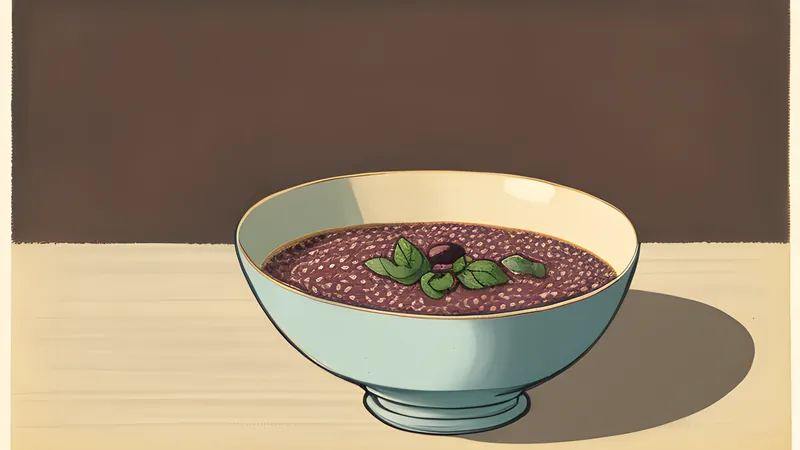
On the longest night of the year, a Korean kitchen fills with the earthy smell of red beans simmering down to a thick crimson porridge. A spoonful might be set aside before the family eats, carried to the front gate and flicked against the door frame, a gesture older than anyone present can explain, meant to keep ghosts from crossing the threshold. This is Dongji, the Korean winter solstice, observed around 22 December, the shortest day and one of the oldest seasonal markers still kept in Korean homes. The dish at its centre, patjuk, is both supper and superstition, and the night it warms is the deepest darkness of the year, the pivot from which the light begins, slowly, to return.
A solstice set by the sun
Dongji belongs to the system of twenty-four solar terms long shared across East Asia, in which the year is divided not by the moon but by the sun’s measured journey along the sky. Because it is fixed astronomically, its date drifts by a day either side of 22 December from year to year, unlike the lunar festivals that dominate much of the Korean calendar. As the moment the days stop shortening and begin to lengthen, the solstice carried unusual symbolic weight in an agrarian society for which the return of the sun was a matter of survival, not just sentiment.
That weight earned it a striking nickname: the “little New Year”, or jageun seol. In some older reckonings, surviving Dongji was treated almost as adding a year to one’s age, and the day was associated with the giving of the new year’s calendars and the planning of the months ahead. The instinct to mark the year’s turning at the solstice rather than at an arbitrary calendar date is one Dongji shares with the wider human fascination with the winter solstice, the shortest day that so many cultures have treated as a threshold.
What the old records show
The custom is documented, not merely assumed. Two Joseon-era texts on seasonal observances, the Dongguk Sesigi and the Yeolyang Sesigi, both describe eating red bean porridge on the winter solstice and sprinkling it around doors and storage jars to drive off evil spirits, placing the practice firmly within the everyday folk life of the dynasty that ruled Korea from 1392 to 1897. The porridge tradition itself is thought to reach back much further, with some accounts tracing it to the Three Kingdoms period that stretched from around the first century BC.
The royal court took the solstice seriously too, treating it as a significant point in the official year. Over the generations, as Korea industrialised and the grander ceremonies faded, the day contracted into the warm domestic ritual that survives now. What is remarkable is how little the core gesture changed: the same red beans, simmered on the longest night, eaten and offered for protection, persisting through centuries of upheaval that swept away far grander observances.
The neighbourly side of the custom is worth dwelling on. Within living memory it was common for children to be sent out on the solstice carrying bowls of the family’s patjuk to neighbours, who in turn sent their own children back with bowls of theirs, so that the protective porridge circulated through a street as a kind of edible goodwill. The red bean was not reserved for the solstice alone either; the same auspicious bean appears in susupattteok, the red-bean and sorghum rice cake served at a baby’s hundredth-day and first-birthday celebrations, marking the bean as a guardian at the vulnerable thresholds of a life as well as of a year.
Why red, and why this night
The symbolism rests on an old logic of opposites. In the cosmology behind East Asian folk belief, the winter solstice is the moment when yin, the dark, cold, passive principle, reaches its absolute maximum. Red, by contrast, was understood as the colour of yang, the bright and active force, and was credited across Korean practice with the power to repel evil, sickness and ill fortune. Eating something intensely red on the most yin night of the year was therefore a small act of cosmic counterbalance, a way of pushing back against the encroaching dark.
This is why the bean and not merely the porridge matters. The same belief in red’s protective force shows up elsewhere in Korean custom, from talismans to wedding traditions, and patjuk is its edible expression. The act of smearing the porridge at gates and in the corners of the house, recorded in those Joseon texts and still half-remembered today, treats the home itself as something to be sealed and guarded on the year’s most vulnerable night.
The bowl itself
To make patjuk, red beans are boiled until soft, then mashed and simmered into a thick, rust-coloured porridge that is more savoury than sweet. Into it go small chewy dumplings of glutinous rice flour called saealsim, a name that means something close to “bird’s eggs”, which they resemble. Their presence is its own quiet ritual: by custom you eat as many saealsim as your age in years, so the bowl doubles as a tally of the life you have lived, and finishing them is bound up with the sense of having safely turned another year.
The eating is unhurried and domestic. There is no parade, no public spectacle; Dongji is a festival of the kitchen table, of family gathered against the cold with a hot bowl between them. In that, it shares the communal warmth of Korea’s other inherited observances, the same impulse toward togetherness and continuity that animates national days such as Korean National Foundation Day. Where those days look outward to the nation, Dongji turns inward, to the household and the hearth.
The making is a labour in itself, and part of the tradition’s quiet pleasure. The beans must be boiled, drained and simmered again to soften their slight bitterness, then pressed and strained to a smooth, dense purée before the porridge is built up and the saealsim rolled by hand and dropped in to bob and cook. It is the kind of slow cooking that fills a house with warmth and smell on a short, cold day, the process as much a part of the ritual as the eating, and a reason the dish carries such a strong association with home and family for those who grew up with it.
In contemporary Korea, Dongji is no longer a public holiday and many younger households no longer cook patjuk from scratch, buying it ready-made from a shop or a temple instead. Buddhist temples, in particular, keep the tradition alive, distributing bowls of patjuk to visitors on the solstice, and the day endures as a gentle cultural touchstone rather than a day off work. That it survives at all, in a calendar crowded with imported celebrations, says something about the staying power of a simple, meaningful meal.
A solstice the world keeps
The turning of the sun is universal, and Dongji is Korea’s particular answer to a night the whole northern hemisphere shares. The same solar term is observed across East Asia: in China it is Dongzhi, often marked with dumplings in the north and glutinous rice balls called tangyuan in the south, while Japan keeps Tōji with a hot bath scented with yuzu citrus and a meal of pumpkin. The shared logic is unmistakable, a warm food and a homely ritual to meet the year’s coldest, darkest pivot, yet each culture expresses it through its own ingredients and beliefs.
Beyond the region, the longest night has gathered its own festivals, fires and feasts wherever people have watched the dark grow and then, gratefully, recede. Korean communities scattered abroad carry Dongji with them, simmering patjuk in kitchens thousands of miles from the peninsula, because the longest night arrives there too, and it can be met the same way: with a red bowl and good company. In recent decades the dish has even shed some of its strictly seasonal character, with sweetened versions of red bean porridge eaten as comfort food through the cold months, so that the taste of the solstice lingers well past the single night that gave it meaning.
Fun facts
- Dongji’s date drifts around 22 December because it is fixed by the sun’s position, not the lunar calendar that governs most Korean festivals.
- It was once nicknamed the “little New Year”, and surviving it was loosely associated with adding a year to one’s age.
- You are traditionally meant to eat as many saealsim dumplings as your age in years, turning the meal into a personal birthday tally.
- The custom of sprinkling red bean porridge at doors and jars to repel spirits is written down in the Joseon-era Dongguk Sesigi and Yeolyang Sesigi.
- Red was prized as protective because the solstice is the most yin night of the year, and red embodied the opposing, life-bringing yang.
A closing reflection
A bowl of red bean porridge is a humble thing to set against the longest darkness of the year, yet that modesty may be the point. Dongji does not try to banish winter with spectacle; it answers the cold with warmth, the dark with a single bright colour, and dread with the simple, defensible faith that the light has already begun its slow return. There is a kind of practical hope in that, the hope of people who have learned to mark the worst night not by fearing it but by gathering around a pot and waiting, together, for the days to grow.
Related Content