Diwali
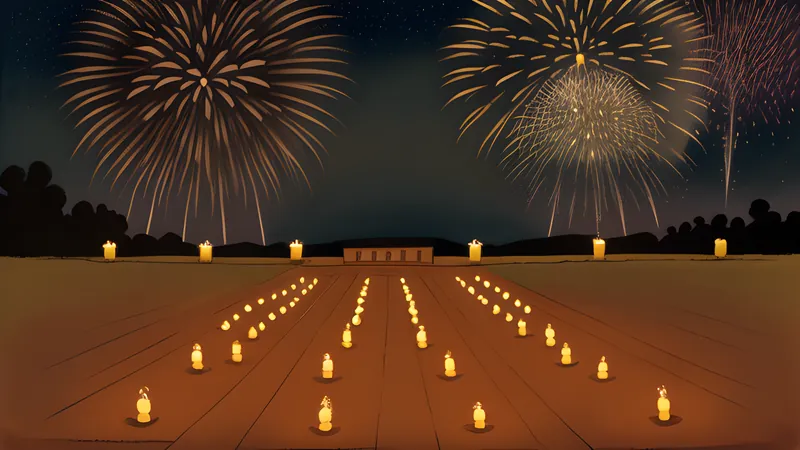
On the darkest night of the lunar month of Kartik, when the moon has thinned to nothing, hundreds of millions of homes across India and the Indian diaspora do the same thing at once: they fill with light. Rows of small clay lamps are set along walls, windowsills and doorsteps, candles and electric strings are hung, and fireworks split the sky. This is Diwali — Deepavali in its fuller Sanskrit form, “a row of lamps” — the festival of lights and the most important holiday of the year for most Hindus, kept also by Jains, Sikhs and some Buddhists, each for reasons of their own. It is a five-day festival built around the triumph of light over darkness and knowledge over ignorance, and like every great Indian festival it moves with the moon.
Why the Date Moves
Diwali falls on the amavasya, the new-moon night, of the Hindu lunar month of Kartik, which in the Gregorian calendar lands in October or November. The main night of Diwali is the darkest of the year — chosen deliberately, so that the lamps have the most darkness to defeat. Because the Hindu calendar is lunisolar, reconciling the moon’s months with the solar year by the periodic insertion of an extra month, the festival’s Gregorian date shifts from year to year, typically between mid-October and mid-November. The five days run from the thirteenth day of the waning fortnight to the second day of the waxing fortnight of the following month, straddling the new moon at their centre. The representative date given here stands in for a night that must be recalculated against the lunar calendar each year, in the same way the dates of Vesak and Easter Sunday are.
The Stories Behind the Lamps
Diwali is unusual among great festivals in having no single founding story; it gathers several, and which one a family tells depends on region and tradition. The best known in northern India ties the festival to the Ramayana: the return of Prince Rama to his kingdom of Ayodhya after fourteen years of exile and his victory over the demon king Ravana, whose people are said to have lit rows of lamps to guide him home in the dark. In southern India the emphasis often falls instead on the god Krishna’s defeat of the demon Narakasura, freeing sixteen thousand captives.
Across much of the tradition the festival is bound to Lakshmi, the goddess of wealth, prosperity and good fortune. On the new-moon night she is believed to walk the earth and enter the homes that are clean, bright and welcoming — which is why houses are scrubbed, whitewashed and illuminated before her, and why the night is the busiest of the Hindu financial year. Bengal and eastern India instead worship the fierce goddess Kali on the same night. Diwali, in other words, is less one story than a confluence of many, all agreeing on light and renewal.
History and the Other Faiths
The festival is ancient, its roots reaching back well over two thousand years into harvest and lamp-lighting rites; Sanskrit texts and the accounts of medieval travellers describe autumn festivals of lights that are recognisably its ancestors. But Diwali is not only Hindu, and its history is layered with the other religions born in India.
For Jains, Diwali marks the anniversary of the moment in 527 BCE when Mahavira, the twenty-fourth and last tirthankara — the great teacher who shaped Jainism into its historical form — attained moksha, final liberation, at Pavapuri. Jain tradition holds that the gods illuminated the darkness that fell at his passing, and Jains keep Diwali as a solemn, devotional occasion rather than a boisterous one.
For Sikhs the day coincides with Bandi Chhor Divas, the “day of liberation”, commemorating the release of the sixth guru, Guru Hargobind, from imprisonment in the fortress of Gwalior by the Mughal emperor Jahangir around 1619. The guru is said to have refused to leave unless fifty-two imprisoned Hindu princes were freed with him, and to have secured their release by a stratagem; his return to Amritsar was greeted with lamps lit throughout the city, and the Golden Temple is illuminated on this day still. The shared festival, kept by four religions for four different reasons on the same lunar night, is one of the clearest expressions of India’s layered devotional history — a quality it shares with the way Hanukkah binds a people to a single midwinter act of rededication.
Why It Matters
Beneath its many stories, Diwali carries a single consistent idea: the victory of light over darkness, good over evil, knowledge over ignorance. The lamp — the diya, a small clay dish of oil with a cotton wick — is a working symbol of that idea, and the act of lighting it is a small annual rehearsal of hope. The festival is also a hinge of the social and economic year. It is the traditional time to settle debts, open new account books, buy gold and household goods, and begin ventures under good omens; for many businesses the Diwali season is the peak of the year. And it is the great family festival, drawing relatives home, mending quarrels, and renewing bonds through visits and the exchange of sweets.
How It Is Celebrated
The festival unfolds over five days, each with its own character. It opens with Dhanteras, a day for buying gold, silver and new utensils, held to be auspicious. The second day, Naraka Chaturdashi or Choti Diwali, brings early cleansing rituals. The third day is Diwali proper, the new-moon night, when Lakshmi is worshipped, the lamps are lit in their fullest array, gifts and sweets are exchanged, and the fireworks reach their height. The fourth day varies by region — in the north it is Govardhan Puja, recalling Krishna’s lifting of a mountain; among traders it is the start of the new financial year. The fifth day is Bhai Dooj, honouring the bond between brothers and sisters, on which sisters pray for their brothers’ welfare.
The preparations are as important as the days themselves. Homes are thoroughly cleaned and often repainted; doorsteps and courtyards are decorated with rangoli, intricate patterns made in coloured powder, rice or flower petals, laid down to welcome the goddess and guests. Kitchens fill with sweets — the syrup-soaked jalebi, the milk-fudge barfi, the gram-flour ladoo — made in quantity to give away.
Variations Across the World
Diwali is a public holiday across India, Nepal, Sri Lanka, Malaysia, Singapore, Fiji, Mauritius, Trinidad and Tobago, and Guyana, carried around the globe by the Indian diaspora over the past two centuries. In Nepal the festival is Tihar, a five-day observance remarkable for honouring animals: crows on the first day, dogs on the second — garlanded and fed as guardians — and cows on the third. In the Indian city of Ayodhya, held in tradition to be Rama’s own kingdom, the festival of Deepotsav has in recent years set world records for the number of lamps lit at once, with hundreds of thousands of diyas ranged along the riverbank. In Britain, Leicester hosts some of the largest Diwali celebrations outside India, and the festival is now marked at the White House, at 10 Downing Street and by public lightings in cities across the world.
Symbols and Their Meaning
The diya is Diwali’s essential emblem, the point of light multiplied into thousands. The lotus is the flower of Lakshmi, on which she is depicted seated or standing. Rangoli patterns at the threshold serve as both welcome and blessing, their impermanence — swept away and remade each day — part of their meaning. Gold stands for the prosperity the festival invites, sweets for the sweetness of renewed relationships, and fireworks, in the older understanding, for the driving-off of evil spirits and the announcement of joy, though their environmental cost has made them a subject of growing debate and, in some cities, of restriction.
Fun Facts
- Diwali is deliberately timed to the darkest night of the lunar month, the new moon, so that the festival of light has the greatest possible darkness to overcome.
- Four religions keep the same night for four different reasons: Hindus for Lakshmi and Rama’s return, Jains for Mahavira’s liberation in 527 BCE, Sikhs for Guru Hargobind’s release, and some Buddhists for the emperor Ashoka’s conversion.
- The city of Ayodhya has repeatedly set Guinness World Records for the largest display of oil lamps, lighting well over two million diyas along the Sarayu river in a single evening in recent years.
- In Nepal’s version of the festival, dogs are honoured with garlands and treats on Kukur Tihar, a day devoted entirely to celebrating the loyalty of dogs.
- Diwali became a recognised occasion at the highest levels of Western public life within a generation: the first Diwali celebration at the White House was held in 2003, and a lamp has been lit there by or on behalf of the president in the years since.
A Closing Reflection
There is a quiet wisdom in choosing the darkest night of the month for a festival of light. It would have been easier to celebrate at the full moon, when the sky helps; instead the tradition waits for the moon to vanish entirely and then answers with a million small flames. The clay lamp is a humble thing — oil, a wick, a pinch of earth shaped by hand — and it burns out by morning. But the gesture of lighting it, repeated across continents on the same night by people who tell different stories about why, says something durable about how human beings meet the dark: by making, however briefly, a little light of their own.
Related Content