Danish Constitution Day
On 5 June 1849, King Frederik VII of Denmark put his signature to a document that stripped his own crown of nearly two centuries of absolute power. The Junigrundloven, the June Constitution, replaced a system in which the monarch had ruled with formally unlimited authority since 1660 — among the most thoroughgoing absolutisms in Europe — with a constitutional monarchy, an elected parliament and a charter of civil liberties. Denmark had passed from autocracy to representative government not through revolution or bloodshed but through a royal pen stroke. Every year since, on the anniversary of that signature, Danes gather in parks and meadows under the red-and-white Dannebrog to mark Grundlovsdag — Constitution Day — with the most characteristically Danish of rituals: the open-air political speech.
A signature, not a storming
The choice of 5 June commemorates a specific and well-documented act: Frederik VII signing the Constitutional Act of the Kingdom of Denmark in 1849. Denmark had been an absolute monarchy since the Royal Law (Kongeloven) of 1665, which codified the absolutism established under Frederik III in 1660. By the 1840s pressure for reform was building, sharpened by the wave of liberal revolutions sweeping Europe in 1848.
What is notable is how the transition happened. In March 1848, a delegation of citizens marched to Christiansborg Palace in Copenhagen to demand a free constitution. The newly crowned Frederik VII, by temperament more interested in archaeology and fishing than in ruling, reportedly told them he had already dismissed the old ministry — defusing the moment before it could become a confrontation. A constituent assembly was elected, drafted the charter through the winter of 1848–49, and the King signed it the following June. The principal intellectual architect was the politician and jurist D. G. Monrad, who drafted much of the text, with Orla Lehmann among the leading liberal voices.
A living, revised charter
The 1849 constitution was a landmark for its time, establishing a bicameral parliament, the Rigsdag, and guaranteeing freedoms of speech, assembly and religion. But it was a beginning rather than a settled conclusion, and Constitution Day commemorates an evolving tradition rather than a single frozen text.
The charter was revised repeatedly: a more conservative version in 1866 after military defeat by Prussia, then the pivotal change of 1915, which for the first time extended the vote to women and to servants without their own household — roughly doubling the electorate. The current constitution dates from 1953 and, by deliberate design, was also signed on 5 June, layering a second anniversary onto the first. That 1953 revision abolished the upper chamber, the Landsting, leaving the single-chamber Folketing of today, and altered the order of succession to allow a woman to inherit the throne — a change that, years later, made Queen Margrethe II’s long reign possible.
The 1849 charter was, for its moment, strikingly liberal, but its limits were equally telling. The vote went only to men over thirty who ran their own household; servants, the propertyless, the poor receiving relief, and of course all women were excluded — a category Danes later summarised with grim wit as “the seven Fs” (fruentimmere, folkehold, fattige, fjolser, forbrydere, fallenter, fremmede — women, servants, paupers, fools, criminals, bankrupts and foreigners). Reading the constitution’s history is, in large part, the story of those exclusions being dismantled one by one across the following century, so that the document Danes honour today is genuinely broader than the one Frederik VII signed. That is part of why Grundlovsdag works as a celebration of a process rather than a single triumphant moment: the charter has been argued over, narrowed, widened and reshaped by every generation that inherited it.
Why it matters
Constitution Day is the closest thing Denmark has to a national day, yet it honours something subtler than independence or military victory. Denmark has never had to fight for its existence as a unified democratic state in the way many nations have; it had no war of independence, no revolution to mythologise. What it had instead was a negotiated handover of power, and the day reflects that temperament exactly. It centres on the machinery and principles of self-government: representative parliament, the rule of law, and the rights of the individual. For generations it has been the one fixed day in the calendar when politicians of every party address the public directly and citizens take stock of the health of their democracy. In a political culture proud of compromise and consensus, the day quietly renews the values that hold public life together — which is precisely why neighbouring Norway marks its own foundational charter with comparable warmth on its 17 May constitution day, though Norwegians do so with rather more flags, parades and brass bands than the Danes tend to muster.
How it is celebrated
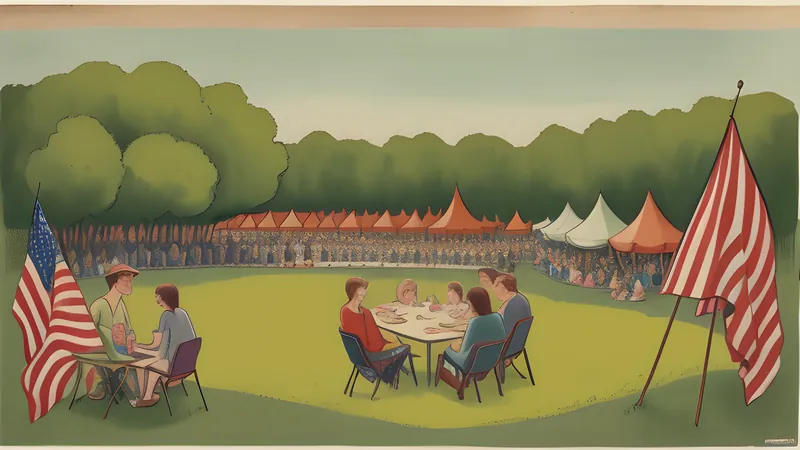
The signature tradition is the grundlovsmøde, the open-air constitution meeting. Across the country, political parties, unions and associations hold gatherings in parks and gardens where leading figures give the grundlovstale — a constitution speech, usually on the state of democracy and the controversies of the day. Some of these have entered political folklore: prime ministers have used the Constitution Day platform to launch policy, defend records or, occasionally, signal an approaching election, and a sharply worded grundlovstale can dominate the next morning’s headlines. The Folketing’s own gardens at Christiansborg, and historic meeting grounds such as the one at Skamlingsbanken in southern Jutland — a hill long associated with Danish national gatherings — draw particularly large crowds. Audiences listen, heckle gently, debate and mingle, very often over a picnic in the early-summer light. It has long had the feel of a half-holiday: many workplaces and shops close at noon, and although it is not a formal public holiday, collective agreements give large numbers of Danes the afternoon off. Flags are flown from homes and public buildings, and the mood balances genuine civic seriousness with the relaxed pleasure of a June afternoon outdoors.
Symbols and the long light
The Dannebrog — Denmark’s red banner with its white cross, by tradition one of the oldest continuously used national flags in the world — is everywhere on the day. The grundlovstale itself is the defining ritual, an unbroken tradition of public oratory in the open air. Greenery, the long northern evening and communal eating complete the scene. There is something fitting in a democracy that chose to celebrate itself not with cannon and parade but with people sitting on grass, listening to arguments, and disagreeing politely over sandwiches.
Around the world
Denmark’s day sits within a broader Scandinavian habit of honouring constitutional milestones, but its emphasis on open-air speech-making gives it a distinct flavour. Where some nations celebrate the overthrow of a regime, Denmark marks a peaceful, top-down transformation. The summer timing also places it close to other Danish midsummer gatherings such as the bonfire night of Sankt Hans a few weeks later, so that early June through late June becomes a season of Danes assembling outdoors in the lengthening light. Danish communities abroad — in the United States, Australia and elsewhere — often keep the date too, holding their own meetings and picnics far from home.
Fun facts
- Because the 1953 constitution was deliberately signed on the same calendar date as the 1849 original, 5 June carries a genuine double anniversary, linking the birth of Danish democracy with its most important modern overhaul in a single day.
- Frederik VII, the king who signed away absolute monarchy, was a keen amateur archaeologist who led excavations of ancient burial mounds and was rather happier digging than governing — which may help explain his readiness to give power away.
- The 1953 succession change, allowing female inheritance of the throne, was the direct legal reason Margrethe II could become queen in 1972; without that Constitution Day amendment, her younger uncle’s line would have inherited instead.
- For most of the twentieth century, Father’s Day in Denmark also fell on 5 June, having been tied to Constitution Day rather than to a separate spring date as in many other countries — so the constitution and fatherhood shared a calendar slot.
- The 1915 revision that gave Danish women the vote was celebrated with a procession of some 12,000 women to Amalienborg Palace, marking one of the largest political demonstrations the country had seen.
A closing reflection
There is a quiet radicalism in choosing to honour your democracy by arguing about it in a field. A constitution, after all, is only ink until people gather to test what it means, and the Danish instinct to mark the day with thousands of competing speeches rather than a single official ceremony treats the document exactly as it deserves — not as a relic to be saluted but as an unfinished conversation to be continued. On 5 June, under the Dannebrog and the long northern evening, the country reminds itself that the freedoms set down in 1849 belong to whoever is willing to keep talking about them.
Related Content