Carrot cake day
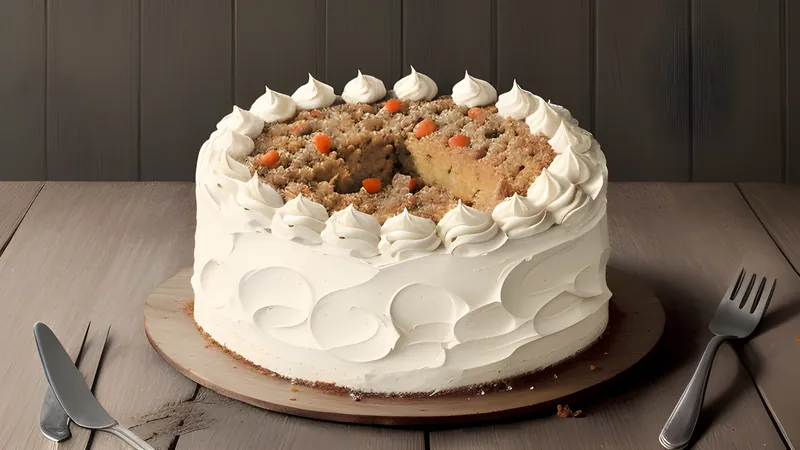
In 1814, Antoine Beauvilliers, who had once cooked for Louis XVI and ran one of the first true restaurants in Paris, published the second volume of L’art du cuisinier and tucked into it a recipe for Gâteau de Carottes. It was popular enough that rival cookbook authors lifted it word for word, and in 1824 Beauvilliers issued an English edition in London with a literal translation: “Carrot Cakes”. That is the moment carrot cake steps out of the murk of folk cookery and into print under something close to its modern name, attached to a real chef who had survived the Revolution that killed his former employer. Carrot Cake Day, marked each year on 3 February, is a celebration of a dessert with an unusually long and traceable paper trail.
What makes the cake worth a day is not just that it is delicious but that it keeps reappearing at moments of scarcity. Carrots sweeten when sugar is dear, and the cake’s history is studded with exactly those moments, which makes it less an indulgence than a record of how cooks improvise when the larder is thin.
Where the cake comes from
The deep roots are medieval. When sugar was a luxury imported at great cost, European cooks reached for the sweetest vegetable they had, and carrots, which can be over five per cent sugar by weight, were the obvious choice. The result was the carrot pudding, a sweetened, spiced, baked dish that food historians point to as the cake’s ancestor; the earliest carrot-pudding recipes are sometimes traced to medieval Switzerland. An English recipe of 1591 for a “pudding in a Carret root” already carries the future cake’s DNA: scraped carrot, eggs, cream, raisins, dates, cloves, mace and breadcrumbs standing in for flour. It was not yet a cake, but every element was assembling.
The honest caveat is that no single person invented carrot cake, and any source naming one inventor is overreaching. What we have instead is a slow convergence: medieval puddings, Beauvilliers’ named French recipe, and a regional Swiss tradition all feeding into the same idea.
The history of carrot cake
Switzerland deserves more credit than it usually receives. The Aargauer Rüeblitorte, or Aargau carrot cake, has a documented 19th-century recipe from a housekeeping school at Kaiseraugst in the canton of Aargau, and it remains, according to the Culinary Heritage of Switzerland, one of the country’s best-loved cakes, especially for children’s birthdays. The Swiss version is finished not with cream cheese but with a marzipan carrot perched on top, which is very likely where that now-universal decorative flourish began.
The cake’s most famous chapter, though, is British and wartime. During the Second World War, sugar in the United Kingdom was rationed to around eight ounces per person, and the Ministry of Food mounted a determined campaign to make carrots fill the gap. The campaign even acquired a cartoon mascot, Dr Carrot, drawn with spectacles, urging households to slip carrots into everything. The Ministry’s recipe leaflets pushed carrot cakes and puddings hard, and for a time icing was actively discouraged as wasteful, so the wartime cake was a plain, dense, frugal thing, nothing like the lavish dessert we picture now.
That lavish version is surprisingly recent and decisively American. In the 1960s, carrot cake was transformed in the United States from rationing-era thrift into a fashionable bakery item, and it was at this point that cream cheese frosting became its near-inseparable partner. So the cake we treat as timeless is really a layered fossil: a medieval pudding, a Napoleonic-era French recipe, a Swiss marzipan tradition, a British wartime expedient and a 1960s American glow-up, all sitting in the same slice.
Why it matters
Carrot Cake Day is, beneath the sugar, a small monument to thrift. The cake exists because cooks refused to be defeated by an empty sugar tin, first in the Middle Ages, then under wartime rationing. In an age newly anxious about food waste and the cost of ingredients, that lineage feels less like a quaint backstory and more like a usable idea: that the best comfort food often comes from making do rather than from abundance.
It also matters as a quiet correction to how we think about desserts. We tend to assume our food traditions are old and fixed, when the truth is that even something as homely as carrot cake was reinvented within living memory, much as the broader National Cake Day flattens a dozen distinct, separately invented cakes into one cheerful catch-all. The frosting that defines it today would have struck a 1940s British baker as an extravagance bordering on the illegal.
How it is celebrated
The day is marked mostly by baking and eating, which is no bad way to mark anything. Home bakers use it as the prompt to attempt a layered version from scratch; cafés put a slice on special; and recipe sites publish their variations in a flurry around early February. Keen bakers use the occasion to try a richer or more ambitious recipe than usual, such as a browned-butter carrot cake that pushes the spicing and the nuttiness further than the standard formula. The most reliable tradition is simply the contented argument over whether the cake is improved or ruined by raisins.
Global variations
Carrot’s sweetness has been harnessed far beyond the English-speaking layer cake. In South Asia, gajar ka halwa slow-cooks grated carrot with milk, sugar and cardamom into a rich, fudge-like pudding eaten warm in winter, the same underlying principle as carrot cake but with no flour and no oven. In Switzerland, the Rüeblitorte keeps its marzipan-carrot topping and its ground-almond crumb. In the United States, the cake is tall, layered and emphatically cream-cheese-frosted, often loaded with walnuts, pecans, crushed pineapple or coconut; that pineapple is a reminder of how American baking loves fruit-in-the-batter, the same instinct behind Pineapple Upside-Down Cake Day. In Britain, it is frequently humbler, a loaf or traybake under a thin glaze or a dusting of icing sugar. The same root vegetable yields a fudge in Delhi, a torte in Aargau and a sky-high gateau in California.
What makes the cake work
Part of carrot cake’s durability is chemistry. Grated carrot is mostly water held inside fibre, and as the cake bakes that water is released slowly, steaming the crumb from within and keeping it moist long after a plain sponge would have dried out. This is why carrot cake famously improves on its second day and resists going stale; the carrot acts as a built-in reservoir. The fibre also gives the cake structure, letting it carry a heavy load of oil, sugar, nuts and fruit without collapsing, which a flour-only batter of the same richness could not.
Oil rather than butter is the other quiet decision behind the texture. Because oil is liquid at room temperature, a carrot cake made with it stays soft straight from the fridge, where a butter cake would firm up; this is also why the American layer cake, designed to sit under refrigerated cream cheese frosting, almost always uses oil. The spices do more than flavour: cinnamon, ginger and nutmeg were chosen historically because they pair naturally with the earthy sweetness of root vegetables, the same logic that puts ginger in a pumpkin pie. None of this was engineered in a laboratory. It was discovered slowly, by cooks who noticed that the carrot version of a cake simply kept better, and built a tradition on that small, useful fact.
Symbols and traditions
The signature touches of carrot cake all carry meaning. The warm spices, cinnamon, nutmeg, ginger, are the inheritance of the medieval pudding, when spice itself signalled luxury. The little piped marzipan or icing carrot on top is a wink at the cake’s hidden ingredient and, in its Swiss form, may be the oldest decorative tradition the cake has. Even the optional pineapple and coconut are a kind of mid-century American signature, marking the moment the cake went from frugal to festive.
Fun facts
- Antoine Beauvilliers, who published the named “Carrot Cakes” recipe in 1824, had cooked for Louis XVI and is often credited with opening one of the first recognisable restaurants in Paris, in 1782.
- During the Second World War the British Ministry of Food discouraged icing on cakes as wasteful, which is why the era’s carrot cakes were plain, not the frosted dessert we know.
- The orange carrot is a relative newcomer; for most of its cultivated history the carrot was purple, white, red or yellow, and the familiar orange root rose to dominance in the Netherlands only from around the 17th century.
- The carrots in the cake contribute almost no “carroty” flavour; their job is moisture and a gentle background sweetness that keeps the crumb soft for days.
- The wartime “Dr Carrot” campaign was so effective at promoting the vegetable that it helped seed the enduring myth that eating carrots dramatically improves night vision.
A closing reflection
It is worth pausing over the fact that the most decadent thing about carrot cake, the slab of cream cheese frosting, is also its newest part, while the cake’s true backbone is a habit of frugality stretching back to medieval kitchens and a wartime ministry rationing sugar by the ounce. Eat a slice and you are tasting two opposite impulses at once: the inventive thrift of cooks who had little, and the comfortable excess of cooks who had plenty. Few desserts hold both halves of that history in a single bite, which is reason enough to keep a day for it.
Related Content


