Card Playing Day
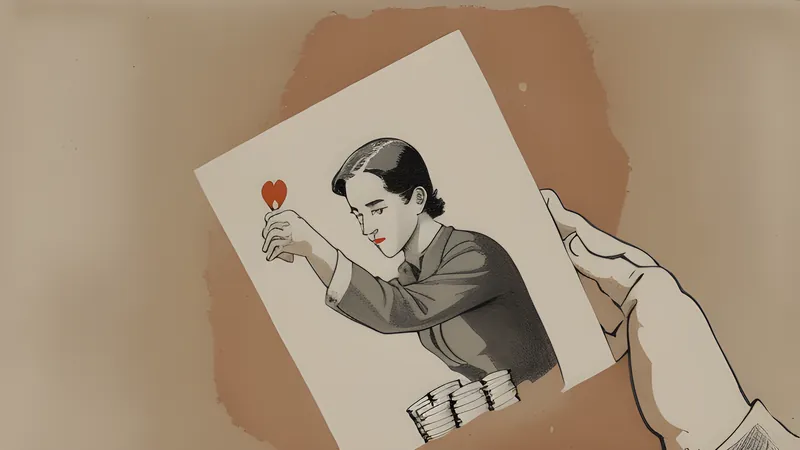
The earliest written mention of playing cards we possess comes from a Chinese text describing how, around the year 868, Princess Tongchang, daughter of the Tang emperor Yizong, played a “leaf game” with members of the Wei clan. The detail is small and almost offhand, a courtly pastime noted in passing, but it places cards in human hands more than eleven centuries ago. Card Playing Day, slotted into the calendar on 28 December, sits at the far end of that long thread: a quiet date in the lull between Christmas and New Year, when the deck that began in a Tang court is still being shuffled at kitchen tables.
The placement is well chosen. By the 28th the frenzy of Christmas has subsided, relatives are still in the house, and there is a flat, unstructured stretch of days that wants filling. A deck of cards is one of the few objects that can pull a mixed-age, half-bored family into the same activity without a screen, a referee or batteries.
Where the day comes from
Like most of the “national days” that fill modern calendars, Card Playing Day has no recorded founder and no organisation behind it. It appears on lists of quirky observances popular in English-speaking countries, copied from site to site until it gained an unearned look of permanence. Anyone claiming a precise origin or inventor for it is guessing. The honest position is that the observance is undocumented, a label that floats free of any real institution.
What is documented, and richly so, is the history of the object it celebrates. Cards have one of the best-travelled biographies of any everyday thing, and the route they took out of China and across the world is traceable in surprising detail.
The history of playing cards
After their Tang-dynasty beginnings, cards moved west along the trade routes. By the 14th century they had reached the Mamluk Sultanate in Egypt, and we are not left guessing about this, because a near-complete Mamluk deck survives in the Topkapı Palace Museum in Istanbul. Its 52 cards are divided into four suits, cups, coins, swords and polo-sticks, with numeral and court cards, an arrangement strikingly close to the structure Europeans would adopt. The polo-sticks are a giveaway of the deck’s eastern origin; polo was an unfamiliar sport in Europe, and the suit was later reinterpreted as batons or clubs.
Cards reached Europe with remarkable speed in the 1370s. A ban on card games recorded in Florence in 1377, and a sermon against them by the Swiss monk Johannes of Rheinfelden in the same year, show how quickly the new pastime spread and how quickly the authorities grew nervous about the gambling that followed it. Early European decks were hand-painted luxuries, but the arrival of woodblock printing turned cards into something the labouring poor could afford, and they became one of the first mass-produced consumer goods on the continent.
The deck we now treat as standard was largely a French achievement. In the 15th century, French cardmakers settled on the four suits of hearts, tiles (diamonds), clovers (clubs) and pikes (spades), shapes that were easy to cut from stencils and cheap to print in two colours. The English adopted the French suits but kept Spanish-influenced names, which is why an English speaker plays clubs and spades over symbols that look like clovers and pike-heads. The corner indices that let you fan a hand and read it at a glance are a much later refinement, popularised in the United States in the 1860s, and the double-headed court cards that spared players from turning a card the right way up arrived around the same time.
Why it matters
A day for card playing earns its keep by defending a particular kind of attention. A card game is one of the last widely shared activities that demands you look at the other people in the room. Across a hand of whist or rummy you watch faces, weigh hesitations, remember what has already fallen, and respond to living opponents rather than an algorithm. That triangle of eye contact, memory and judgement is exactly what screen-based entertainment tends to dissolve, and it is worth protecting precisely because it is so easy to lose without noticing.
There is also a cognitive case that is more than wishful thinking. Games such as bridge make heavy demands on working memory, probability and partnership communication, and several long-running studies of older adults have associated regular, mentally engaging games with better-preserved cognitive function. No card game is a guard against decline, but the act of tracking a depleting deck and inferring an opponent’s hand is genuine mental exercise dressed up as fun.
How it is celebrated
There is no official ceremony, so the day is marked in domestic, improvised ways. The commonest is the simplest: a household clears the table after a meal and deals a few hands of whatever the family knows, cribbage, gin rummy, hearts, switch. A small but real tradition has grown of using the date to teach a game to someone who has never played, a child learning to hold a fan of cards for the first time, or a grandparent passing on the scoring of a half-forgotten game. The table is usually stocked for the long haul, which is why card nights so often overlap with snack-led observances such as National Guacamole Day, the kind of food that survives being eaten one-handed over several hours of play. Care homes and community centres sometimes use the quiet post-Christmas week to run card afternoons, which suit residents far better than louder festivities.
Global variations
The love of cards is genuinely worldwide, and the specifics are vivid. In France, belote is played in cafés and homes with near-ritual seriousness. In Germany, Skat, devised in the town of Altenburg around 1810, is treated almost as a civic institution, with its own official rulebook overseen by a body in that very town. In India, teen patti and rummy crowd family gatherings, particularly around Diwali, when card play takes on an explicitly festive, slightly mischievous character; the same country fixes a very different communal habit in the calendar with National Voters’ Day, a reminder that India is fond of marking shared rituals, the playful and the civic alike. In the United States, poker carries a frontier mythology all its own, while contract bridge, codified by the American railroad heir Harold Vanderbilt aboard a steamship in 1925, became the obsession of mid-century clubs. The same 52 cards carry wildly different cultures depending on whose hands hold them.
Symbols and traditions
The standard deck is dense with inherited symbolism, though much of it was assigned long after the cards existed. The four suits have at various points been mapped onto the four seasons, the medieval estates of clergy, nobility, merchants and peasants, or the four humours. A persistent piece of folklore reads the deck as a calendar: 52 cards for the weeks of the year, four suits for the seasons, thirteen cards per suit for the lunar months, and the pip values summing to roughly 365. It is numerology after the fact rather than design intent, but it has been repeated for so long that it has become a tradition of its own. The court cards, kings, queens and knaves, were once given names; the French decks of the 16th century identified the kings with figures such as Charlemagne, Caesar, David and Alexander.
Fun facts
- The number of possible orderings of a 52-card deck is 52 factorial, a figure so vast that any properly shuffled deck has almost certainly never existed in that exact order in the whole history of the world.
- The joker is an American invention from around the 1860s, created as a special trump for the game of euchre, and is the only card in the standard pack with no European ancestor.
- Tarot cards began as ordinary game cards in 15th-century Italy; their use for fortune-telling did not appear until the late 18th century, centuries after people were happily playing trick-taking games with them.
- The King of Hearts is sometimes called the “suicide king” because, through generations of careless copying by engravers, his sword came to be drawn pointing straight at his own head.
- Skat is so culturally embedded in Germany that the town of Altenburg houses an official Skat court, the Skatgericht, which issues rulings on disputed points of the game.
A closing reflection
A deck of cards is a strange kind of heirloom: identical in every shop, worth almost nothing, and yet carrying eleven centuries of human company in fifty-two slips of pasteboard. What gets passed down is never the cards themselves but the act, the dealing, the bluffing, the small ceremonies of scoring that a family invents and then forgets it invented. To set aside a day for this is really to notice how rare it is becoming for several generations to sit at one table, look at one another, and agree to be governed for an hour by the same arbitrary rules. The game matters less than the willingness to play it together.
Related Content


