Bodhi Day
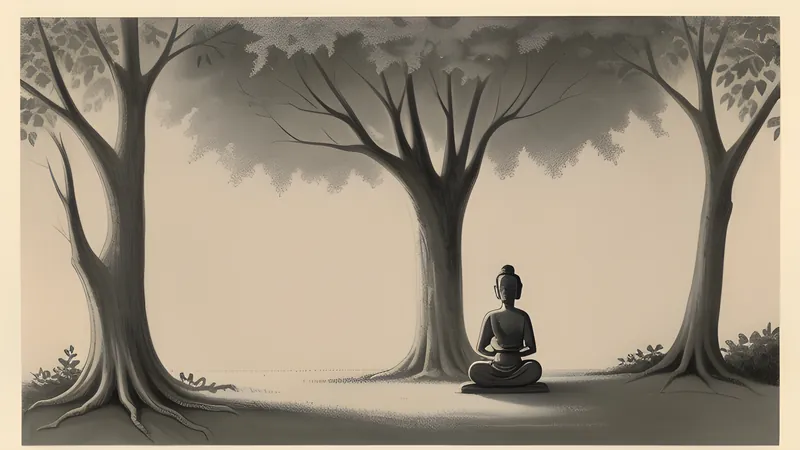
Under a pipal tree at Bodh Gaya in the Ganges plain, somewhere around the sixth or fifth century BCE, a thirty-five-year-old ascetic named Siddhartha Gautama is said to have sat down and vowed not to rise again until he understood the cause of suffering. By the time the morning star appeared, tradition holds, he had become the Buddha — “the awakened one” — and that single night of insight is what Mahayana Buddhists across East Asia now mark on 8 December as Bodhi Day, or Rohatsu in Japan. It is a quieter, more contemplative occasion than the candlelit street processions of Vesak, observed mostly in monasteries and Zen centres with long stretches of seated meditation rather than public spectacle, because the point of the day is to re-enact the search rather than to celebrate the result.
What “Bodhi” Means
Bodhi is a Sanskrit and Pali word usually translated as “awakening” or “enlightenment,” from a verbal root meaning to know or to perceive. It is not a synonym for ordinary knowledge; in Buddhist usage it denotes the specific, transformative insight the tradition holds the Buddha reached that night — a direct seeing into the nature of suffering, its origin, and the way past it. The tree under which he sat has been known ever since as the Bodhi Tree, and a descendant said to be grown from a cutting of the original still stands, tended, at the Mahabodhi Temple complex in Bodh Gaya, in the modern Indian state of Bihar. The site is now a UNESCO World Heritage listing and one of Buddhism’s four principal pilgrimage places, alongside Lumbini, Sarnath and Kushinagar, marking the Buddha’s birth, first sermon and death respectively.
The Night Itself, According to the Texts
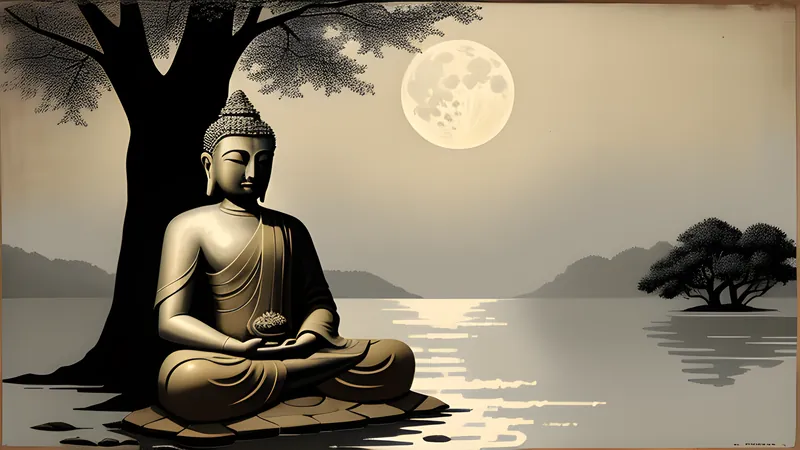
The canonical account, drawn from early Pali sources such as the Majjhima Nikaya and later commentarial tradition, describes Siddhartha spending years testing extreme asceticism — near-starvation, prolonged breath restraint — before concluding that self-mortification was as much a dead end as the indulgence he had left behind in his father’s palace. He accepted a bowl of milk-rice from a village woman named Sujata, regained his strength, and sat beneath the pipal tree resolved to see the matter through. Buddhist tradition describes a night divided into three watches: in the first he recalled his own past lives in vivid detail; in the second he perceived the workings of karma and rebirth across all beings, watching how actions carry consequence from one existence to the next; in the third, as dawn approached, he understood the chain of causation binding suffering to craving and ignorance, and broke it. Some tellings add a dramatic obstacle to this quiet picture — the demon Mara, embodiment of temptation and death, sends storms, armies and seductive daughters to drive the meditator from his seat, and is refused each time, most famously by the Buddha touching the earth to bear witness to his right to sit there, the gesture depicted in the earth-touching mudra found on statues throughout Asia.
From a Single Night to a Winter Observance
There is no evidence the earliest Buddhist communities marked the enlightenment with a fixed annual date; the emphasis on 8 December specifically is a later East Asian development, tied to the Chan and Zen monastic calendar rather than to Indian or Southeast Asian practice. In Japan, where the day is called Rohatsu (“eighth day of the twelfth month”), Zen monasteries observe an intensive week-long meditation retreat, or sesshin, running up to and including 8 December, with practitioners sitting for extended hours, sometimes through the night, in a deliberate echo of the Buddha’s own vigil. The custom of the retreat is documented in Zen monastic records stretching back centuries in Japan and China, where the same date is kept in Chan tradition as part of a broader December observance. Mahayana schools in Korea, Vietnam and the Chinese diaspora keep related customs, though the precise date and emphasis vary by lineage — a reminder that Buddhism, having spread across two and a half millennia and a continent’s worth of cultures, was never going to settle on one uniform calendar.
Vesak, Rohatsu and the Different Buddhist Calendars
It is worth being precise about how Bodhi Day relates to Vesak, the festival more widely known in the West. Theravada Buddhism, dominant in Sri Lanka, Thailand, Myanmar, Cambodia and Laos, holds that the Buddha’s birth, enlightenment and death all fell on the same full-moon day in the lunar month of Vesakha, and commemorates all three together at Vesak, usually in May. Mahayana Buddhism, dominant in China, Japan, Korea, Vietnam and Tibet, generally separates the three events onto different days: the birth is marked in spring, the passing in February, and the enlightenment on 8 December as Bodhi Day. The fixed Gregorian date is itself a modernisation; older Chinese and Japanese observances followed the lunisolar calendar, and some communities still calculate the date that way, producing a Rohatsu that shifts slightly year to year much as Vesak does. What has stayed constant across all these calendrical variations is the content of what is remembered: a specific person, at a specific tree, working out a specific problem through sustained attention rather than revelation from outside.
Bodh Gaya Today
The Mahabodhi Temple that now marks the enlightenment site was first built, according to tradition and supported by archaeological evidence, in the time of the Mauryan emperor Ashoka in the third century BCE, who is recorded by later chroniclers and by his own inscriptions as a vigorous patron of Buddhist sites after his own conversion following the bloody conquest of Kalinga. The structure standing today dates largely from the fifth or sixth century CE with extensive nineteenth-century restoration under British colonial archaeologists, and the temple was inscribed as a UNESCO World Heritage Site in 2002 in recognition of both its architecture and its continuous role as a pilgrimage destination. The tree on the site is not the original — that specimen reportedly died, was replaced from cuttings on more than one occasion across the centuries, including a documented replanting in 1881 by the British archaeologist Alexander Cunningham using a sapling grown from a cutting sent generations earlier to Sri Lanka — but the lineage is treated by pilgrims as continuous in the way that matters to them, a living link rather than a literal one.
How the Day Is Kept
Observance is understated by the standards of major religious festivals. In Zen centres in Japan, Europe and North America, Rohatsu sesshin remains the central practice: days of near-continuous seated meditation, often with reduced sleep, undertaken as a communal act of discipline rather than a solitary vigil. Some temples ring bells 108 times, a number recurring throughout Buddhist practice as a count of the defilements to be overcome. Lay practitioners in Mahayana communities may decorate a Bodhi tree or a household shrine with strings of coloured lights — one Western custom holds that multicoloured lights represent the many paths that lead to enlightenment, though this particular decoration appears to be a twentieth-century adaptation rather than an ancient one, likely influenced by the proximity of the date to Christmas in countries where the two calendars overlap. Offerings of food, particularly the milk-rice associated with Sujata’s gift, are sometimes prepared and shared, along with readings from the sutras describing the night’s events and renewed personal vows, echoing the resolve the Buddha is said to have made before he would allow himself to rise from the tree.
Fun Facts
The pipal tree under which the enlightenment took place is a fig species, Ficus religiosa, still cultivated today specifically because of its association with the Buddha; cuttings from the Bodh Gaya lineage have been transplanted to temples across Asia, including a tree at Anuradhapura in Sri Lanka reputedly grown from a cutting brought over in the third century BCE and tended ever since, making it one of the oldest continuously documented trees in the world. The earth-touching gesture from the Mara confrontation, called the bhumisparsha mudra, is the single most common hand position on Buddha statues across Asia, instantly recognisable by the right hand reaching down to touch the ground. Some Zen lineages hold their Rohatsu retreat’s climax deliberately timed so the final period of meditation ends near dawn on 8 December, mirroring the tradition that the Buddha’s insight came as the morning star rose. The number of days some traditions assign to the ascetic’s final fast before he accepted food from Sujata — a period some texts describe in terms of near-total abstention — is cited in Buddhist teaching less as historical fact to be verified than as an object lesson in the futility of extremity, since the Buddha’s own conclusion was that neither starvation nor indulgence led anywhere useful.
A Closing Reflection
What distinguishes Bodhi Day from most religious calendars is how little pageantry it asks for. There is no crowd scene, no procession, no gift exchange — just the request, repeated every winter in meditation halls from Kyoto to California, that a person sit still and pay uncomfortably close attention to their own mind for longer than is easy. The day commemorates an insight rather than a miracle, which may be why it has travelled so lightly across two and a half thousand years and a dozen cultures without losing its shape: it asks to be re-enacted, not merely remembered.
Related Content