Why the Midnight Movie Needs a Crowd
Some films are only half-finished until a room full of strangers supplies the rest
Contents
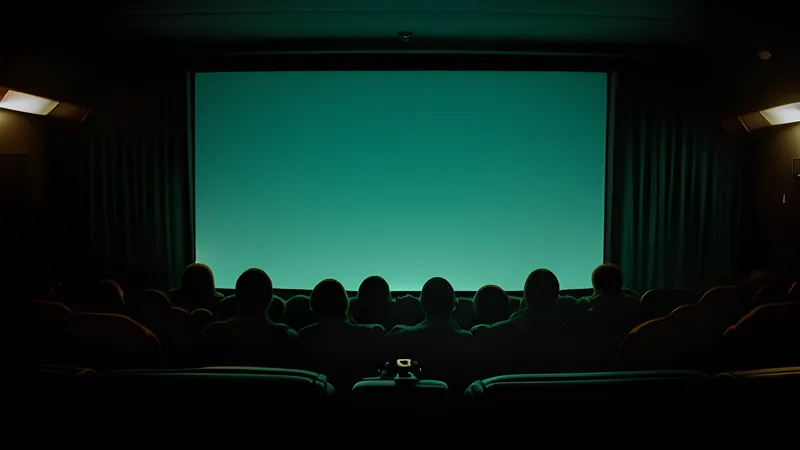
You can stream The Rocky Horror Picture Show tonight in perfect resolution, alone, on a screen the size of your palm, and you will have watched a mediocre film. Twenty thousand people have watched the exact same movie in a packed midnight house with rice in their hair and toast in the air and thrown themselves into a decades-old call-and-response, and they will tell you, correctly, that it is one of the great nights of their lives. Same film. The difference is the room. This is the thing the streaming era has quietly forgotten: a whole category of cinema was engineered to be completed by an audience, and without the audience the engine has no fuel.
The midnight movie was never really a genre. It was a distribution accident that hardened into a ritual, and the ritual was the point. Understanding how it worked is the key to why so many “cult classics” feel flat when you finally catch up with them at home, and why the ones that survive the sofa are a different, rarer breed.
The circuit that built the ritual
The midnight movie as an institution has a real birthplace. In 1970 a distributor named Ben Barenholtz began programming Alejandro Jodorowsky’s El Topo at the Elgin Theater in New York at midnight, letting word of mouth build over months into a phenomenon that ran and ran. That single booking established the template — the late slot, the return audience, the film that was too strange for a normal run finding its people in the dark. El Topo is the acid western that invented the whole midnight-movie idea, and it did so by proving that a film’s commercial life could be built from repeat communal viewing rather than a single opening weekend.
What followed down that circuit reads like a catalogue of films that make no sense as private experiences. John Waters’s Pink Flamingos is a dare you take together — the transgression only pays off when you can feel the whole room recoil and cackle at once. Lynch’s Eraserhead became a midnight fixture because its dread thickens in a shared dark. And The Rocky Horror Picture Show, a box-office failure on release in 1975, was resurrected at New York’s Waverly Theater the following year when audiences began talking back to the screen, then dressing as the characters, then bringing props, until the film became a stage for its own audience to perform on. The movie is a container; the crowd is the content.
Comedy and disgust are contagious, and contagion needs a host
There is a hard mechanical reason these films need a room, and it comes down to two responses that do not fully fire in isolation: laughter and revulsion. Both are social reflexes. We laugh far harder and far more readily in company — the presence of other laughing people lowers the threshold and amplifies the release, which is why a comedy dies in an empty press screening and detonates at a public one. A gross-out gag works the same way in reverse: the shared groan, the collective “no”, the delighted horror of everyone flinching at the same instant, all of it feeds back into the pleasure. A joke or a shock lands, the room reacts, and the reaction becomes part of what the next person is reacting to.
Strip that feedback loop out and the film has to carry everything on its own, which most cult films were never built to do. This is why The Room, Tommy Wiseau’s 2003 catastrophe, is the defining modern midnight movie: on your laptop it is a tedious, inept melodrama, and in a sold-out house where the audience hurls plastic spoons at the screen and shouts the ritual responses, it is genuinely one of the funniest experiences available in a cinema. Nothing changed in the film. The laughter found a host. Take the same principle to a film built with actual craft, Hausu, Obayashi’s demented haunted-house sugar rush, and the crowd does not rescue a bad film so much as give a delirious one the collective permission to be enjoyed at full volume. Its absurd set-pieces want an audience gasping and howling in unison.
Co-authorship, or the audience finishes the edit
The deepest thing a crowd supplies is authorship. At a Rocky Horror screening the callbacks, the props, the shadow-cast performing along beneath the screen — none of that is in the film, and all of it is now inseparable from the film. Successive audiences wrote a second text on top of the first and passed it down, so that attending is joining a lineage. That is a form of co-authorship no solitary stream can reproduce, because the film on the disc is only half the work; the other half lives in a body of communal performance that exists solely in the room.
Even films with no formal callback tradition get this gift in a milder form. Watch a genre crowd track a slow build together and you feel the collective breath-holding become part of the suspense; watch a splatter comedy with a live house and the biggest kills land like punchlines because the room supplies the timing. The midnight-adjacent riot of The Warriors plays as a comic-book lark on a screen at home and as a tribal, cheering event with a crowd who know every gang and every beat. The audience is doing part of the direction — deciding, moment to moment, where the emphasis falls.
The programmer is a co-conspirator
There is one more collaborator the sofa erases, and it is the person who chose the film and the slot. A midnight screening is curated by a human being with taste and nerve, someone who decided that a room of strangers on a Friday at midnight wanted exactly this piece of delirium, and that act of programming is itself part of the experience. You arrive already primed, having chosen to leave the house for something disreputable, having paid and travelled and committed. The algorithm that autoplays a cult film into your evening asks nothing of you, and a film that costs you nothing to reach is a film you are half-watching while you check your phone. Effort is not incidental to the midnight movie; the pilgrimage is load-bearing. The people around you made the same choice, which is why the room already feels like a congregation before the projector even fires.
That priming explains a strange fact any repertory programmer will confirm: the same title dies on a wet Tuesday matinee and detonates at midnight. The film has not changed and neither has the print. What has changed is the self-selection — a midnight crowd is a crowd that wanted to be there badly enough to stay up for it, and a room of true believers reacts as one organism in a way a room of casual drop-ins never will. Timing, in other words, is casting. The late slot casts the audience, and the audience is the lead.
What survives the sofa, and what we lost
None of this is an argument that cult films are bad. It is an argument that a large slice of them are incomplete objects designed to be finished by exhibition, and that streaming quietly amputated the half that made them work. When a distributor uploads a midnight classic to a platform and it lands with a shrug, the film did not curdle; its other half went missing.
So there is a sorting to do, and it is useful for any collector. Some cult films are self-sufficient — the craft, the vision, the dread all survive a solitary late-night watch, and these you can safely evangelise to a friend with a laptop. Others are event-films, dead on arrival at home and transcendent in a room, and the honest thing is to tell people so: do not watch The Room alone and conclude the hype was a lie; find the screening. The tragedy of the streaming monoculture is that it flattens both types into the same thumbnail, teaching a generation that the midnight movie was overrated when they simply watched it with the crowd subtracted.
If a cinema near you runs a midnight programme, it is preserving something closer to a folk practice than a repertory schedule. Go once, to the rowdiest title on the calendar, and feel the film get finished around you. Then try the same film at home the following week and measure the drop. The gap you feel is the crowd — the missing collaborator the whole form was built to include. Cinema spent its first century assuming that collaborator would always be in the seats. The midnight movie is where that assumption is easiest to test, because it fails so completely the moment the seats are empty, and where it fails you can finally see how much of the film was living in the dark alongside you all along.
Related Content