Vampyres: The British Lesbian-Vampire Cult Item
José Ramón Larraz, a Berkshire country house, and the vampire film that threw out the rulebook
Contents
The two women in Vampyres have no fangs. They do not sleep in coffins, turn into bats, recoil from crosses, or explain themselves. When they feed, they use a knife, opening a wound and drinking from it like something out of an abattoir rather than a Gothic novel. For a 1974 British vampire film — made in the years when Hammer was still gamely putting Christopher Lee in a cape — this amounts to a demolition job.
José Ramón Larraz was a Spanish comics illustrator turned director who spent the early 1970s making films in Britain, largely because Britain had tax structures and crews and Spain under Franco had a censor. Vampyres is his best-known work and the one that has kept a cult for fifty years, mostly on the strength of an atmosphere that no amount of budgetary poverty could dent.
A Hammer house with the Hammer removed
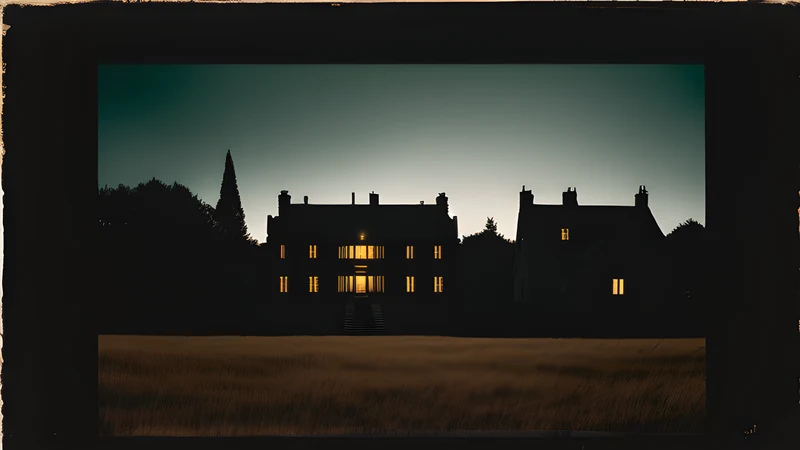
The film was shot at Oakley Court in Berkshire, the Victorian Gothic pile on the Thames that had served as the backdrop to a long run of Hammer productions and, the year after Vampyres, to The Rocky Horror Picture Show. By 1974 the house was derelict. Larraz used the dereliction.
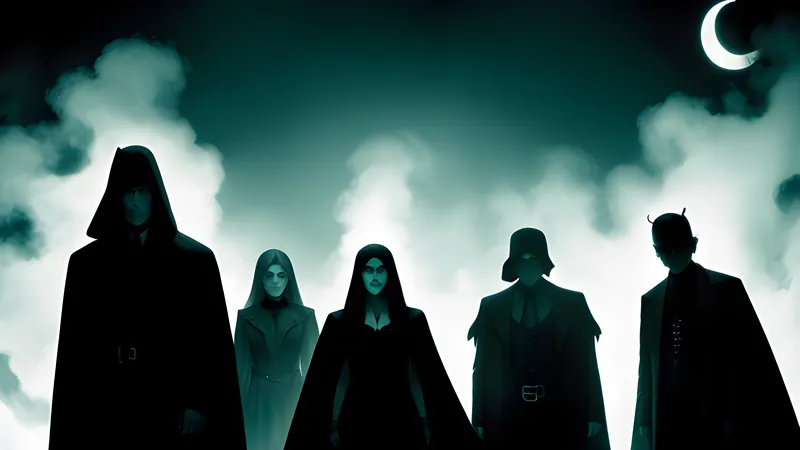
This is the first sign of what he is doing. A Hammer film would have dressed Oakley Court — candelabra, cobwebs arranged by a professional, a fire in the grate. Larraz shoots the house cold and empty, with damp on the walls and daylight coming through windows nobody has cleaned. Fran and Miriam, played by Marianne Morris and Anulka Dziubinska, drift about in long cloaks in rooms that look like what they are: an abandoned building in the Home Counties in autumn. The horror gets its purchase from ordinariness.
Harry Waxman shot it, and the name matters. Waxman had photographed The Wicker Man the year before, and the two films share a specific quality of British light — flat, grey-green, unhelpful, the exact opposite of the ripe colour Hammer had built its house style on. Waxman’s woodland exteriors in Vampyres are the film’s real special effect. The women appear at the roadside in mist that is plainly just weather, and it is more unsettling than any amount of dry ice.
The rules Larraz refuses to write
Vampire films are usually lore machines. Somebody has to explain the rules; somebody has to be the professor with the books. Larraz gives you nothing.
We never learn how Fran and Miriam died, or whether they died, or what they are. There is a suggestion of a shooting in the opening scene and a suggestion that they have been at this a long time, and the film declines to reconcile them. There is no hunter, no investigation, no third act where a man with a stake sets things right. The nearest thing to an authority figure is a couple, John and Harriet, camping in a caravan near the house, whose entire function is to notice that something is wrong and be ignored. Harriet keeps saying she has seen the women and cannot get anyone to care, which is a horror engine as old as Rosemary’s Baby and considerably cheaper to stage.
The withholding is the point, and it is why the film unnerves people who find its actual content faintly ludicrous. Explanation is comfort. A vampire with rules is a vampire you can beat. Larraz’s women simply exist in the woods off a B-road, picking up male drivers, and the film’s flat refusal to account for them leaves the audience in roughly Harriet’s position.
The mechanics of the trap
The structure is a loop, and it is executed with more care than the film’s reputation suggests. Ted, played by Murray Brown, is picked up by Fran, taken to the house, and wakes the next morning weak and cut, with a wound on his arm he cannot account for. He is invited to stay. He stays. He wakes weaker. He stays again.
Larraz shoots each cycle almost identically — the same corridor, the same bedroom, the same morning light — and lets the repetition do the work that a screaming victim would do in a lesser film. Ted is being drained across days, and he keeps electing to remain because Fran seems to like him and because the alternative is leaving. The horror is that the trap has no walls. He could drive off at any point in the film and does not.
The score deserves a note, because it is doing more than a film this cheap has any right to expect. James Kenelm Clarke wrote it, mostly for organ and strings, and it works by refusing to announce anything — it swells during the drives and the walking and goes quiet during the violence, which inverts the standard horror contract. Clarke went on to direct Exposé in 1976, which ended up on the Director of Public Prosecutions’ list a few years later, so the two men most responsible for the mood of Vampyres both had subsequent careers the British censor took an interest in. The organ has a churchy, provincial quality, closer to a crematorium service than a Gothic cathedral, and it keeps pulling the film back toward the mundane English setting every time the imagery threatens to go operatic.
That structure is the reason Vampyres survives its own cheapness. There is a real idea in it: dependency dressed as romance, a man rationalising his own exsanguination one morning at a time. Larraz is interested in that, and it is doing something the sexploitation packaging entirely conceals. The film’s distributors in the United States retitled it Vampyres, Daughters of Dracula, promising a connection to a franchise the film has no interest in whatsoever.
Cut, banned, restored
The BBFC took the scissors to Vampyres on release, and the film spent decades circulating in versions of varying mutilation — the wound-drinking material and the sexual content were both trimmed, and different territories cut different things, so that the film’s reputation for a long time rested on prints missing whatever the local censor disliked. It brushed against the video nasties panic era’s aftermath in the way most Euro-horror of the period did: notoriety arriving via the cuts rather than the content.
Modern restorations have put it back together, and the uncut film is a stranger and slower object than the sleeve art suggests. Long stretches are two women walking. Anulka Dziubinska had been a Playboy Playmate the year before, which the marketing leaned on hard and the film barely uses; Morris carries most of the picture and does the harder job, playing a creature who has to convincingly like the man she is killing.
Where it belongs
The obvious neighbours are the elegant continental vampire films of the same few years. Daughters of Darkness is the aristocrat of the group — Harry Kümel’s film has a hotel, a wardrobe budget and Delphine Seyrig, and it is doing something adjacent with far better manners. Hammer’s own The Vampire Lovers had adapted Le Fanu’s Carmilla in 1970 and opened the commercial door that Vampyres walked through; the studio kept the lore intact and let the eroticism carry the transgression. Larraz kept the eroticism and threw the lore away, which is why his film aged better than most of the wave. The broader run is mapped in the Eurohorror canon, and the metaphor’s long career gets its own treatment in the vampire as sexual metaphor.
Larraz’s own Symptoms, made the same year, is the better film and was Britain’s official Cannes entry in 1974 before vanishing for decades — a quiet, Polanski-adjacent piece of psychological horror that shows what he could do when nobody asked him for nudity. Anyone who takes to Vampyres should go straight there next.
Spoilers below
The ending is the film’s argument, and it arrives with a shrug that is easy to miss.
Ted, drained across days, finally tries to leave and cannot — Fran keeps him, and the last of the cycles ends with him dead in the house. Harriet, who has spent the film insisting something is wrong, goes to look and is killed for it, along with John. The women are interrupted by daylight, retreat into the crypt beneath the house, and the film ends with an estate agent showing the property to prospective buyers, the house on the market, the horror still installed downstairs.
Nobody wins. Nobody investigates. The film’s final gesture is administrative: a sale, a viewing, a fresh set of people about to move in above a crypt. Larraz declines even the small mercy of a fade-out on the monster’s face. The last thing Vampyres wants you to feel is that the arrangement is ongoing and that the property market is entirely indifferent to it.
The opening scene, which shows Fran and Miriam shot dead in bed by an unseen gunman, is never explained and never referred to again. Read one way, they are victims who came back. Read another, the killing has not happened yet and the film is a loop closing. Larraz was asked about it for the rest of his life and never settled it, which is either evasion or the most honest thing in the picture.
Related Content