Uncle Boonmee Who Can Recall His Past Lives: The Ghost-Monkey Palme d'Or
A dying man, his dead wife at the dinner table, and a son with red eyes in the dark
Contents
Tim Burton was president of the Cannes jury in 2010, and the Palme d’Or went to a Thai film in which a dead woman fades into a chair at dinner and a lost son walks out of the treeline covered in black fur with two red lamps for eyes. The press reaction included a certain amount of spluttering. Looking back, it is one of the least surprising decisions in the festival’s history. Burton has spent his career arguing that the monstrous is family, and Apichatpong Weerasethakul had just made the most literal version of that thesis anyone will ever film.
Uncle Boonmee Who Can Recall His Past Lives (2010) runs a little under two hours. Boonmee (Thanapat Saisaymar) is dying of kidney failure. He runs a tamarind farm in Isan, the northeast of Thailand, near the Laotian border, and he has come home to die there with his sister-in-law Jen (Jenjira Pongpas) and his nephew Tong (Sakda Kaewbuadee) in attendance. He administers his own dialysis on the veranda. He talks about whether his illness is karmic payback for the men he killed as a soldier and the insects he killed as a farmer, and the film is entirely serious in giving those two categories equal weight.
I came to this after Tropical Malady had already rearranged my expectations, and it still landed sideways. Where the earlier film was a puzzle box built out of a wall, this one is porous, hospitable and frequently very funny.
The dinner table
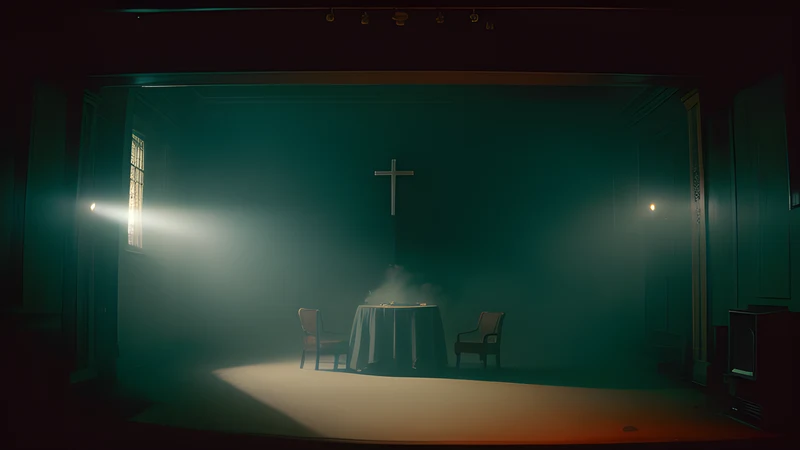
The scene everyone carries out of the cinema is the one where Boonmee’s dead wife Huay materialises at the dinner table. She does it slowly, in a single unbroken shot, in the ambient light of the veranda while everyone is eating. There is no music sting. Jen notices, remarks on it, and carries on. Huay sits down. They discuss her death, his illness, the practicalities.
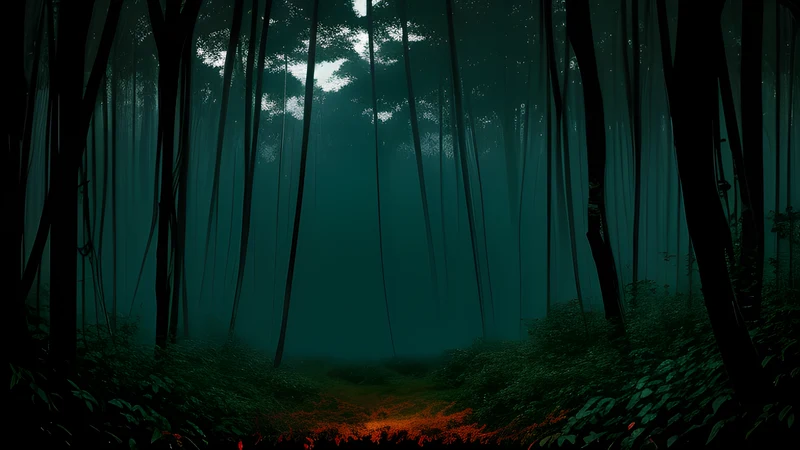
Then Boonsong arrives. Boonmee’s son, missing for years, walks up out of the dark as a monkey ghost: a shaggy black silhouette with glowing red eyes, filmed with the flat frontal patience of a family photograph. He explains, calmly, over dinner, what happened to him. The family absorbs it.
The genius of this sequence is entirely a matter of blocking and duration. Apichatpong stages the supernatural at conversational distance in a wide shot with the meal continuing, and the camera declines to react. He has said the monkey ghost’s design is a deliberate throwback to Thai television and comic books of the 1970s — the costume looks like a costume, and the film wants you to notice, because Boonsong is a memory of a genre as much as a memory of a son. Anyone tempted to fix the effect with CGI has failed to understand what is being said, which is roughly the argument in why practical gore ages better than CGI blood run through a completely different value system.
Why it works: the refusal of the reaction shot
Here is the mechanics. Conventional ghost cinema tells you how to feel by cutting to a face. A ghost appears; we cut to the human; the human’s terror is our instruction. The Haunting built an entire masterpiece out of that grammar by giving you nothing except the reaction. Apichatpong removes the instruction. He holds a wide, keeps everyone in frame, and lets the dead and the living occupy the same coverage.
The effect is a fundamental reordering of the ghost story’s politics. If nobody in the frame is frightened, the ghost is a guest. Boonmee’s household has visitors, and the visitors are relatives, and the relatives have news. Grief in this film is a hospitality problem rather than a terror problem. Compare The Orphanage, which reaches the same emotional destination by putting its protagonist through an ordeal — Apichatpong gets there by asking everyone to sit down and eat.
The photography by Sayombhu Mukdeeprom is the other half of it. Shot on 16mm, grainy, working with available light and lamps, the image itself has the texture of something recalled rather than recorded. When the film cuts to a sequence in an entirely different register — a princess, a pool, a catfish, in what plays as one of Boonmee’s other lives — the change in light does the work that a title card would do in a lesser film.
The buffalo, the princess, and the cave
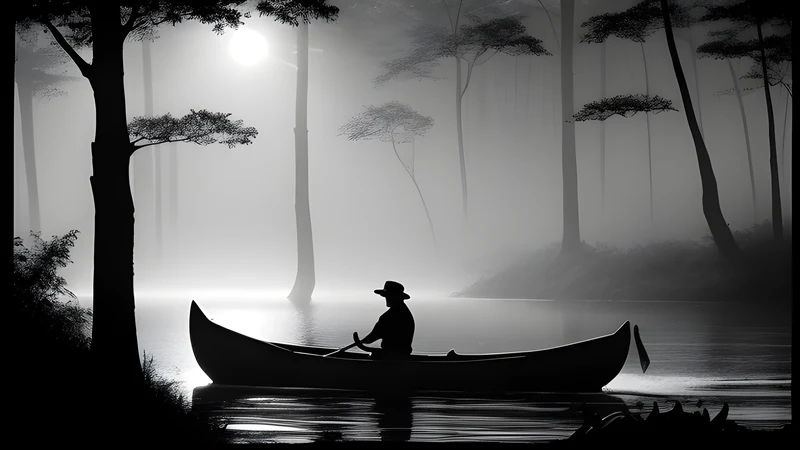
The film is structured as a set of loosely joined panels. It opens with a water buffalo breaking its tether and wandering into the trees, and stays with the animal, and this scene is never explained or referred to again. Later, a disfigured princess in a period setting is carried to a waterfall and has an encounter with a catfish which is one of the strangest and most tender sequences in modern cinema, played completely straight. Near the end, Boonmee walks into a cave and says he thinks he was born there.
It all interlocks the way a life does, if you accept the film’s premise that a life is not a single continuous thing. The buffalo, the princess and the man are all Boonmee, or all no one in particular, and the film’s serenity about the difference is the whole point.
Context matters here: the film grew out of a wider multi-platform project Apichatpong made around Nabua, a village in the northeast with a history of violent state suppression of suspected communists in the 1960s and 70s. Boonmee’s soldiering, his karma, and the jungle full of things that will not stay dead all sit on top of that specific and unhealed local history. The ghosts are political without a single line of political dialogue.
The real ancestor
The cross-reference nobody makes is to the Japanese ghost tradition rather than the Thai one, and specifically to Kwaidan (1964) — see Kobayashi’s ghost stories as painted theatre. Kobayashi’s anthology treats the supernatural as a formal, courteous, aesthetic presence with its own etiquette, and stages it in artificial space where nobody screams. That is Boonmee’s veranda, transplanted and made rustic.
The other ancestor is closer to home for Apichatpong: the low-budget Thai television and pulp of his childhood, which he plunders without irony. Very few art-house directors of his standing are willing to admit that the deepest layer of their sensibility is a man in a monkey suit on a small screen in the 1970s.
The case against
The honest complaint is drift. The final twenty minutes leave Boonmee’s story to follow Tong and Jen into a hotel room in a town, and produce an image of two versions of the same people sitting in two places at once, watching television. It is a fascinating idea and it lands with much less force than the veranda, and it dissipates where you expect it to gather. A number of very sympathetic viewers find the last movement a failure of nerve.
I would defend it on the grounds that a film about reincarnation ending tidily would be a contradiction, though I concede the defence is convenient. The buffalo prologue also asks you to accept a promise the film never quite pays; the animal is beautiful and it is doing thematic rather than structural work.
Where to find it, and what next
Boutique labels keep it available and it turns up on arthouse streaming platforms. Watch it in a dark room; a great deal of the film is dark, and cheap screens crush the veranda scene into mud.
Then take Memoria, where Apichatpong exports this cosmology to Colombia and hands it to Tilda Swinton, and read the subtitled horror film and the anglophone blind spot for why so few people who love ghost stories have seen this one.
The verdict: this is the most radical ghost film of its century, and it achieves that by removing fear from the ghost story and finding that everything else survives intact. It has more genuine feeling per frame than any horror film of the 2010s I can name, and it is funnier than its reputation allows.
Spoilers below
What Boonsong says at the table is the film’s spine. He tells the family he was out photographing the jungle and kept finding a strange shape in his pictures, and went looking for it, and found a monkey ghost, and mated with it, and became one. He has been in the treeline this whole time. He came back because he sensed his father was dying. Apichatpong lets the family accept this over dinner, and lets the horror of it register only later and only in Jen’s face, and only for a second.
Huay stays. She helps with the dialysis. She talks to her dying husband about what death is like, and she tells him that spirits attach to people rather than to places, which is the film’s rebuttal of the entire haunted-house genre in one line of dinner conversation.
The cave is the ending. Boonmee, Huay, Jen and Tong walk into it by torchlight, and Boonmee describes his birth in the dark, and says that his memory of it is of a future life rather than a past one, which is either a beautiful thought or a translation problem and works as both. Huay removes his dialysis tube. He dies in the cave with his dead wife’s hands on him and his monkey-ghost son somewhere outside in the trees.
The coda is the piece that divides people. After the funeral, Tong showers and changes into monk’s robes; Jen sits in the hotel room; and then the film simply produces a second Tong and a second Jen, still on the bed, watching television, while the first pair walk out to get food. No explanation, no sting, no shot-reverse-shot. The soul has done what the film has been quietly claiming souls do — it has split off and gone on being somewhere else while the body carries on with its evening.
Read the whole thing back from there and the buffalo makes sense at last. An animal breaks its rope and walks into the trees, and a man is pulled back to the trees to die, and a boy walks out of the trees with red eyes, and the jungle takes everything and keeps it, alive, in a form nobody would recognise. The Palme d’Or jury got it exactly right.
Related Content