The Yellow Sea: Na Hong-jin's Cross-Border Brutality
A Yanbian taxi driver takes a contract in Seoul, and Na Hong-jin films the debt eating him alive
Contents
Na Hong-jin had a very hard act to follow. The Chaser, his 2008 debut, was the kind of first film that rearranges a national industry’s sense of what is possible, and the obvious move afterwards was to make it again, slightly bigger. What he did instead was make a film about money.
The Yellow Sea arrived in 2010, went to Un Certain Regard at Cannes the following spring, and has spent fifteen years being described as a chase film. It is a chase film in the way that a foreclosure is a change of address. The chase is what the story does; the subject is a man in the wrong economy, and every terrible thing that happens to him proceeds directly from a sum he cannot repay.
Yanbian, a debt, and a job across the water
Gu-nam, played by Ha Jung-woo, drives a taxi in Yanbian — the Korean Autonomous Prefecture in China’s north-east, home to the Joseonjok, ethnic Koreans who have been on the Chinese side of the border for generations and who are, in both countries, nobody’s priority. He is broke in a specific and modern way. He borrowed heavily from a broker to send his wife south to Seoul on the understanding that she would work and send money back. She went. The money stopped. The calls stopped. The debt did not stop, and Gu-nam pays it down at a mahjong table, which is going about as well as you would expect.
Into this walks Myun Jung-hak, played by Kim Yoon-seok, who butchers dogs for a living and arranges other things on the side. The offer is simple and it is the oldest offer in the genre: go to Seoul, kill a man, and the debt is cleared. Gu-nam is smuggled across the Yellow Sea in a boat, given ten days, an address, and a photograph.
The casting is the first thing to admire, because Na has taken his two leads from The Chaser and swapped their moral positions. Kim Yoon-seok, who was the closest thing that film had to a hero, is here a genuine predator. Ha Jung-woo, who was that film’s blank-faced killer, is here the most sympathetic man on screen — a driver who wants his wife back and is bad at cards. A director with less nerve would have run the same pairing the same way. Na inverted it and trusted the audience to feel the ground move.
Why it works: the film is priced in labour
Na’s method is physical, and The Yellow Sea is his most exhausting application of it. Gu-nam does not glide through Seoul. He walks it, sleeps rough in it, eats badly in it, gets lost in it, and does his surveillance the way a man with no money and no training would do surveillance — standing in the rain, taking notes on paper, waiting. The film spends an enormous amount of its runtime on the preparation, and it is the best part of the picture, because it is the part where you can feel how much the job costs before anybody has been hurt.
When the violence arrives it is the least glamorous major-key action in Korean cinema. Nobody in this film owns a gun. They fight with hatchets, kitchen knives, lengths of pipe and — in the film’s most notorious flourish — large animal bones, because Myun is a butcher and butchers use what is to hand. The effect of removing firearms is not to make the violence tamer. It makes every death take a long time and require somebody to be physically present for all of it. Na is making an argument about class here that no amount of dialogue could carry: guns are capital, and nobody in this story has any.
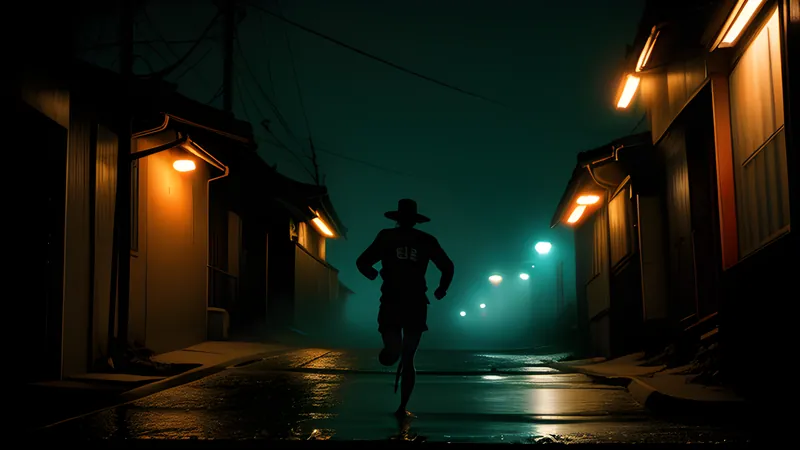
The chases are the other pillar, and they are shot with Na’s signature refusal of relief. He films running the way he filmed it in The Chaser — the incline, the slipping, the ruinous stupidity of a foot pursuit through traffic — but on a bigger canvas, across motorways and container yards and industrial ground, so the sense is of a man being moved across a map by forces with better logistics than his. There is a lengthy vehicular sequence in the film’s middle stretch that is genuinely frightening precisely because everyone involved drives badly.
Ha Jung-woo’s performance is the anchor. He plays Gu-nam as a man of average competence in an above-average situation, and he never upgrades. He does not acquire skills. He does not have a hidden past. He gets more tired, more injured and more desperate, and by the last act he is running on nothing but the original question about his wife, which the film keeps just out of reach.
The case against
It is too long and it is too tangled, and those are separate problems. The plot of The Yellow Sea accumulates parties — a Seoul businessman, his associates, the police, Myun’s people, the men who actually wanted the target dead — until the middle hour requires bookkeeping, and Na has no interest in helping. Motives are supplied late, in a rush, by characters we have barely met. A thriller can survive a certain amount of this; the film pushes past it.
The film also circulates in more than one length, and this has muddied its reputation for fifteen years. The longer Korean version is the one to look for; the shorter international cut is the one a great many English-speaking viewers met first, and it removes exactly the connective material that the film’s already-strained plotting could least afford to lose. Some of The Yellow Sea’s reputation for incoherence was manufactured in an edit suite.
And there is a real gap between the film’s sociology and its appetite. Na has done something valuable in putting the Joseonjok on screen as protagonists rather than as the Korean cinema’s default supply of disposable villains — an ugly convention the industry ran for years. But the film also hands its most bestial character to that community and films Yanbian as a mud-coloured hell, and it never fully resolves the tension between the empathy it extends to Gu-nam and the relish it takes in everything around him.
The real ancestor
The name most reviews reached for was Melville, and it is the wrong lineage. Melville’s men are professionals with codes; Gu-nam is a debtor.
The real ancestor is Jules Dassin’s Thieves’ Highway from 1949 — a film about a man hauling produce to market and being destroyed by the terms of the trade, where the antagonist is a price. Dassin worked out that you could build noir out of an invoice, and The Yellow Sea is the same construction with a border added: a man moves goods across a frontier, the goods are a killing, and the market takes everything he has including his body.
The closer parent, and the one that explains the film’s tone, is Sam Peckinpah’s Bring Me the Head of Alfredo Garcia from 1974. A broke man accepts a contract to deliver a death for money, and the film becomes a shambling, filthy, sun-blasted road picture in which the contract slowly consumes the man carrying it out. Peckinpah’s protagonist gets sweatier, drunker and further from anything recoverable with every mile, and so does Gu-nam. Both films understand that the horror of a paid killing is the logistics.
Within Na’s own work, The Wailing six years later is where the physical filmmaking and the moral queasiness finally find a subject large enough for them, and you can see the whole director rehearsing here: the rain, the mud, the outsider, the sense that the universe is running a scheme nobody has explained. For a broader map, Korean genre cinema: ten to start with has the essentials.
The verdict
The Yellow Sea is a great film with a bad hour in it, and the great parts are great enough that the bad hour is a price worth paying. Na Hong-jin took the most conventional premise available — take this money, kill this man — and rebuilt it as an argument about who gets to have options. Ha Jung-woo is remarkable as a man with no talents beyond persistence; Kim Yoon-seok is genuinely upsetting; and the decision to strip guns out of a crime film and make everyone use butcher’s tools produces a violence that is harder to watch than anything in the director’s more celebrated work. Find the long cut. Give it the full evening it demands. And come out of it knowing that the most frightening thing in the film is an interest rate.
Spoilers below
The job goes wrong in the only way the film could not have survived going right: Gu-nam does not do it.
He tracks the target — a professor — for days, learns his movements, picks his moment, and on the night he moves, somebody else has got there first. The professor is killed by another party entirely, and Gu-nam arrives into the aftermath, is seen, and becomes the man the police are looking for. He has done all of the labour of a murder and committed none of it, and he is now carrying the full liability. It is the film’s central joke and its cruellest structural idea: he cannot even be paid, because the debt was contingent on a job that somebody else completed.
What unspools from there is a web of contracts. Multiple parties wanted the professor dead for their own reasons — a businessman’s private grievance among them — and Gu-nam has been walked into the middle of an arrangement that had no use for him beyond a body to hang it on. Myun Jung-hak comes to Seoul to clean up, and Kim Yoon-seok plays the clean-up as a working day. He is not enraged. He has a list.
The question that drove Gu-nam across the water — where his wife went, and why the money stopped — is the thing the film handles most carefully, and I want to be honest about the limits of what I can tell you. The answer, when it finally arrives, arrives too late and costs too much to function as a resolution; whatever certainty he gets is not worth what he paid to get it, and Na frames it as the final invoice rather than as revelation. The film’s coda has been argued over since release, and the two cuts do not leave a viewer in quite the same place.
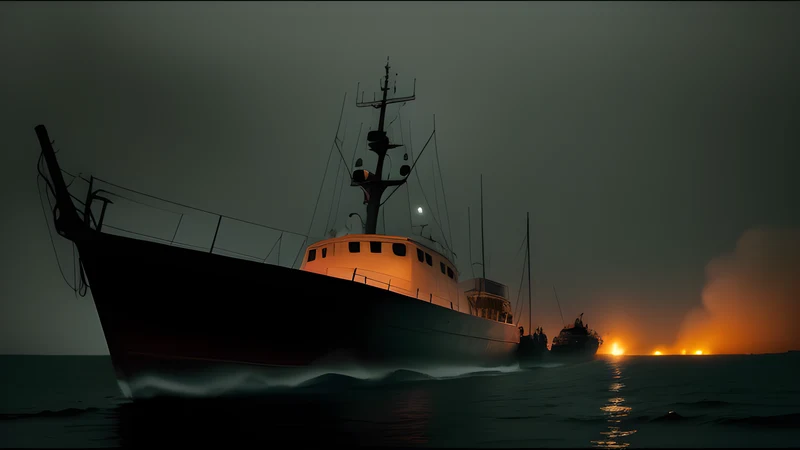
What is not ambiguous is the crossing. Gu-nam, badly wounded, gets onto a boat going back the way he came, and he does not reach the other side. He dies at sea, in the middle of the water that gives the film its name — the exact geographical midpoint between the country that would not have him and the country that sold him. Na has spent two and a half hours moving a man across a border in both directions, and the last thing he does is leave him in the gap. There is no home to be sent back to, and there never was; there is only the crossing, and the crossing is what he was sold.
Related Content