The Witch: Folk Horror and the Puritan Nightmare
Robert Eggers builds terror out of scripture and mud
Contents
Robert Eggers put a subtitle on his first film that told you exactly what kind of horror you were getting: The VVitch: A New-England Folktale. He reached past the ghost story and the monster movie for the register of a folktale — the sort of thing that gets told to frighten children into obedience and then curdles into something the tellers half-believe. Released in 2015, it remains the cleanest debut in modern American horror, and the most disciplined film ever made about the machinery of Puritan faith turning on the people it was meant to protect.
I have watched it more times than is healthy, and it keeps yielding. The horror is real, escalating and, by the end, total. But the thing that makes it re-watchable is the argument buried inside it — that this family is destroyed less by a witch in the wood than by the theology they carry with them into the clearing.
The plainest possible setup
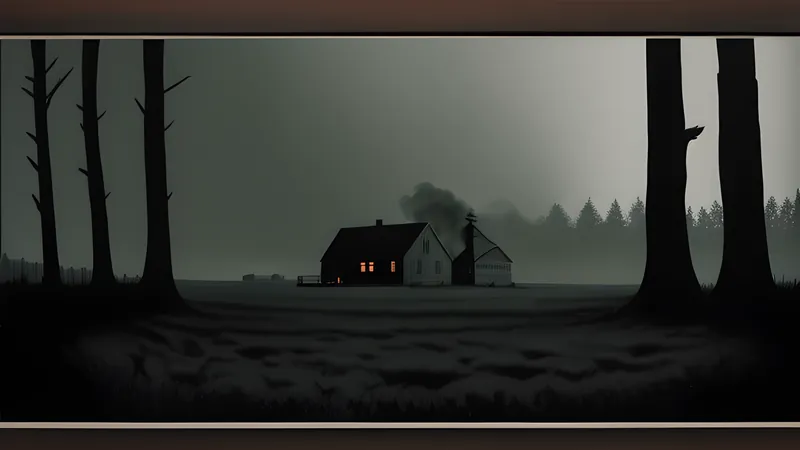
Eggers wastes nothing. A farmer named William is expelled from a plantation — a Puritan settlement — over some point of doctrinal pride, and rides out with his wife Katherine and their five children to build a farm at the edge of a vast, dark wood. That is the whole premise. The genius is in the “edge of the wood,” because the film understands the wood the way the Puritans did: as the wilderness, the domain of the Devil, the negative space at the border of the godly world into which everything unspeakable is projected.
The horror announces itself with brutal economy. The infant Samuel, playing peek-a-boo with his eldest sister Thomasin, vanishes between one breath and the next. Eggers cuts, briefly and without mercy, to what became of him. There is no ambiguity for the audience about whether a witch is real; the film shows you, early, that she is. What it withholds is whether the family can survive knowing it — and the answer, teased apart guilt by guilt, is no.
Anya Taylor-Joy, in the role that made her, plays Thomasin as a girl on the threshold of womanhood in a household that has no vocabulary for what that means except suspicion. Her mother resents her. Her younger siblings accuse her. Her father leans on her and then sacrifices her trust to save his own standing. The film watches a family look for something to blame and slowly, inevitably, settle on the one member whose only crime is that she is becoming a woman under a roof that regards female desire as the Devil’s doorway.
Why the dread accumulates instead of spiking
Eggers is a production designer by temperament, and the film’s terror is built out of research. The dialogue is stitched from period sources — court records, diaries, the actual texts of witch trials — so the family speaks a thou-and-thee English that sounds archaic and, crucially, sincere. Nobody in this film is winking. Mark Korven’s score does much of the covert work: a keening, atonal string-and-voice arrangement that swells at the edges of scenes before anything has happened, so that dread arrives before its cause. The camera creeps toward the treeline in slow push-ins and then declines to show you what is inside it. The film understands that the wood is scariest when it stays a rumour.
The other reason the horror lands is that Eggers refuses the modern reflex to make the supernatural a metaphor you can safely file away. Plenty of recent horror gives you a monster and a wink — the ghost is really grief, the demon is really trauma, and once you have decoded it you are allowed to stop being frightened. The Witch denies you that exit. The witch is a metaphor for the family’s guilt and desire and also an actual witch who takes children apart in the dark. Both are true at once, and the refusal to collapse one into the other is what keeps the film from tidying itself into a fable.
The performances hold this together because Eggers directs children as seriously as adults. Harvey Scrimshaw as Caleb gives the film its most harrowing single scene, a boy’s religious ecstasy and terror indistinguishable on his face — a sequence that reportedly unsettled audiences at Sundance and remains hard to sit through, precisely because the child believes every syllable of the faith that is killing him. Ralph Ineson’s William is a study in a certain kind of failure: a proud, loving, useless man whose voice — that gravel-bottomed rumble — keeps promising a competence he cannot deliver. Kate Dickie’s Katherine curdles from mother to accuser in increments so small you cannot name the moment she turns. Nobody in this cast plays a type. They play people trapped inside a belief system, which is the harder and rarer thing.
At the centre of it stands Black Phillip, the family’s he-goat, one of the great horror creations of the century precisely because the film treats him as ordinary livestock for most of its length. The children play with him. He butts and bleats. And the whole time, the film is letting you wonder, and letting the family wonder, and the not-knowing is worse than any reveal could be.
Folk horror’s bloodline, and its new branch
The Witch did not invent folk horror; it re-founded it. The genre’s foundational British films — Witchfinder General, The Blood on Satan’s Claw, and above all The Wicker Man — established the grammar: an isolated community, an old belief the modern world thinks it has outgrown, a rational visitor or a devout family who discover the old thing was never dormant. Eggers transplanted that grammar to the New World and found it grew even better in American soil, because Puritanism supplied a ready-made theology of terror. The Devil was not a superstition to these people. He was a defendant.
The film’s most obvious modern sibling is Ari Aster’s Midsommar, which four years later took the same folk-horror engine and ran it in blazing daylight rather than shadow — the two films make an almost perfect diptych on how belief consumes the outsider, one shot in Puritan gloom and one in Swedish sun. Closer to home, Ben Wheatley’s Kill List had already dragged the British folk-horror tradition into the present and ambushed audiences with it, and if you want the older, stranger root of the “isolated community, ancient appetite” idea, the reed fields of Onibaba are watching from Japan. Eggers gave the whole tradition a jolt of scholarly rigour, and every folk-horror film since has had to reckon with how seriously he took the archive.
The verdict, argued
What makes The Witch great rather than merely accomplished is that it is genuinely on Thomasin’s side, and it earns that sympathy by first showing you a world with no place for her. The film is a horror picture, an unbroken tightening of dread across ninety minutes, and it is also the sharpest study I know of how a rigid faith manufactures the very sin it fears. It does not sneer at the Puritans. It takes their terror seriously enough to show what it costs them, which is everything.
Newcomers sometimes report it as slow. It is not slow; it is patient, in the way a snare is patient. Watch it with subtitles on for the archaic dialogue, in a dark room, and let Black Phillip take his time. The payoff is one of the few horror endings that feels less like a twist than a liberation.
Spoilers below
The film’s final movement is where its argument becomes its horror. The family destroys itself from within — the twins Jonas and Mercy, the drowning of the mother’s faith after the loss of the baby and then of the boy Caleb, William gored and buried under his own stacked firewood by Black Phillip, Katherine attacking Thomasin in a grief-maddened rage and dying in the struggle. By the last reel, Thomasin is the only one left alive, orphaned by a wilderness her family walked into out of pride.
And then Eggers does the thing that turns the film from tragedy into something more unsettling. Thomasin, alone and with nothing left to lose, addresses the goat. Black Phillip answers. The Devil offers her the deal the whole film has been withholding — asks if she would like to see the world, to taste butter, to wear a pretty dress, to live deliciously. She signs the book. And in the final images she walks naked into the wood, finds the coven gathered around a fire, and rises, laughing, into the air above the trees.
The ending is horror and it is release at once, which is the film’s whole thesis made flesh. Thomasin was accused of witchcraft by a family who had already decided a young woman’s desire was satanic. The film’s cruel, clarifying joke is that they were right about the outcome and wrong about the cause — she becomes a witch because they left her no other door. The Devil offers her exactly what her family, her faith and her God denied: pleasure, freedom, and a place to belong. That the only community with room for Thomasin is a coven of witches is the most damning thing The Witch has to say, and it says it while she is laughing.
Related Content