The Warriors: The Gang Odyssey That Became a Comic Book
Walter Hill turned a slice of New York panic into a neon fairy tale
Contents
Walter Hill’s The Warriors (1979) has one of the great high-concept engines in genre cinema, and it is over two thousand years old. A small band, stranded deep in hostile country, has to fight its way home through a gauntlet of enemies who all want it dead. That is the plot of Xenophon’s Anabasis, the account of ten thousand Greek mercenaries marching to the sea through Persia, and Sol Yurick knew exactly what he was doing when he transplanted it into the gang wars of 1960s New York for his 1965 novel. Hill knew it too, and he pushed the material one crucial step further, turning a grimy urban thriller into something closer to myth.
One night, one long walk home
The setup is beautifully efficient. Cyrus, the messianic leader of the city’s biggest gang, calls a midnight truce and summons a delegate from every crew in New York to a mass meeting in a Bronx park. His pitch is simple and seductive: the gangs outnumber the police many times over, so they should stop killing each other and take the city. It is a genuinely stirring bit of demagoguery, and then Cyrus is shot dead by a twitchy opportunist from a gang called the Rogues, who points the finger at the Warriors, a crew down from Coney Island.
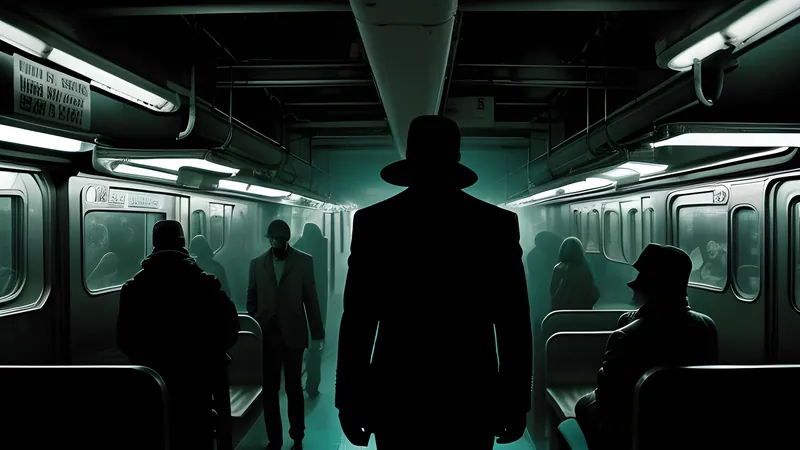
That frame-up is the starting gun. The Warriors are suddenly the most wanted gang in the city, sixty-odd miles of hostile turf between them and home, and every crew in New York has been told they did it. The film is the night-long journey back to Coney Island, subway line by subway line, each stop a new territory and a new enemy: the roller-skating Punks, the mimed menace of the baseball-uniformed, face-painted Baseball Furies, the all-female Lizzies. A DJ’s voice — we see only her lips at the microphone — narrates the manhunt across the airwaves, turning the whole city into a single hunting party. The structure is a video game a decade before video games looked like this, a series of levels and boss fights strung along the transit map.
Why the stylisation works
The genius of Hill’s approach is that he refused to make the realistic film the subject matter invited. This is not the New York of The Panic in Needle Park or the sociological gang drama the 1970s kept producing. Hill drains the realism out and replaces it with a fairy-tale grammar: the gangs wear matching costumes no real crew would ever adopt, the subway runs on dream logic, the city is emptied of ordinary citizens so that the streets belong entirely to tribes. Every choice pushes toward legend. The Baseball Furies, with their painted faces and Louisville Sluggers, are not plausible for a second, and their implausibility is precisely what makes them unforgettable — they are figures from a nightmare, not a police report.
The craft insight is about how tightly Hill controls tone through movement and colour. He shoots the night in deep, saturated blacks punctuated by neon and the sodium orange of the platforms, and he keeps the Warriors moving — the film almost never stops, because stopping means dying. That relentless forward propulsion is the same muscle Hill would flex across his career in The Driver and 48 Hrs., a belief that momentum is character. The fights are choreographed for clarity and rhythm, staged more like dance numbers than brawls, which is why they still read cleanly when so much action of the era has aged into mush. Hill trusts the wide shot and the clean silhouette, and the film is legible in a way modern edit-blitz action forgets how to be.
Then there is the comic-book question the film made literal. In 2005 Hill released a Director’s Cut that added an animated comic-panel prologue and used illustrated transitions between chapters, arguing that the panels were what he had wanted all along — the film as a graphic novel come to life. Purists split on it, and I lean toward the theatrical version, whose stylisation is strong enough without the framing device spelling it out. But the impulse is honest, because the film was always operating at comic-book altitude: bold primary archetypes, iconic costumes, a quest structure, villains defined by a single visual hook. Hill had made a comic book in live action six years before the Director’s Cut told you so.
The novel underneath, and the myth on top
Sol Yurick wrote the source novel partly in argument with the romantic view of gangs, and his book is grimmer and more sociological than Hill’s film — younger characters, a bleaker night, an ending that offers no triumph. Hill kept the skeleton of Yurick’s structure and the Anabasis frame Yurick had built it on, then swapped the sociology for spectacle. That trade is the whole reason the film endures where a faithful adaptation might have dated. Yurick’s New York was a specific city at a specific moment of urban fear; Hill’s is a dream that never has to age because it was never real to begin with.
The choice tells you something durable about adaptation: fidelity to a book’s surface can be a trap, and the smarter move is often to find the mythic shape underneath the reporting and build outward from that. Hill found Xenophon inside Yurick and let the two-thousand-year-old story carry the weight. It is the same instinct that keeps the film feeling less like a period piece than a fable that happens to be set on the subway.
The verdict
The Warriors is one of the purest examples I know of style doing the heavy lifting, and it is why the film has outlived nearly every “realistic” gang picture of its moment. The characterisation is thin by design; the Warriors themselves are archetypes — the level-headed heir Swan, the hot-headed muscle Ajax, the wary Mercy who latches onto the crew — and the film asks you to invest in their journey rather than their psychology. That thinness is the price of the myth, and the myth is worth it. What you remember is the atmosphere: an entire city reimagined as a board across which costumed tribes hunt each other under sodium light, and the ancient, satisfying shape of a small band trying to get home. It has been endlessly imitated, sampled, and turned into a video game of its own, and none of the descendants match the strange purity of the original.
For where to go next, the obvious companion is another late-1970s, early-1980s vision of a New York collapsed into pure genre myth — John Carpenter’s Escape From New York, which took the same instinct (the city as a lawless arena) and cranked it into science fiction two years later. It also rewards a viewing alongside the loose, roaming energy of Repo Man, another film that treats a real American city as a stylised nowhere for outsiders to wander through.
Where to watch: the original 1979 theatrical cut is the one to prioritise, though the 2005 Director’s Cut is worth a look once you know the film. See it after dark, loud, and let the neon do its work.
Spoilers below
The pleasure of The Warriors is that its stakes are so cleanly drawn, and the resolution pays them off without cheating. The Warriors’ warlord Cleon is presumed killed early in the Bronx, which is what elevates Swan to leadership for the long march south, and the film smartly never confirms his fate — he simply does not come home, a casualty of the opening ambush. Along the way the crew is whittled down: Fox is thrown under a train during a scuffle, Cochise and the others are picked off or scattered, and the survivors keep moving because the alternative is annihilation.
The Baseball Furies chase — the crew pursued through the park and turning at last to fight in the film’s most iconic set piece — is the moment the Warriors stop merely fleeing and start winning, and it is staged as a triumph of nerve over numbers. Mercy, the girl who attaches herself to Swan, hardens from a hanger-on into a genuine partner across the night, and their wary romance is the film’s small, real heart.
The climax delivers the truth the whole film has withheld: the killer of Cyrus was Luther, the leader of the Rogues, who shot him for no reason beyond the pleasure of chaos — his answer, when pressed on why, amounts to a shrug about simply liking to do things like that. That nihilism is the film’s dark joke; the great citywide truce, the dream of the gangs uniting, was wrecked by one grinning vandal acting on a whim. When the Warriors finally reach the Coney Island beach at dawn and Luther comes to finish them, Swan faces him down, the Rogues’ bluff collapses, and the real killers are exposed. The last image — the exhausted survivors walking along the shoreline in the grey morning light, home at last — is the Anabasis payoff intact across two and a half millennia: the sea, the survivors, the long walk over. Hill lets them have their dawn, and it feels earned.
Related Content