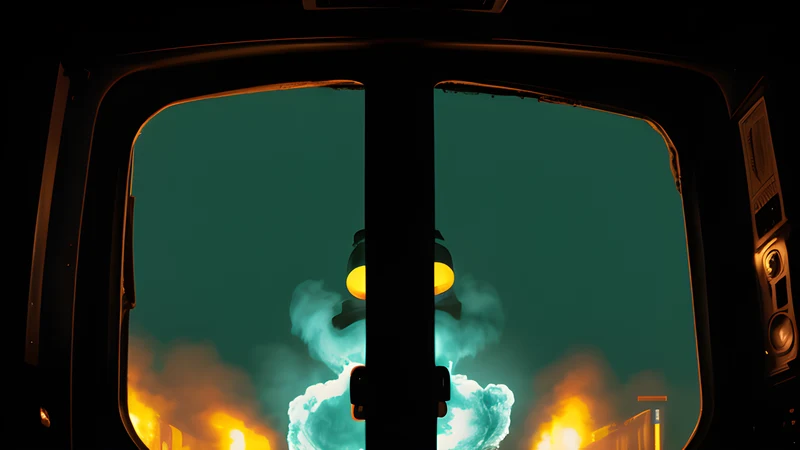
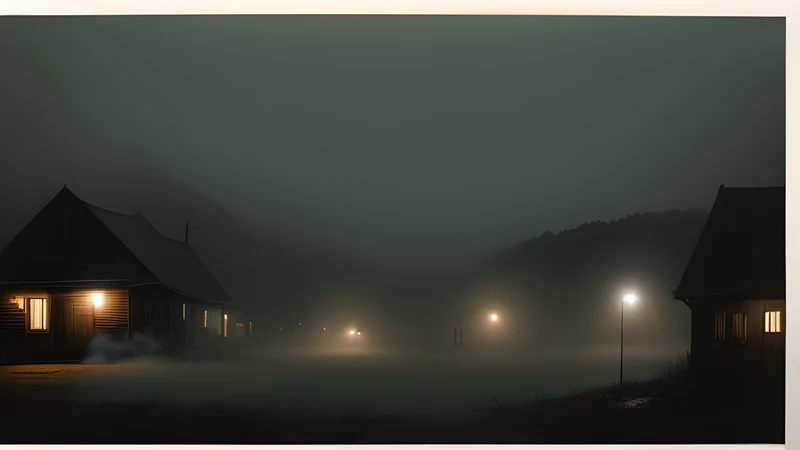
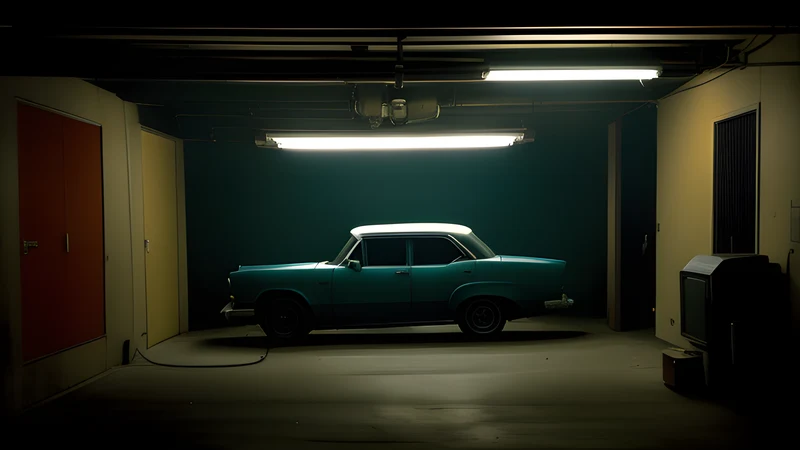
The Sender: The Telepathic-Nightmare Sleeper
Roger Christian's 1982 debut got to the shared nightmare two years before Freddy Krueger
Contents
The Sender opens on a young man walking into a lake in front of a family picnic. He does it without hurry and without announcement, which is the first indication that Roger Christian understood the assignment. The picnickers pull him out. He has no name, no papers and no memory, so the county psychiatric hospital books him as John Doe, and Dr. Gail Farmer inherits him. Within a reel she is having other people’s nightmares.
Paramount released this in 1982 and appeared genuinely unsure what to do with it. It has a studio budget, a proper score by Trevor Jones — the same year he wrote The Dark Crystal — and a cast of serious actors, and it went out into a marketplace already saturated with slashers and vanished. Two years later Wes Craven released a film about a man whose dreams could reach into other people’s, and the shared-nightmare picture became a franchise industry. The Sender got there first and got nothing for it.
An art director directs
Roger Christian’s credentials before this were extraordinary and entirely visual. He was set decorator on Star Wars in 1977 and shared the Academy Award for it; he was art director on Alien in 1979. His whole professional reputation was built on a specific talent — making cheap, real, used-looking objects feel lived in, the aesthetic that gave both those films their weight. Then he made the short Black Angel in 1980, and Paramount let him direct a feature.
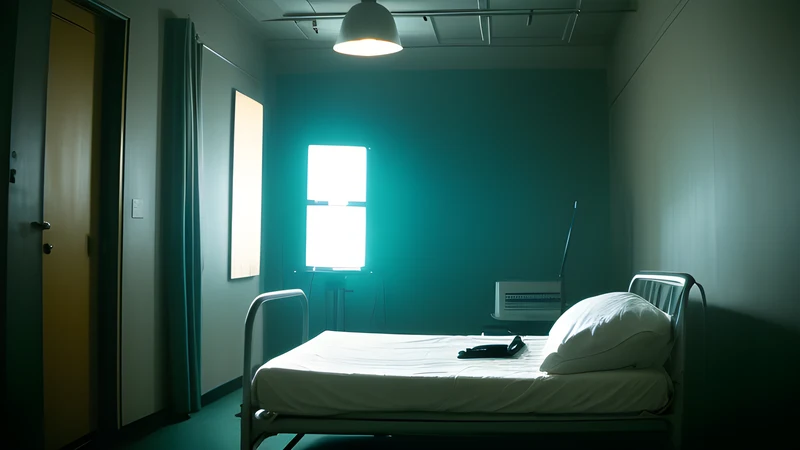
You can see the pedigree in every frame and it cuts both ways. The hospital is superb: peeling institutional green, cheap furniture, a building that clearly predates any theory of care currently practised inside it. Christian shot in England with British locations standing in for anonymous American county, and the mismatch works in his favour — the place feels slightly wrong in a way nobody in the film can name.
What he could not do is drive a scene. The dialogue passages sit flat, and Christian keeps reaching for an effect when a cut would do. His later career bears this out with some force; he is the man who directed Battlefield Earth in 2000, a film assembled almost entirely out of angles. The Sender is what that instinct looks like before it metastasised, when it was still tethered to a script with a real idea in it.
The idea
Thomas Baum’s screenplay does something structurally clever. John Doe is not a monster and never becomes one. He is a broadcast tower with the transmitter jammed open. When he sleeps, or when he is frightened, or when the hospital does something to him, whatever is happening behind his eyes arrives fully rendered in the head of anyone nearby — and critically, they cannot tell it from their own perception. Gail sees rats in her flat. The staff see things in the ward. The film’s horror is epistemological: every character loses the ability to certify their own senses, and the person doing it to them is the most helpless human being in the building.
Zeljko Ivanek plays Doe with almost no dialogue and it is a real piece of work — this was very near the start of a career that has since run four decades through American television. He gives the character a stillness that reads as absence rather than menace, so the film never tips into the thing it’s constantly at risk of becoming, which is a psychic-killer picture. Kathryn Harrold carries the actual load as Farmer, and she plays a doctor whose competence is being disassembled rather than a woman being scared. Shirley Knight — twice an Academy Award nominee by the early sixties — turns up as Jerolyn, Doe’s mother, and does something genuinely unsettling with a soft voice and total conviction.
The hospital itself is the antagonist for most of the running time. Paul Freeman’s Dr. Denman wants to treat the patient with the tools he has, and the tools he has are electroconvulsive therapy and restraint. The film is quite direct about this: the institution’s response to a man whose distress is contagious is to increase his distress. The ECT sequence is the centrepiece and Christian shoots it as an eruption, the room coming apart because the thing on the table is screaming into every skull in range.
What it’s really descended from
The obvious comparisons are the psychic cycle that ran either side of it — De Palma’s The Fury in 1978, Carrie before that, Patrick the same year over in Australia, where a comatose young man ran a hospital by telekinesis and where the Ozploitation boom was mining the same seam. The Sender shares hardware with all of them.
Its real ancestor is Dead of Night, the Ealing portmanteau from 1945. That film’s frame story is a man arriving at a house where his recurring dream is already in progress, and a psychiatrist who explains everything rationally right up until the point the dream eats him. The Sender is that structure at feature length: a clinician whose professional scepticism is the mechanism of her destruction, in a building where the difference between dreaming and being awake has been quietly deleted. The Ealing film is the origin of the entire “the doctor is inside the pathology” tradition, and this is one of its more faithful descendants.
Which makes the Nightmare on Elm Street comparison instructive rather than damning. Craven took the shared dream and gave it a personality, a glove and a body count, and that is why it printed money for a decade. Baum and Christian kept the dream anonymous and pitiable. The commercial verdict was delivered immediately and permanently. The artistic one is closer than the box office suggests.
The mechanics
The best trick in the film is a matter of grammar. Christian refuses to signpost the transitions. There is no ripple dissolve, no harp glissando, no obliging shift in the grade to tell you that you have crossed over into someone else’s head. A scene simply continues, and then something in it is wrong, and you are already several seconds into a nightmare before you have been told. The audience gets put in exactly the position of the staff, which is the entire point of the premise and which most films with this idea throw away in the first ten minutes because they cannot resist telling you where you are.
The second is texture. This is where the art director earns his fee. The nightmare imagery is built out of physical, grubby, on-set materials — glass, water, vermin, blood on institutional tile — rather than optical printing. It has the same used-universe grain Christian brought to Alien, and it means the dream footage and the waking footage are made of identical stuff. There is no visual seam to grab hold of. When the film wants you to doubt a shot, you have no forensic basis to resist.
The verdict, argued
The Sender is a flawed film with one first-rate idea executed with unusual rigour. The middle sags, Christian stages conversation like a man waiting for the next effects setup, and the resolution reaches for an explanation the premise never needed. Against that: a genuinely frightening central conceit, a lead performance built entirely out of stillness, an institutional setting used as an argument rather than a backdrop, and a refusal to make the sufferer into a villain.
It has never had the restoration or the reappraisal it’s owed, and it drifts between streaming rental tiers and the occasional disc pressing. Track it down anyway. Watch it as the missing link between the Ealing frame story and the eighties dream-slasher, and it stops being an oddity and starts being a piece of the map.
Spoilers below
The revelation is that Jerolyn is dead — she killed herself, and the woman visiting the hospital is Doe’s own broadcast, a mother assembled nightly out of grief and pushed into everyone else’s perception. The staff have been receiving her. Every scene she appears in has to be re-read backwards, including the ones where other characters respond to her, and the film has been careful enough that they all still work.
That’s the piece that lifts it. The horror stops being a psychic-attack plot and becomes something closer to a study of unresolved mourning as an infectious condition. Doe isn’t hurting anyone on purpose; he is failing to bury his mother, loudly, in a building full of people who have no defence against it.
The last act’s discipline is in what it declines to do. There is no cure, no destroyed monster, no doctor triumphant. Gail’s ending leaves her carrying something she cannot verify and cannot discharge, which is precisely what the film has been arguing an institution does to the people inside it. Christian never made another film this controlled, and the industry never quite noticed he had made this one.
Related Content