The Philadelphia Experiment: The Time-Slip Naval Legend
Two sailors jump off a destroyer in 1943 and hit the water in 1984
Contents
There is a particular kind of B-picture that earns its keep by believing its own premise completely. The Philadelphia Experiment (1984) has an absurd one — the US Navy accidentally throws two sailors forty-one years into the future — and it never once nudges you in the ribs about it. The result is a modest, oddly moving film that a lot of people saw on television at the right age and have carried around ever since.
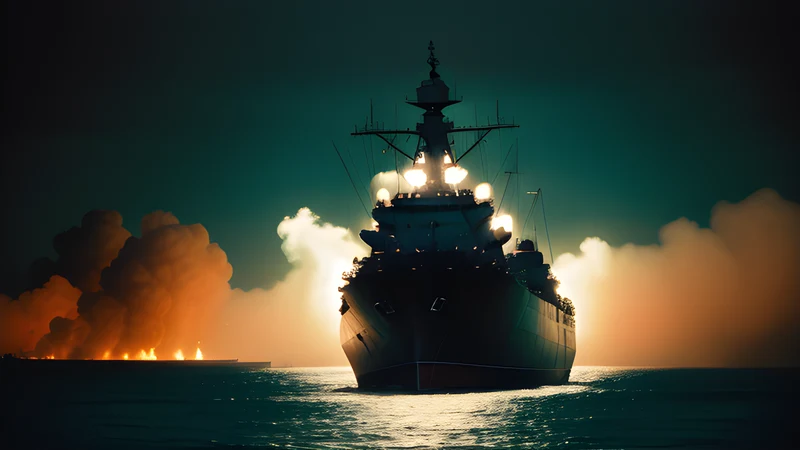
The setup is a piece of folklore with a paper trail. In the 1950s a correspondent calling himself Carlos Allende wrote to the astronomer Morris K. Jessup with an account of a wartime experiment at the Philadelphia Naval Yard: a destroyer escort, the USS Eldridge, wrapped in coils and made invisible, with consequences for the crew he described in escalating and unverifiable detail. The letters circulated. The story grew a bibliography, most usefully the 1979 book by William Moore and Charles Berlitz that gave the legend its modern shape and this film its title and its option.
Taking the legend at its word
The screenplay’s smartest move is refusing to argue. It does not stage a debunking and it does not stage a defence. It opens in 1943, puts you on the deck, runs the experiment and lets it go wrong, and by the time you have decided whether you believe any of it the film is already twenty minutes into a chase.
Stewart Raffill directs the wartime material with a plainness that flatters it. Men in dungarees doing jobs; officers who talk like officers; equipment that looks heavy. When the field comes up, the effects are exactly as good as New World Pictures could afford, which is to say they are green, they are crackling, and they are on screen for slightly less time than would let you examine them. Raffill understood the trade every low-budget genre director has to make and made it correctly: show the impossible thing briefly, at night, through weather, and then cut to a face reacting to it. The face sells what the budget cannot.
John Carpenter was attached to direct this at one stage and stayed on as executive producer. His fingerprints are visible in the structure — a lean premise, a small cast, forward motion over explanation — and it is a fair parlour game to imagine the version he would have shot. It would have been colder and funnier and it would have had a better score. The film we got is warmer than a Carpenter picture, and the warmth is what has kept it alive.
The film is a romance wearing a uniform
David Herdeg (Michael Paré) and Jim Parker (Bobby Di Cicco) go over the side of a ship in wartime and come out of the water in the Nevada desert in 1984. Everything after that is the oldest engine in fiction: a stranger in a strange land, being driven somewhere by a woman who has decided, against all evidence, to help him.
Nancy Allen plays Allison, and she is the reason the middle hour holds. Allen had already done more interesting work than this film needed — she is very good at playing a person deciding, in real time, how much of an implausible story to accept — and she gives Allison an impatience that keeps the scenes moving. She is not charmed by Herdeg’s confusion. She is irritated by it, and then curious, and the curiosity is what turns into something else.
Paré, coming off Eddie and the Cruisers and about to make Streets of Fire, is well cast precisely because he does not do much. Herdeg is an enlisted man whose entire training was in following instructions, and Paré plays the future as a series of things that are too loud. The performance is mostly watching. That is right for the part and it is right for the film, which wants you looking at 1984 through the eyes of somebody who finds a colour television genuinely frightening.
Why the 1943 sequences work
The craft high point is the transition, and it works because of sound. The film establishes the deck of the ship as a soundscape — metal, rain, orders shouted over machinery, the low constant hum of a working vessel — and then the experiment scrubs it. What replaces it is a whine that keeps climbing past where you expect it to stop. The picture goes green and useless; your ears do the narrative work. When the sailors surface, the first thing that reaches them is desert silence, and the contrast is more disorienting than any effect in the film. It cost nothing.
The second good decision is the vortex itself, which is treated as weather rather than as a set piece. It arrives in the sky over a town, it pulls things towards it, and the film keeps cutting to civilians looking up. Low-budget sci-fi generally fails at scale. This one buys it with reaction shots and a rumble.
The strangest director’s credit in the cycle
Stewart Raffill is worth a paragraph on his own, because his filmography is one of the odder documents in eighties genre cinema. The same decade in which he made this competent, sincere little time-slip picture also produced The Ice Pirates and, later, Mac and Me — a run so tonally scattered that it is hard to believe one person is responsible. He was a journeyman in the honourable sense: handed a premise and a budget, he shot it straight and delivered on schedule.
That plainness is exactly what this material needed. A stylist would have wanted to comment on the legend, to wink at the conspiracy audience, to signal that the film was above its own source. Raffill just films it. The wartime scenes have the texture of a decent television war drama, the 1984 scenes have the texture of a decent television thriller, and the collision between the two registers is doing the work that a cleverer director would have tried to do with style. There is a lesson buried in there about folklore adaptations, and most of the films that came after this one failed to learn it.
The case against
The 1984 half of the plot is functional at best. The scientists in the modern timeline exist to explain the film to itself, and every time the picture cuts back to a control room the momentum bleeds out. The military pursuit is generic — jeeps, radios, a colonel with no interior life — and the resolution leans on a piece of physics that the film has invented five minutes previously.
There is a deeper miss. The story is sitting on top of a genuine idea about wartime, which is that the men who were used in these experiments, real or imagined, were used because they were expendable. The legend has that cruelty in it. The film gestures at it once and then gets on with the chase. A tougher picture would have made the Navy the antagonist from frame one.
The real ancestor
The collector’s answer is not Back to the Future. This film’s grandparent is the displaced-person melodrama, and its closest cousin in the same year is Iceman — another 1984 picture about a man pulled out of his own era into a facility full of people who want to study him, and another one that finds its best scenes in simple incomprehension rather than in plot. Watch them together and the pairing is uncanny.
Forward, the line runs to the low-budget time-travel films that took the same lesson about scope: keep the mechanism vague, keep the human problem specific. Timecrimes (2007) does more with a house and a field than this film manages with a naval yard, because it understands that the horror of time travel is administrative — you have to be somewhere at a specific moment, and you are late. Primer went further in the other direction, refusing explanation entirely. The Philadelphia Experiment sits between the two, explaining too much and meaning well.
A sequel followed in 1993 and is best left alone. This one turns up regularly in decent transfers and is worth ninety minutes for the opening reel, Allen’s performance, and the sound design in the middle of the experiment — which remains the most convincing thing in a film about a ship that was never invisible.
Spoilers below
The mechanism, when the film finally commits to it, is a loop: the 1984 experiment being run by Dr. Longstreet has opened the same hole in the sky that swallowed the ship in 1943, and the two events are the same event. The revelation that Longstreet is the young scientist from the wartime sequence, grown old and still working on the thing that ruined him, is the best idea in the screenplay and arrives far too late to be developed. Eric Christmas plays him with a stricken decency that suggests the film everyone might have made.
Parker’s dissolution is the picture’s one moment of real horror. He begins to phase — hand first — because the experiment never finished with him, and the film handles it with an economy that its bigger set pieces lack: a man looking at his own arm and understanding what it means. He is pulled back to 1943 and the film loses him quietly, which is more effective than a death scene would have been.
Herdeg goes into the vortex to shut it down and gets the choice the whole film has been building to: stay in 1984 with Allison, or return to a world where he belongs and everyone he knows is alive. He stays. The film earns it, just about, because Allen has spent an hour making the case that being wanted in the wrong decade beats being unremarkable in the right one. The last shot is a man standing in a landscape that will never make sense to him, having decided that it does not have to.
Related Content