The Paranoia Thriller of the 1970s and the Death of Trust
How a decade of assassinations, wiretaps and cover-ups produced its own genre — and its own way of holding a camera
Contents
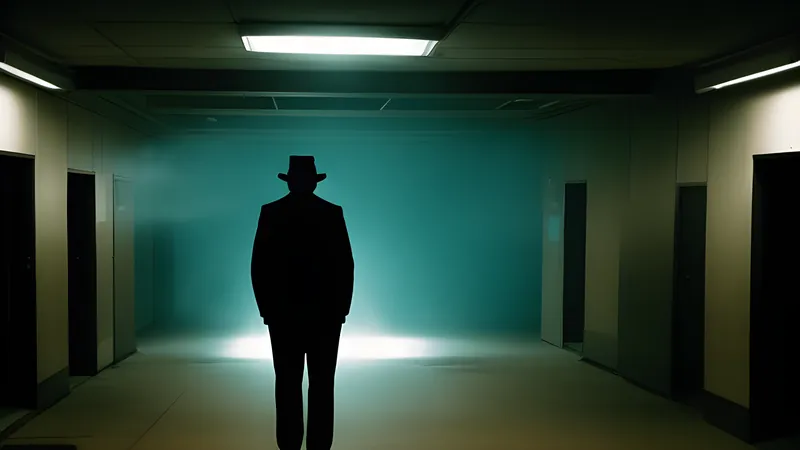
There is a run of American films made between roughly 1971 and 1976 that all seem to have been shot in the same weather — a grey, watchful light, characters pinned small in the corners of enormous frames, a sense that the building you are standing in is listening. Klute, The Conversation, The Parallax View, Three Days of the Condor, All the President’s Men: different directors, different studios, one nervous system. This is the paranoia thriller, and it is one of the few genres you can date almost to the month, because it grew directly out of a specific collapse of trust in the machinery of American life.
What makes it worth studying now is that it was never only a set of plots about conspiracies. It was a way of shooting, a grammar of surveillance and smallness that a good filmmaker can still reach for whenever the subject is a person discovering the world is arranged against them. The plots dated the moment their scandals faded. The grammar did not.
The decade that earned it
The genre did not invent its dread. It reported it. The 1960s had supplied a sequence of public killings — a president in 1963, then his brother and Martin Luther King in 1968 — whose official explanations satisfied fewer and fewer people. Then the 1970s delivered the proof that the suspicion had been, in part, warranted. Watergate broke across 1972 and 1973 and ended with a president resigning in 1974. The Church Committee hearings of 1975 dragged into daylight that the CIA and FBI had in fact been running domestic surveillance and disruption programmes — COINTELPRO against activists, the MKUltra experiments, plots that read like pulp fiction and turned out to be minutes of meetings.
You cannot overstate what this did to the audience. A conspiracy thriller in 1968 asked you to imagine that your government might bug, manipulate and lie to you. A conspiracy thriller in 1975 was reporting the news with the serial numbers filed off. The films could be as bleak as they liked and never feel hysterical, because the daily paper was bleaker. That is the rare historical condition the genre grew in: a paranoid style that had stopped being paranoid and become merely accurate. The historian Richard Hofstadter had named “the paranoid style in American politics” back in 1964 as a pathology of the fringe; a decade later the mainstream had caught it, and the cinema was the instrument that took its temperature.
The look: Gordon Willis and the aesthetics of being watched
The single most important craftsman here shot with light he was famous for withholding. Gordon Willis — nicknamed the Prince of Darkness for exactly this — photographed Alan J. Pakula’s Klute (1971), The Parallax View (1974) and All the President’s Men (1976), the loose “paranoia trilogy,” and his choices define the look of the whole cycle. Willis underexposed. He let faces fall into shadow, let the tops of frames go black, let institutional interiors — a newspaper office, a corporate lobby, a hearing room — dwarf the humans inside them with hard geometry and dead space.
The effect is a visual argument. When a character occupies a small bright patch in a vast dark composition, the frame itself says: you are outnumbered by the room. When a scene plays out in a long shot with the camera set far back, the audience is placed in the position of a watcher — you are, structurally, the surveillance. Pakula and Willis shot conversations from across the street, through glass, from above, so that intimacy always came with the suggestion that someone else had the same angle. This is the deep craft of the genre and the reason it survives: the paranoia is composed into the image, and it works even before you know the plot.
The Conversation: surveillance as sin
If one film is the pure distillate, it is Francis Ford Coppola’s The Conversation (1974), released the same year Coppola made The Godfather Part II, which is an absurd run of form. Gene Hackman plays Harry Caul, a surveillance expert — the best in the business — who records a young couple’s conversation in a crowded San Francisco square and then becomes convinced the recording will get them killed. The genius of it is that Caul is himself the apparatus. He is the man who does this to others, undone by the fear of it being done to him, and by the guilt of a previous job that ended in murder.
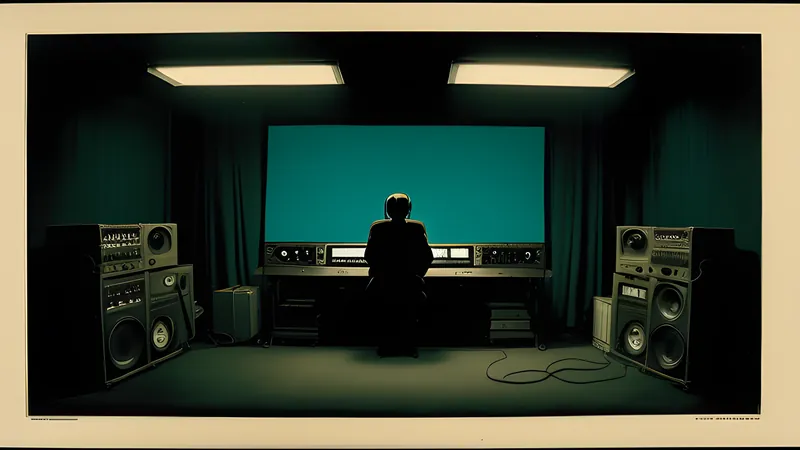
Coppola and sound designer Walter Murch built the film around audio the way a giallo is built around colour — the same overheard sentence is replayed, cleaned, re-emphasised, until its meaning inverts on a single stressed word. And the ending is the genre’s definitive image: Caul, certain he is bugged, dismantles his own apartment plank by plank searching for the device, and finds nothing, and is left sitting in the wreckage of his home playing the saxophone, having destroyed his own life looking for the watcher he cannot locate. There is no relief, no exposure, no villain unmasked. The point of The Conversation is that once you understand how the surveillance state works, you can never again believe you are alone, and that knowledge is itself the punishment.
The shape of the plot, and why it always ends badly
The paranoia thriller has a structure as reliable as the slasher’s, and it is worth naming because the shape is doing thematic work. A single, initially unremarkable person — a reporter, a mid-level CIA researcher, a wiretapper — stumbles onto a thread. Pulling it reveals a pattern; the pattern reveals an organisation; the organisation turns out to be larger, older and more embedded than any individual can defeat. Three Days of the Condor (Sydney Pollack, 1975) puts Robert Redford’s bookish analyst on the run from his own agency after everyone in his office is murdered, and its horror is bureaucratic: the killing was a routine internal clean-up, filed and approved. The Parallax View sends Warren Beatty’s journalist into a corporation that manufactures assassins, and rewards his investigation with the bleakest possible ending.
The downbeat resolution is not fashion; it is the genre’s thesis. A conspiracy small enough to defeat in the third act is a conspiracy too small to have frightened the 1970s. The films insist the protagonist lose, or win so partially that the victory is indistinguishable from defeat, because that is the emotional truth of living after Watergate — the sense that the exposure of one scandal only reveals how many more remain buried, and how little the machinery cares that you found this one. Roman Polanski’s Chinatown (1974) plays the same chord in period costume: Jake Gittes solves the mystery completely, understands exactly who did what to whom, and is powerless anyway, because the corruption runs deeper than any single crime — it is the water supply itself, the ground the whole city stands on. “Forget it, Jake” is the paranoia thriller’s entire worldview compressed into three words — comprehension without remedy. Compare the studios’ instinct in a later era to explain and resolve their monsters into safety; the paranoia thriller is built on the opposite nerve, the refusal to let the audience off the hook.
The bloodline forward
The genre’s ancestor is European and older — Antonioni’s Blow-Up (1966), the photographer who enlarges a print until he has found, or invented, a corpse in the grain. Brian De Palma took that idea, crossed it with The Conversation, and made Blow Out (1981), a sound man who records a car crash and hears a gunshot on the tape; it is the paranoia thriller’s most self-aware child, and it shares De Palma’s lifelong fixation on the guilt of watching and recording.
From there the bloodline runs straight into science fiction, because once surveillance became total and technological the anxieties migrated to the future tense — the films that saw the surveillance age coming inherited the 1970s frame and pointed it at the machines. Philip K. Dick’s version, filmed as A Scanner Darkly, turned the watcher-watching-himself structure of The Conversation into a man assigned to surveil his own identity. The plots keep updating their technology. The grammar — the small figure, the long lens, the dead space, the ending that offers knowledge in place of safety — is exactly what Willis and Pakula and Coppola built when the news itself had become too paranoid to satirise.
Where to start
Watch The Conversation first, twice, listening the second time to what Murch does with the same recording. Then The Parallax View for the purest expression of institutional dread and Willis’s darkest frames, and Three Days of the Condor for the version with movie-star momentum and a genuinely upsetting shrug of an ending. Finish with All the President’s Men, which is the optimistic outlier — the one time the small man wins — and notice that even the victory is shot like a haunting, in a newsroom that glows in an ocean of black. The decade could not quite believe its own good news, and photographed it accordingly.
Related Content