The Orphanage: The Ghost Story as Grief Therapy
Bayona's 2007 debut turns a haunted house into a mother's refusal to let go
Contents
Most haunted-house films are about a family that should leave and won’t. The Orphanage is about a woman who cannot leave, because leaving would mean admitting her son is dead, and the film understands that this refusal is the engine of every ghost story ever told. Juan Antonio Bayona’s 2007 debut — Spanish-language, produced by Guillermo del Toro, written by Sergio G. Sánchez — takes the oldest furniture in the genre, a big draughty house full of children’s voices, and rebuilds it into something close to a case study of grief. It is one of the most emotionally devastating horror films of its decade, and it earns every tear by playing the old-fashioned game with total conviction.
I saw it in a cinema on release and left wrung out, which is the correct response and a rare one for the genre. El orfanato is a picture that makes you jump and then makes you cry about the thing that made you jump. It belongs to a specific golden run of Spanish horror, the humane, mournful ghost tradition that del Toro’s own films opened up, and it is arguably the most tear-soaked of the whole line.
The house Laura came home to
Laura, played by Belén Rueda in a performance of enormous, escalating desperation, was raised in a seaside orphanage as a girl. Decades later she returns as an adult, buys the shuttered building with her doctor husband Carlos, and reopens it as a small home for children with disabilities. She has brought her own adopted son, Simón, a bright, lonely seven-year-old who does not yet know he is adopted or that he is HIV-positive, and who spends his days inventing invisible friends. The house obliges him. Soon Simón is talking about a new playmate called Tomás, a boy who wears a sackcloth mask, and about a game the friends want to play with treasures and clues.
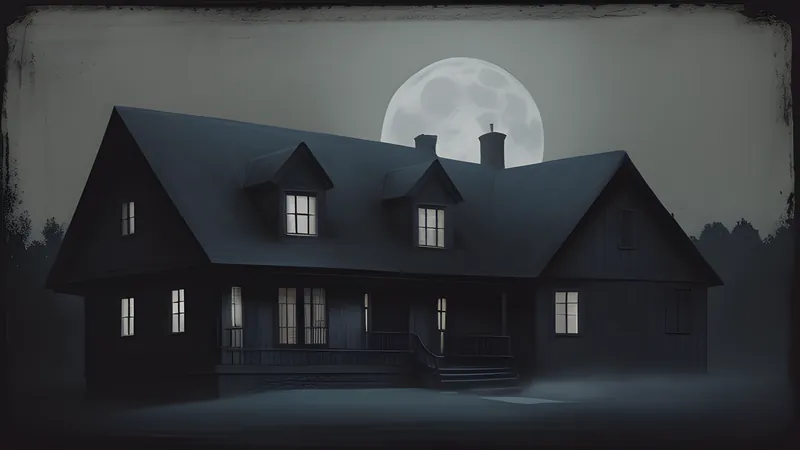
Bayona shoots the opening act in warm, sunlit nostalgia, all sea light and peeling grandeur, so that the house feels like a memory before it feels like a threat. That is the film’s first clever move: it establishes the orphanage as a place of love and childhood before it turns it into a place of loss, so that the horror when it arrives is inseparable from the tenderness. The production design leans on the iconography of old children’s homes — the caves on the beach, the coal shed, the lighthouse — and Bayona and cinematographer Óscar Faura frame the house as an organism with its own held breath.
When the film breaks your heart
The engine starts on the day of a party. A mysterious woman, a social worker who has been snooping around claiming an interest in Simón’s medical file, appears at the fringes of the celebration. Simón, furious with Laura after a bitter argument in which he blurts what his invisible friends have told him about his adoption and his illness, disappears during the party. He is simply gone. And here the film performs its transformation: the ghost story recedes and a missing-child procedural takes its place, months of police searches and dead ends and a marriage cracking under a grief with no body to bury.
This is the structural masterstroke. Bayona gives the middle of his film over to the unbearable ordinary machinery of a vanished child rather than to hauntings — the volunteers, the psychologists, the husband who wants to move on, the mother who will not. The supernatural becomes Laura’s tool and her torment. If the dead can speak, then Simón might still be reachable, and so she invites the ghosts in, staking her sanity on the chance that the house is trying to tell her where her boy went. Grief makes her a believer, and the film makes belief look exactly like madness from the outside.
The medium, and the craft of the séance
The film’s most famous sequence brings in Aurora, an elderly medium played by Geraldine Chaplin, whose lined face and trembling gravity give the scene its authority. A team wires the house for sound and camera and lets the old woman walk its rooms in trance, and Bayona directs the séance as the set piece of the picture. Chaplin moves through the dark calling out to the dead, the monitors flickering with what may or may not be there, and the tension comes from a very simple source: we, like Laura, desperately want the ghosts to be real, because real ghosts mean Simón can be found.
That is the film’s deepest trick, and it is worth naming as craft. Bayona weaponises hope. In most horror the audience wants the supernatural to be false so the characters can be safe; here the audience is bent into wanting it to be true, because the alternative is a small dead boy. The séance sequence — patient, escalating, built on sound design and the human face rather than gore — is a direct descendant of the great restrained haunted-house cinema, the lineage of the suggestion-over-spectacle school. Bayona had clearly studied where dread comes from, and he trusts a closed door and a child’s laugh more than any effect.
Del Toro’s fingerprints, and the tradition it crowns
Del Toro produced The Orphanage and put his name above the title, and his sensibility is all over it, though Bayona makes it his own. The del Toro signature is the equation of ghosts with grief and injustice, the conviction that a haunting is unfinished business demanding to be witnessed. This is the exact idea del Toro built his own Spanish ghost story on, and The Orphanage is the clear heir to The Devil’s Backbone, which also filled a big institutional house with lost children and one who would not leave. Both films treat the dead child as a figure of sorrow rather than menace, and both understand the ghost as a plea. The full case for this humanist monster theology is laid out in the argument that del Toro makes the monsters the good guys.
Where The Orphanage pushes past its producer’s own work is in its unbroken focus on a mother’s love as the sole motor of the plot. Bayona has no war, no fascism, no politics — he has a woman and a missing son and a house, and he wrings a feature-length ache out of that alone. It sits beside del Toro’s fairy-tale masterpiece Pan’s Labyrinth as the two crown jewels of mid-2000s Spanish genre cinema, one baroque and one intimate, both about a child crossing over and an adult who cannot follow.
The verdict
The Orphanage works because it never treats the ghost story as a gimmick to be explained away. It commits, fully and without irony, to the idea that a haunting and a bereavement are the same shape — an attachment that outlives its object, a love with nowhere to go. Belén Rueda carries the whole film on a face that goes from hostess to hollow-eyed obsessive over two hours, and Bayona directs his first feature with a control that would be the envy of directors three films deep. It is a genuine four-hankie horror film, a rare and difficult thing, and it belongs on any short shelf of the great modern ghost stories. Watch it paired with The Devil’s Backbone for the full statement of what Spanish cinema did with the haunted house in these years, then chase it with the colder, stranger J-horror ghosts of Dark Water to see the same maternal grief refracted through a different tradition entirely.
Spoilers below
Stop here if you haven’t seen it.
The revelations arrive in two waves, and the second is the gut-punch. First, the history of the house. The snooping social worker is Benigna, the former caretaker of the old orphanage, whose disfigured son Tomás — the boy in the sack mask — was the orphans’ secret playmate, hidden away in the seaside caves. The other children, in a cruel prank, once stole his mask on the beach and he fled in shame into a cave, where the tide came in and drowned him. In revenge, Benigna poisoned the orphanage’s children, and their remains were hidden in the coal shed. The ghostly playmates Simón spoke of are those murdered children, and Tomás is the masked boy. The house is a mass grave.
Then the devastation. Laura, following the children’s “treasure hunt” game as a way to reach Simón, eventually finds a hidden door behind a wall in the coal cellar, sealed during a renovation. Behind it is a small staircase and the body of Simón. On the day of the party, he had wandered into the secret space chasing the game; the door had been accidentally shut and hidden by the renovation work Laura’s own household had commissioned; he fell down the steps and died there, feet from the party, while everyone searched the coastline and the whole country. He had been in the house the entire time. Laura’s months of supernatural searching were, in the cruellest reading, her son’s corpse decaying under her feet.
Broken, Laura chooses to stay. She takes an overdose of pills and, in the film’s final movement, “awakens” into the world of the ghost children, becoming their new caretaker — the Wendy to their lost boys, tending the dead she could not save, reunited at last with Simón. Bayona leaves the metaphysics deliberately soft: a grieving mother’s dying wish-fulfilment, or a genuine crossing-over. Carlos, the surviving husband, later returns to the house and finds a small sign that the game goes on. The ghost story resolves as an act of surrender to grief so total it becomes a kind of peace, and the horror film ends as an elegy.
Related Content