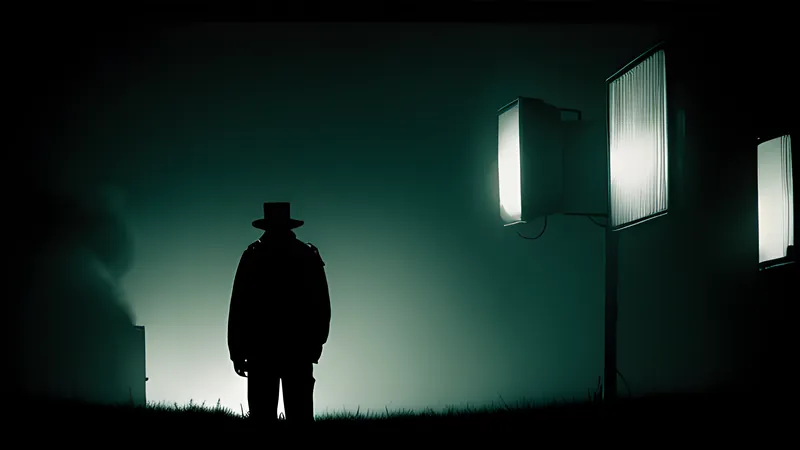
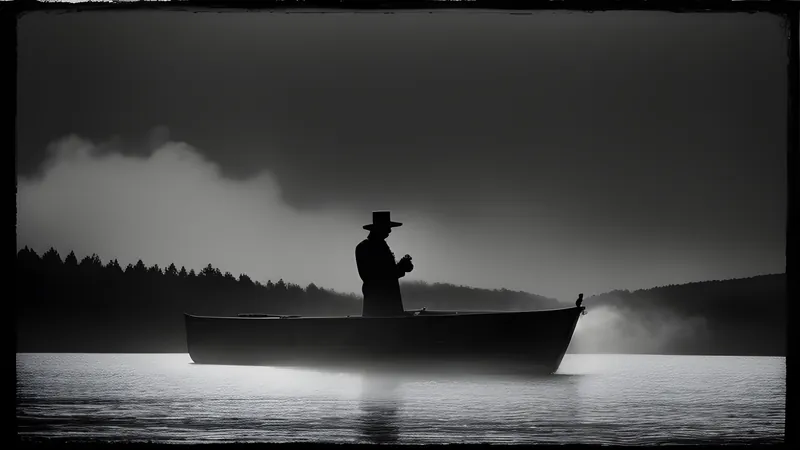
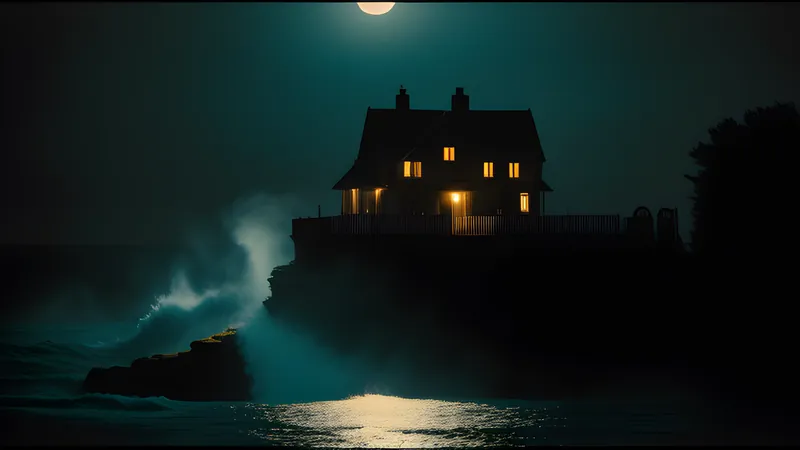
The Old Dark House: Whale's Storm-Bound Black Comedy
A lost James Whale gem where the horror is mostly manners and the scares come with a laugh
Contents
For decades you could not see this film at all. The Old Dark House slipped out of circulation, the negative decayed, and by the 1960s it was widely presumed lost, one of those titles horror historians mentioned with a sigh. That it exists today is down to the director Curtis Harrington, a Whale devotee who badgered Universal into hunting for a surviving print and oversaw its rescue. The recovered film turned out to be one of the wittiest horror pictures ever made, and the missing link between the earnest scares of early sound horror and the arch, self-aware mode that took another forty years to become fashionable.
A house you enter to get out of the rain
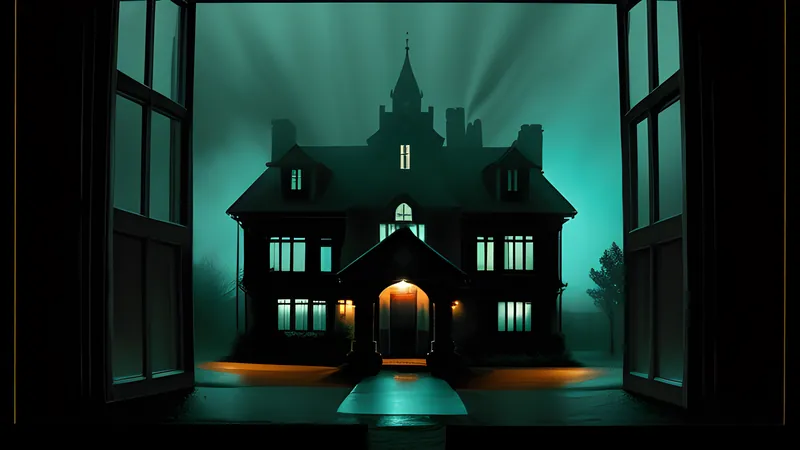
The set-up is the oldest one there is. Three travellers, driving through the Welsh mountains in a storm that has washed out the roads, take shelter for the night in the only house for miles. The house belongs to the Femm family, and the Femms are not well. What follows is a single night under one roof while the rain hammers and the electricity fails and the guests slowly grasp that every person in the household is, in a different way, dangerous.
Whale had made Frankenstein the year before and could have coasted on more of the same. Instead he adapted J. B. Priestley’s novel Benighted and used the haunted-house frame as a delivery system for something much slyer: a comedy of English manners in which the horror leaks out between the pleasantries. The scares are real, and the film keeps undercutting them with a raised eyebrow, so that you laugh and flinch in the same breath. It is the tone he would perfect three years later in Bride of Frankenstein, road-tested here on a smaller, stranger canvas.
The casting is a murderers’ row. Boris Karloff, fresh off Frankenstein’s monster and billed above the title, plays Morgan, the mute, scarred, drink-prone butler whose lurching menace hangs over the whole night. Ernest Thesiger is Horace Femm, prissy and cadaverous, offering a guest a potato with the air of a man handing over a live grenade. Eva Moore is his fanatically religious sister Rebecca, who backs a young woman into a bedroom and delivers a hissing sermon on the sins of the flesh that is genuinely unsettling because it is played for keeps. And a young Charles Laughton, in his American film debut, blusters in as a Yorkshire businessman with a chorus girl in tow, bringing a whole other register of comedy through the door. Gloria Stuart, decades before her late-life fame in Titanic, plays the young woman the film keeps in peril, lit so that her pale evening gown glows against the murk; Whale dresses her in white on purpose, a beacon for the household’s various appetites to fix on. Melvyn Douglas and Raymond Massey round out the stranded party, urbane men steadily stripped of their composure as the night wears on.
The horror is the family
What makes The Old Dark House modern is where it locates the fear. There is no ghost and no supernatural agent. The threat is the family itself, each member a different flavour of damage, and the film reveals them one careful layer at a time. Horace is a coward hiding behind fastidiousness. Rebecca is a zealot curdled by decades of repression. Morgan is a violent drunk kept barely leashed. Whale doles them out like courses, and each new Femm is worse than the last.
Consider how little actually happens for long stretches, and how much tension Whale wrings from it. A meal, a conversation, a walk down a corridor to fetch a lamp. The horror is atmospheric and behavioural, coaxed from performance and shadow rather than incident, which is why the film has dated so gracefully while flashier contemporaries curdled into camp. The dinner scene is the hinge, and it is a masterclass in dread built entirely from social discomfort. The guests try to behave normally; the hosts will not cooperate; the lights are unreliable; and Thesiger’s Horace keeps the audience on a knife-edge by refusing to be reassured or reassuring. The famous line — his flat, unbothered offer of a potato while everything unravels around him — has become shorthand for the whole film’s method. Terror delivered as tea-time chit-chat. You have seen a thousand imitations of this scene, in everything from Hammer’s country houses to modern chamber horrors, and most of them are coarser than Whale’s original.
Then the film opens its last trapdoor. There is another Femm upstairs, the eldest, glimpsed as a shrunken, ancient figure in a high bed — played, in a piece of casting only revealed in the credits, by an actress, Elspeth Dudgeon, billed under a man’s name so that audiences would not know. And there is a Femm the family keeps locked away entirely, whose release turns the black comedy, in its final act, toward genuine violence. Whale withholds him until the storm and the tension are at their peak, then lets him loose.
Why the wit still works
The craft is what keeps it fresh. Whale directs the house as a single continuous space, the camera gliding up staircases and along corridors so that geography becomes suspense; by the climax you know exactly which door leads where, and that knowledge is used against you. The lighting is pure German-inflected chiaroscuro, faces sliced by shadow, the storm throwing the whole household into unreliable darkness whenever the power dips.
Above all Whale trusts his actors to be funny and frightening at once, and never lets the comedy defang the threat. The picture holds both feelings in suspension for seventy-two minutes, which is a far harder trick than pure horror or pure farce. When it tips, late, into real danger, the earlier laughter makes the violence land harder, because you had been lulled into thinking the whole thing was a lark.
It is also, unmistakably, a Whale film in its sensibility — waspish, theatrical, quietly subversive about respectability and repression, a gay Englishman’s sidelong comedy about the horrors polite families keep behind closed doors. The Femms are English propriety rotted from within, and Whale clearly enjoys pulling the house apart.
Where it sits in the collection
Trace the lineage and The Old Dark House is the keystone of a whole tradition. It gives the subgenre its name and its grammar: strangers stranded, a sinister household, a night of revelations, comedy and menace braided together. Whale carried the exact same tone, and the same Ernest Thesiger, straight into Bride of Frankenstein, which is the film to watch next if this one lands; the two are companion pieces in wit. For the studio context — how this fits the run of pictures that built the first monster universe — see the Universal monsters canon, where The Old Dark House is the sly, undervalued cousin of the more famous creature features.
Set it against the studio’s sincere mode, the fog-bound tragedy of The Wolf Man, and the breadth of 1930s Universal horror comes into focus: the same studio could break your heart with a werewolf and tickle your ribs with a butler, sometimes within a year of each other. Whale worked the comic seam, and few have worked it better since. The wonder is that he did it in a genre still finding its feet in sound, only a handful of years after the talkies arrived.
The verdict is straightforward and a little evangelical. The Old Dark House is a small, perfect, once-lost film that invented a mood most horror is still chasing — the scare that arrives with a laugh already loaded. It is short, it is fast, and it is a great deal cleverer than its creaky-title reputation suggests. Seek out the restored print, turn the lights down, and watch a director who understood that the most frightening thing in any house is the family that lives there.
Spoilers below
The locked-away Femm is Saul, the eldest son the family has imprisoned upstairs because he is a pyromaniac and a killer. In the final act he escapes, and the black comedy tips fully into violence: Saul, soft-voiced and reasonable-seeming at first, corners the hero Penderel by the great staircase and tries to burn the house down and murder him with a knife, having lured him close with quiet talk. The struggle sends both men over the banister; Saul dies, Penderel survives, and the fire is contained before it can take the house.
What lingers is how the film distributes its cruelties. The supernatural never arrives; every horror is a human one, bred inside a single family — cowardice, fanaticism, alcoholism, madness — and the storm merely traps the guests long enough to meet each in turn. Whale ends on a note of dawn and dry irony, the survivors motoring off as though from a peculiar house party, and the return of daylight plays as the film’s last joke. The monsters were the hosts, the horror was hospitality, and the whole nightmare was, technically, a night spent waiting out the rain.
Related Content