The Midnight-Movie Canon
The films that only made sense after dark, in a full house of strangers who came back every week — the strange, the filthy and the sublime
Contents
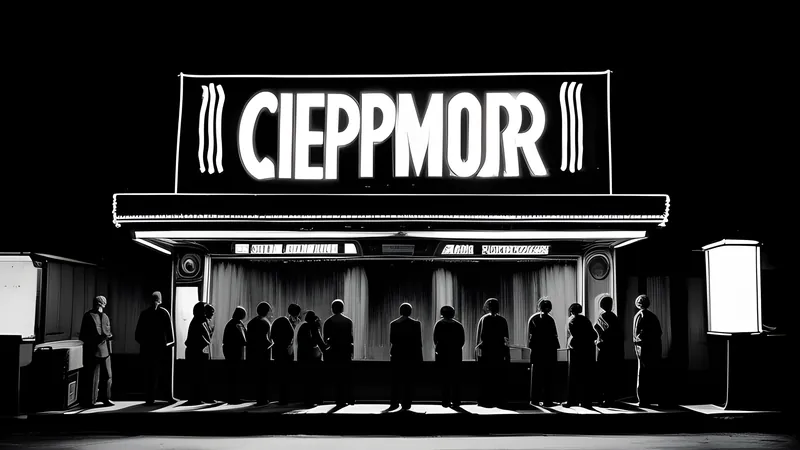
The midnight movie is a delivery system as much as a genre. It began at the tail end of the 1960s, when a handful of New York cinemas discovered that the films too strange for a normal booking could fill a house at midnight, week after week, with the same crowd coming back to worship. The Elgin, the Waverly and the Bleecker Street cinemas turned unshowable pictures into rituals, and a distinct kind of film grew up to fill the slot: transgressive, dreamlike, often barely coherent, and always better with a room full of the converted shouting back at the screen. These are films that needed a congregation. Seen cold and alone on a laptop, many of them look like failures; seen in a packed room at one in the morning, the same films become scripture. The audience was always half the show.
What follows is the canon of the after-dark crowd, roughly chronological. Some are genuine masterpieces, some are gleeful garbage elevated by devotion, and a few are both at once. The one thing they share is that they were made immortal by repetition — by people who saw them a dozen times and learned the beats. Watch them at home if you must, but know that you are getting the studio recording of something that was really a live event. Where the desk already has a full piece on a title, I have linked it.
The founders
Freaks (1932), Tod Browning. The oldest ancestor here, a horror film cast with real circus sideshow performers that so appalled audiences on release it was cut, buried and banned in Britain for decades. Rediscovered by the counterculture, it became a midnight staple precisely because of its outsider sympathies — its monsters are the humane ones, and its climax remains genuinely unnerving. It is the template for every cult film that turns rejection into a badge. On streaming and Blu-ray.
Night of the Living Dead (1968), George A. Romero. Romero’s grubby, black-and-white Pittsburgh zombie picture was one of the first true midnight phenomena, running for years at the Waverly and rewriting the horror rulebook on a nothing budget. Its bleakness, its unbilled social fury, and a lapse into the public domain that let it play everywhere for free all fed the legend. The casting of Duane Jones, a Black actor, in the lead — never remarked upon in the script — gave the film a charge on the midnight circuit that its makers reportedly never intended, and the ending lands even harder for it. Every modern zombie owes it a debt. Freely available in countless editions.
El Topo (1970), Alejandro Jodorowsky. The film that invented the modern midnight circuit, when the Elgin began running Jodorowsky’s acid-western allegory at the witching hour and a subculture formed around it. A gunslinger crosses a desert of the grotesque in search of enlightenment, and the imagery is by turns beautiful, blasphemous and baffling. My full piece is El Topo: Jodorowsky and the Birth of the Midnight Movie. Available restored via ABKCO.
The transgressors
Pink Flamingos (1972), John Waters. Waters made his Baltimore filth epic to be the filthiest film ever, and the drag legend Divine carried it to a notoriety that has never quite faded. It is deliberately, joyously repellent, an assault on good taste engineered by someone who understood that shock, done with enough wit, becomes its own kind of art. What keeps it watchable half a century on is the glee: Waters is never sneering at his cast of Baltimore misfits, he is celebrating them, and the affection under the outrage is why it lasts. A cornerstone of trash cinema and a genuine act of nerve. On the Criterion Collection, of all places.
The Harder They Come (1972), Perry Henzell. Jimmy Cliff plays a country boy turned reggae singer turned outlaw in Henzell’s rough, vital Jamaican crime film, which introduced reggae to much of the world and ran at midnight for years on the strength of its soundtrack and its swagger. It is the rare midnight movie that doubles as a landmark of a national cinema. Streams and rents.
The Holy Mountain (1973), Alejandro Jodorowsky. Jodorowsky returned with an even more delirious provocation, an alchemical satire in which a thief and a guru assemble a group to storm the mountain of immortality. It is stuffed with imagery designed to detonate on a receptive, late-night audience, and it plays like a fever you half-remember. See The Holy Mountain: Jodorowsky’s Alchemical Provocation. Restored and available via ABKCO.
Phantom of the Paradise (1974), Brian De Palma. De Palma’s glam rock opera fused Faust, The Phantom of the Opera and The Picture of Dorian Gray into a savage satire of the music industry, and though it flopped everywhere else it became a genuine phenomenon in a couple of cities where audiences adopted it whole. Paul Williams’s songs are terrific, and the film’s cult has only grown. My appreciation is Phantom of the Paradise: De Palma’s Rock Opera of Faustian Rot. Rents widely.
The rituals
The Rocky Horror Picture Show (1975), Jim Sharman. The definitive midnight movie and the longest-running theatrical release in history, kept alive by the audience that dresses up, shouts the callbacks and acts it out in front of the screen rather than by anything on the print. As cinema it is patchy; as a communal event it is unbeatable, and it turned participation into the whole point. The genius of its long life is that it built a ritual with roles for the audience — the callbacks, the props, the shadow-casts miming along in front of the print — so that no two screenings are the same and the film is really just the score for a party. If any single title proves that the crowd is the medium, it is this one. Still playing somewhere near you this weekend.
Eraserhead (1977), David Lynch. Lynch’s black-and-white nightmare of industrial dread and monstrous fatherhood found its first real audience at midnight, where its unhurried horror and singing radiator could work on people slowly, in the dark, with nowhere to look away. The sound design is the real terror, a low industrial drone that never lets up and gets into your chest, and at midnight, in the dark, with a receptive room, it works on you like weather. It is the most artful film on this list and the least explicable, which made it perfect for the slot. On the Criterion Collection.
Hausu (1977), Nobuhiko Obayashi. A Japanese haunted-house film like no other, in which a schoolgirl and her friends are devoured by a house through a barrage of hand-made effects, animation and pop-art delirium. It baffled critics and delighted the midnight crowd once it travelled west decades later, and it remains one of the most purely joyful strange objects in cinema. See Hausu: The Haunted House as a Sugar-Rush Fever Dream. On the Criterion Collection.
The late arrivals
The Warriors (1979), Walter Hill. Hill’s stylised gang odyssey, in which a New York crew must fight their way home across a city of themed rival gangs, became a rowdy midnight favourite and later reinvented itself, in a director’s cut, as an actual comic book. Its pop-mythic New York is pure fantasy, and its cult has proved bottomless. My full piece is The Warriors: The Gang Odyssey That Became a Comic Book. Streams and rents.
Repo Man (1984), Alex Cox. Cox’s punk science-fiction comedy about a young repossession agent, a car with something lethal in the boot, and the great Los Angeles nowhere is the midnight movie’s last great original, a film so committed to its own deadpan strangeness that it could only ever have found its people after dark. See Repo Man: Punk, Aliens and the Great Los Angeles Nowhere. On the Criterion Collection.
The slot is gone; the films remain
The midnight circuit that made these films is mostly a memory now, killed off by home video and then streaming, which let anyone watch anything alone at any hour and quietly dissolved the congregation. Something was lost in that convenience, because half of what made a midnight movie was the room. Still, the canon survives, and repertory cinemas keep reviving it for exactly the reason it worked the first time — some films only truly come alive with a crowd that already loves them. Start with any two of these, ideally with friends, ideally loud. And if a cinema near you is running one at midnight, go. That is how they were meant to be seen.
Related Content