The Matrix at 25: What the Sequels Misread
A revisit of the film that swallowed a decade of cinema, and the three that tried to explain it
Contents
I was fourteen when The Matrix opened at the end of March 1999, and like most people my age I walked out of the cinema convinced I had watched the medium change shape in real time. Twenty-five years on, the sequels have receded into film-school footnotes and a fourth instalment came and went in 2021, yet the original still plays with the tautness it had that first weekend. That durability is worth pulling apart, because the quality keeping the 1999 film alive is precisely the one the Wachowskis mislaid the moment they went back to Zion.
The machine that still runs
The first film is a closed circuit. A bored software drone named Thomas Anderson gets an offer, swallows a pill, learns the world is a simulation grown by machines to farm human bodies, and becomes the one man who can rewrite the lie from inside. Every scene feeds that spine. The interrogation, the training programs, the rooftop chases, the lobby shoot-out — each earns its place by advancing a single question: can a person wake up inside a system built to keep them asleep?
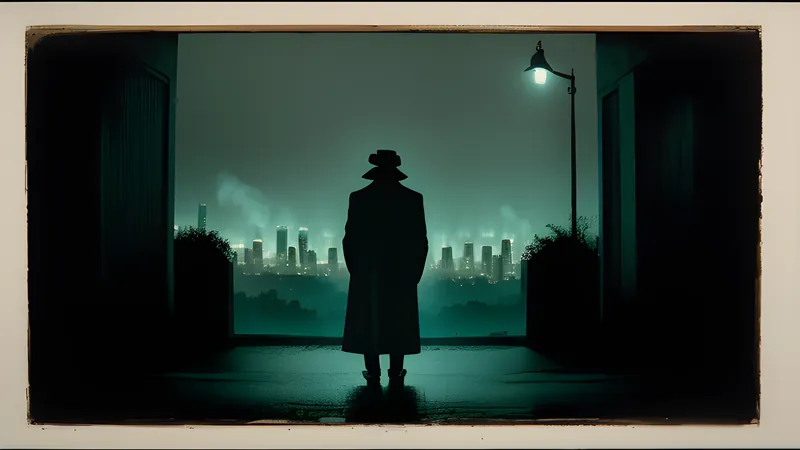
What strikes me on this rewatch is the confidence of the withholding. The film never over-explains its own metaphysics. Morpheus offers a parable and a pill, Cypher offers a warning over a steak he knows is fake, and the audience is trusted to feel the philosophy rather than absorb a lecture on it. Laurence Fishburne delivers exposition while something physical is always in motion, so the ideas arrive wrapped in momentum. The green-sick interiors from cinematographer Bill Pope, the cold blue cast of the “real” world, Owen Paterson’s production design of decaying office grandeur — the visual grammar does half the storytelling before a word lands. Even the costuming works as argument: the sunglasses, the long coats, the absence of colour, a wardrobe that tells you these people have edited themselves down to essentials.
The screenplay is tighter than its reputation as a philosophy-seminar-with-guns suggests. It sets its rules early and honours them. Agents can commandeer any body still plugged in, which turns every bystander into a threat and keeps the tension live even in empty corridors. Death in the simulation means death in the pod, so the stakes never soften. The film builds a sandbox with hard walls and then plays fair inside them, which is the discipline most of its imitators never learned.
Why the craft holds up
The effects that made the film famous have aged into something close to timeless because they were built on a genuine idea rather than raw processing power. Bullet time, John Gaeta’s Oscar-winning conceit, was made with a ring of stills cameras firing in sequence around the actor and then interpolated into impossible camera movement. It reads as a photographed event, which is why it still feels solid; the physical rig gives it a weight that pure rendering rarely earns. The film took four Academy Awards in the end — visual effects, editing, sound and sound editing — and every one of them was won on the same principle, that a trick lands hardest when it feels like it happened to real matter.
The action holds for the same reason. Yuen Woo-ping, imported from Hong Kong, ran the principal cast through months of wire-fu training before a frame was shot, and Keanu Reeves, Carrie-Anne Moss, Hugo Weaving and Fishburne perform recognisable bodies doing heightened-but-legible things. Zach Staenberg’s editing cuts on genuine motion, so the geography of a fight stays clear even at speed. Weaving’s Agent Smith turns bureaucratic diction into menace, every clipped, disgusted consonant a small act of contempt for the humans he has to smell. This is a film that fetishises real matter — sweat, recoil, gravity, breaking concrete — and that fetish is load-bearing. When the sequels abandon it, you feel the floor go.
The sound design deserves its own paragraph. Dane Davis and his team built a sonic vocabulary for the impossible: the whip-crack of a dodged bullet, the deep swallow of a phone-line exit, the electronic shudder of an Agent taking over a host. Married to Don Davis’s brass-heavy orchestral score, the audio tells you the rules of two worlds without a line of dialogue. That is the level of craft the film sustains across its whole running time, and it is why a generation can still quote its choreography beat for beat.
The ancestors it never quite credited
Watch like a collector and The Matrix reveals its family tree fast. The most direct relative is Alex Proyas’s Dark City, released a full year earlier and shot on the same Fox Studios Sydney lot, some of whose sets the Wachowskis reused. Proyas got there first with the amnesiac hero waking inside a fabricated reality run by unseen controllers who remake the city every night, and the resemblance is close enough that the debt deserves saying out loud. Roger Ebert spent years championing Dark City partly to remind people which film had the idea first.
The look and the code owe a great deal to Mamoru Oshii’s Ghost in the Shell, which the Wachowskis famously screened for producer Joel Silver as a statement of intent — the cascading green glyphs of the opening titles are a straight lift in spirit, and the film’s questions about identity inside a networked body run right through Neo’s arc. And for a queasier vision of jacking into a fabricated world, David Cronenberg’s eXistenZ arrived within weeks with a wetter, stranger answer to the same question. The Matrix stood on all three, then out-designed and out-marketed every one of them, which is a kind of genius in itself.
The verdict, argued
The 1999 film is a near-perfect delivery system for a single idea, and it earns its permanence because it trusts a metaphor and refuses to cash it out. The sequels reversed that instinct, and the reversal is instructive rather than merely disappointing. I still think Reloaded and Revolutions are fascinating misfires worth arguing over — the freeway chase in Reloaded is one of the great sustained action sequences of its decade, and Lana Wachowski’s solo Resurrections has real feeling buried in its meta-commentary. But they are misfires, and the argument below is where the specifics live. If you want the original’s true peers, the three films above reward the exact appetite the first Matrix woke up in you.
Spoilers below
Here is the misread, plot beat by plot beat.
The first film keeps “the One” as a live metaphor for self-belief. Neo dies, Trinity’s declaration brings him back, and he opens his eyes to see the Matrix as raw green code he can now rewrite at will. The triumph is legible and clean, and the film ends on a promise rather than an explanation — a phone call, a warning to the machines, a flight straight up into the sky.
The Matrix Reloaded takes that promise and hands it to the Architect, a smug white-bearded program who informs Neo that the prophecy itself is a control mechanism, the sixth iteration of an engineered messiah designed to let the system safely reset. The scene is a dense monologue delivered to a wall of monitors, and it retroactively reframes the first film’s victory as one more scheduled layer of programming. Turning the red-pill fable into a seminar on cyclical control dissolves the very stakes that made the original land. The audience was invited to feel awake; the sequel explains that the waking was on a timetable.
Zion compounds the problem. The first film keeps the “real” world a rumour, a rust-coloured abstraction glimpsed through cracked pipes and flickering monitors, and that scarcity is what makes the Matrix frightening by contrast. Reloaded gives us a literal populated cavern-city and stages a lengthy communal dance sequence intercut with a Neo-and-Trinity love scene. Rendering the last human abstraction as a sweaty rave drains it of the dread the first film had carefully banked.
The Burly Brawl seals it. Neo fights a hundred copies of Agent Smith in an effects set-piece so digital that the bodies turn weightless and rubbery, and the sequence plays like a cutscene after a first film that made every punch feel like it cost something. Revolutions then cashes the messiah imagery in full — Neo’s blinded sacrifice, the crucifixion pose, the negotiated peace with the machine city — literalising the Christ metaphor the original had the discipline to leave implied.
The through-line is simple. The first Matrix works because it withholds, and every major sequel decision answers a question nobody needed answered. Mystery was the mechanism; explanation was the mistake, made at scale.
If this rewatch leaves you hungry for the version of the idea that keeps its secrets, go back to Dark City for the older, colder cousin, then to Ghost in the Shell for the frames the Wachowskis quoted. Both understand that a fabricated world is scariest while it stays half-glimpsed.
Related Content