The Man from Nowhere: The Korean Léon
Lee Jeong-beom's 2010 hit takes Besson's template, strips the whimsy out of it, and hands it to a pawnbroker
Contents
The Korean title is Ajeossi. It means, roughly, “mister” — the word a child uses for a grown man who is not family. It is what the little girl calls him. It is the entire film in four letters, because the story is about a man who has no name worth using and a child who gives him one anyway, and the whole arc is the distance between a stranger’s form of address and something closer.
The English title is The Man from Nowhere, which sounds like a Western and tells you nothing. This is the first thing to know about the film: it arrived in the Anglophone world wearing a title that advertised the wrong movie, got shelved next to Taken, and has spent fifteen years being recommended as “the Korean Léon” — a comparison that is accurate, unavoidable, and about sixty per cent of the truth.
It was the biggest Korean film of 2010 at the domestic box office. It was Won Bin’s last feature, and he has not made another since, which gives the performance a strange finality it did not have at the time. And it contains a knife fight that people who do not otherwise watch Korean cinema can describe from memory.
The pawnshop and the girl next door
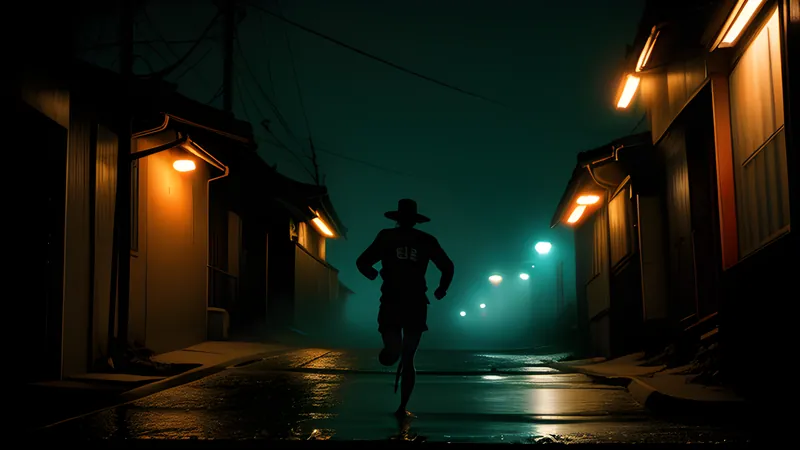
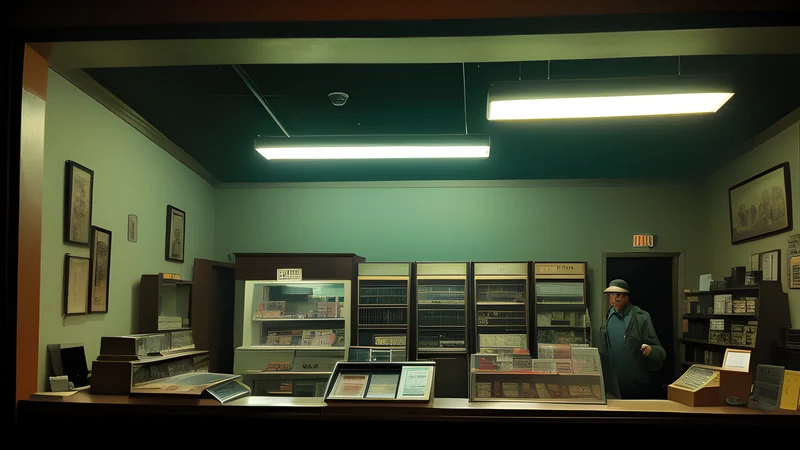
Cha Tae-sik runs a pawnshop in a shabby corner of Seoul. He is played by Won Bin — at the time one of the most photographed faces in the country — under a curtain of hair, and he says almost nothing for the first half hour. He takes in other people’s possessions, gives them less than the possessions are worth, and does not ask questions. He lives behind the shop.
Next door is So-mi, played by Kim Sae-ron, who was about nine. Her mother is a bar hostess with a drug habit and a talent for making bad situations worse. So-mi is the neighbourhood’s spare child: unwashed, unfed, ignored at school, and entirely undeterred by the fact that the man in the pawnshop plainly wishes she would go away. She calls him ajeossi. She steals from him. She sits in his shop because it is warmer than her flat and because he is the only adult in her orbit who has never once lied to her.
Then the mother does something extraordinarily stupid involving a quantity of heroin that belongs to people who count it, and both mother and daughter disappear. The gang — run by two brothers, played by Kim Hee-won and Kim Sung-oh, whose business extends past narcotics into a trade in children and in what can be taken out of them — assumes the pawnbroker is a soft target who can be squeezed for the rest. This assumption is the plot.
Why it works: the violence is deferred, then priced
The film’s craft argument is about withholding, and it is made structurally. For roughly the first forty minutes, Tae-sik does not fight anybody. He is pushed, arrested, insulted and underestimated, and Lee Jeong-beom shoots all of it flat and patiently, so that a viewer who has been sold an action film starts to shift in their seat. We are given exactly one clue — a police file, a redacted history, an unnamed unit — and we are otherwise asked to take a great deal on faith.
When Tae-sik finally moves, Lee’s decision is to make it fast and unsatisfying. The first real bout of violence is over almost before it registers, shot without gloating, and the effect is to establish a rule: this man does not perform. Every action film promises competence; this one demonstrates it and then declines to celebrate it, which is what makes the last twenty minutes land.
The pivot everybody remembers is the haircut. Tae-sik, alone, takes a blade to his own hair in front of a mirror, and Won Bin’s face emerges from behind it for the first time in the picture. It is a moment of pure star mechanics — the film has been hiding the most famous face in Korea and now spends it — and it works because it is also character: the man is putting on the old uniform. Lee shoots it in near silence. No music swell, no slow build, just a man tidying himself for work he had hoped never to do again.
The knife fight at the climax is the reason the film travelled. Tae-sik faces the gang’s imported enforcer, Ramrowan, played by the Thai actor Thanayong Wongtrakul, in a small tiled room, and Lee shoots it in long, unbroken takes at close range with almost no cutting. Two men, two blades, no space, no music. What makes it great is not speed. It is the legibility — you can see every exchange, follow every wound, understand exactly why each man is losing what he is losing — and the willingness to let Tae-sik get badly hurt. The camera holds. The fight has a middle, which fight scenes almost never do. Most action cinema of the last two decades cuts because the performers cannot do it; Lee does not cut, because his can.
Kim Sae-ron is the other reason it works, and she has the harder role. So-mi is written to be pitiable and is played, instead, as prickly, sarcastic and self-sufficient — a kid who has already worked out that adults are unreliable and has made her peace with it. The film’s emotional engine only turns because she refuses to beg.
The case against
The villains are cartoons in a film that is otherwise pitched at ground level. The two brothers mug, cackle and explain their own evil, and every scene at gang headquarters plays like a broader picture spliced in. The organ-trafficking material is deployed for shock rather than examined, which is a real failure of nerve: the film wants the moral weight of a genuine social horror and the plotting convenience of a bogeyman, and it cannot have both.
The Besson debt is also less a homage than an inheritance, and it comes with Besson’s problem. Léon has an uneasiness at the centre of it — a queasiness about what the child’s attachment is meant to be — and The Man from Nowhere solves that by simply desexualising the whole thing and making So-mi younger and more obviously a child, which is the right call and also an admission that the template needed fixing. Having fixed it, the film has nothing new to say about the relationship. Tae-sik and So-mi barely share a scene after the first act. The bond that powers the film is established in twenty minutes and then referred to for ninety.
And it is, in the end, a rescue picture with a body count, which means it resolves a story about institutional failure — a school that noticed nothing, a police force that harasses the wrong man, a state that lost track of an entire child — through one man’s private competence. That is a comfort, and the film knows it is a comfort, and it serves it anyway.
The real ancestor
Léon is the chassis, and Besson had built it once before as Nikita — the state-made killer whose humanity is the flaw in the machine — so the Korean lineage runs through two Besson films rather than one. Korea took delivery of both: The Villainess is the Nikita half of the inheritance, seven years later and considerably angrier. Man on Fire, Tony Scott’s 2004 picture, is this film’s closer emotional relative: a wrecked professional, a neglected girl, a rescue that is really a suicide with paperwork.
But the ancestor of the fighting is not European at all, and the film says so on screen. The tight-quarters, joint-breaking, no-music close combat that Tae-sik and Ramrowan conduct in that room descends directly from the Thai and Indonesian action revival — Ong-Bak in 2003 announced that a body could be filmed doing real things in long takes, and Korean action spent the rest of the decade absorbing the lesson. Casting a Thai performer as the man who can actually hurt Won Bin is the film paying its debt in the most literal way available to it. Watch the knife fight, then watch The Raid three years later, and the through-line is obvious: legibility, duration, and consequence.
Elsewhere on the desk, Le Samouraï is the ur-text for the silent professional in a shabby room, and it is where Besson got it from before Lee got it from Besson. A Bittersweet Life is the Korean film that got there five years earlier and did it with more style and less heart. And I Saw the Devil is what happens when the same national cinema decides the avenger should be as damned as the target. For a broader route in, Korean genre cinema: ten to start with has the map.
The verdict
The Man from Nowhere is a borrowed film that earns its licence in the last twenty minutes. Lee Jeong-beom takes a template that had been worn smooth by 2010, fixes the thing that was always wrong with it, hides his leading man behind a fringe for half the runtime, and then delivers the most legible piece of close-quarters violence in modern Korean cinema. The villains are pantomime and the sociology is skin-deep. None of that survives contact with that tiled room, or with a nine-year-old telling a man who kills people for a living that he smells. It streams widely and it has never needed a rediscovery, because it has never been out of circulation — it is the film people put on for someone who says they do not like subtitles, and it is the film that changes their mind.
Spoilers below
The cruelty of the ending is that the rescue arrives too late for half of it.
So-mi’s mother is already dead when Tae-sik starts looking. She has been killed and harvested — the gang’s second business, the one the film keeps circling, is organs, and the mother’s body has been processed by the time the search begins. Tae-sik finds this out in the middle of the film, which means he spends the entire back half knowing that the only outcome still available is partial. He does not tell anyone. He keeps going.
The nastiest beat is the one the film plants and pays off in the same breath: he is shown a container of eyes, and told they are So-mi’s. The gang lies to him, and for a stretch of runtime he — and we — believe the girl has been taken apart. The rampage that follows is grief rather than strategy, which is why it is shot with none of the discipline of the earlier fights.
She is alive. The eyes belong to somebody else, which the film mentions once and then walks past, and that walk-past is the picture’s real moral limit: an anonymous child was destroyed to make a plot point land, and The Man from Nowhere does not stop to look at her.
Ramrowan is the film’s most interesting inversion, because he loses and is allowed to know it. The knife fight ends with Tae-sik winning at enormous physical cost, and the enforcer’s dying beat is professional recognition — one man acknowledging that the other did the job better. It is the only respect anyone in the film pays anyone.
The last scene is the whole point of the Korean title. Tae-sik, wrecked and about to be taken into custody, gets one moment with So-mi. He asks her to close her eyes, and holds her, and she does not let go. He came within a second of shooting himself in front of her when he thought she was gone; the film’s final mercy is that the child arrives in time to stop him. He goes to prison. She goes into care. The last thing she calls him is ajeossi, and by then the word has stopped meaning “stranger”.
Related Content