The Innkeepers: Ti West's Haunted-Hotel Charmer
Two bored desk clerks, one closing hotel, and the friendliest ghost story of its decade
Contents
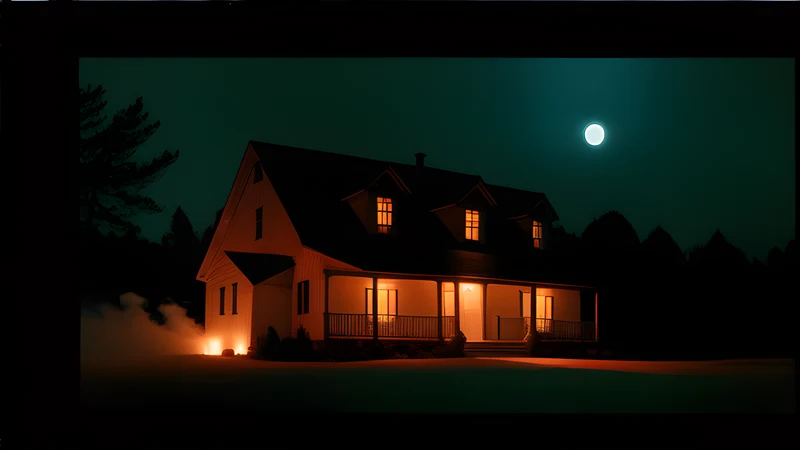
Ti West made The Innkeepers in the building where he had lived while making his previous film, which is the most useful fact about it. The Yankee Pedlar Inn in Torrington, Connecticut housed the crew of The House of the Devil during that shoot, and it came with the local reputation such places acquire — a resident ghost, a story about a bride, corridors that a film crew stuck in a small town at the end of a long day will happily populate. West went back in 2011 and shot a feature there, in the actual rooms, with the actual staircase. The result played SXSW that year and remains the strangest entry in his filmography, because for a solid hour it is a workplace comedy that happens to have a ghost in the basement.
The premise is two people and a countdown. Claire, played by Sara Paxton, and Luke, played by Pat Healy, are the last two employees of an inn that closes on Sunday. The owner has gone to Barbados. There are three guests in the entire building. Luke maintains a website about the hotel’s haunting, complete with amateur electronic-voice-phenomenon recordings, and Claire — younger, unqualified, bored past the point of judgement — decides that their final weekend is the moment to get proper evidence. She hauls a recorder around a mostly empty hotel at three in the morning because there is nothing else to do with her life this week.
The comedy is the trap
Most horror films that open funny are apologising for something. West’s is doing engineering. The first act of The Innkeepers is genuinely, unforcedly amusing — Claire dragging a bin bag across a lobby, Luke doing the thing that men in their thirties do where they perform expertise they do not have, an extended bit of business about a coffee order that has no plot function whatsoever. Lena Dunham turns up for ninety seconds as a barista, a year after Tiny Furniture and a year before Girls, and West lets the scene run past its usefulness.
The purpose of all this is to make you stop reading the frame as a horror frame. A comic register retunes your attention: you start watching faces for jokes rather than watching backgrounds for movement. By the time West wants you to look over Claire’s shoulder, you have spent forty minutes learning to look at Claire instead. It is the same weapon he used with the Walkman dance in The House of the Devil, refined. That film bought its silence with charm; this one buys it with laughter, which is a heavier purchase because laughter physically relaxes an audience.
It works because Paxton is extraordinary. Her Claire is an entirely convincing twenty-something with no plan — clumsy in a way that is choreographed rather than cute, funny on purpose about half the time and by accident the rest, and quietly, unmistakably lonely. Paxton had come out of studio horror remakes and teen comedies, and West hands her something with an interior. Healy gives Luke exactly the right amount of shabbiness; his character’s whole personality is a bluff, and Healy plays the bluff rather than the man, which pays off later. The two of them talking rubbish across a front desk is the film’s actual subject.
The building does the work
West and cinematographer Eliot Rockett shoot the inn like an estate agent with a grudge. Wide, static, symmetrical compositions; long corridors held for a beat past comfort; a camera that plants itself and refuses to reframe when a character walks out of shot, leaving you alone with a doorway. Nothing in these shots is doing anything. That is the mechanism — a locked-off wide of an empty hallway is a promise the film has made no commitment to keep, and the audience’s own trained eye starts scanning the depth of the frame for a shape. West is renting your imagination and paying nothing for it.
The chapter cards structuring the film into named nights are a small, sly device that borrows the furniture of the literary ghost story and quietly tells you the film has a shape, which makes the meandering feel intentional rather than lost. Jeff Grace’s score is again a study in withholding — long tones, almost no stings, and a willingness to leave whole sequences carried by room tone and the hum of a building’s electrics. The sound design is the real star: an inn at 4am has a specific acoustic signature, all pipe knock and settling timber, and West records enough of it that the ghost never has to compete with music to be heard.
Kelly McGillis is the other collector’s flourish. She plays Leanne Rease-Jones, a former television actress now working the psychic-medium circuit and holding a small event in the hotel, and she gives the performance real dignity — someone who has swapped one kind of performed authority for another and is entirely sincere about the second. McGillis was Charlie in Top Gun and Rachel in Peter Weir’s Witness, which means the film has cast a genuine mid-eighties leading woman as a faded celebrity and lets her be the only adult in the building. It is a joke with a soul.
The real ancestor
The lazy reference is The Shining, and West is not remotely hiding from it — the empty hotel, the closing season, the corridors. The honest ancestor is elsewhere. Session 9 is the closer relative: working people doing a mundane job in a large institutional building that has outlived its function, where the horror is inseparable from the labour. And the film’s manners come straight from The Haunting, which established the discipline West is observing — the ghost is a sound and a suggestion, and the film that shows you least frightens you most.
There is a third strand, and it is the one people miss. The Innkeepers is descended from the seance picture — the tradition where a sceptic and a believer share a house and the film adjudicates between them. The Changeling is the high-water mark of that form, and West is running the same argument with the equipment updated from a medium’s table to a cheap digital recorder and a website. Luke’s EVP hobby is 1970s spiritualism wearing a USB cable.
The case against
The film’s structure is a genuine gamble and it does not fully collect. West spends so long establishing tone that when the horror finally engages, it has roughly twenty-five minutes to work in, and the escalation is compressed enough to feel abrupt. Some of the scares in the final stretch are conventional in a way the preceding hour has taught you to consider beneath this film — a figure in a doorway, a bass hit. After the extraordinary restraint of the first act, a couple of standard-issue jolts land as a small betrayal.
There is a fairer complaint too: the ghost’s mythology is thin. West gives you a bride, a basement and a rumour, and declines to develop any of it, which is defensible as atmosphere and frustrating as story. The Haunting withheld its explanation from a position of enormous structural strength; this film withholds partly because it has not built one.
I would still put it on the shelf above most of its era. The reason is that it is about something, and the something is not ghosts. It is about being twenty-five, in a job that ends on Sunday, in a town you cannot leave, and needing so badly for something to be true that you go looking for it in a basement. Claire wants the hotel to be haunted because a haunted hotel is more interesting than her life. The entire film runs on that, and the horror is only the bill arriving. That reading is why the piece has aged better than the “elevated horror” label people later stapled to West’s work — a label the desk has picked at in elevated horror and the backlash against the slow burn. West was never selling seriousness. He was selling company.
It streams and discs easily, and it rewards the same conditions as its predecessor: late, quiet, undivided. Watch next: Session 9 for the working-day dread, The Changeling for the seance, The House of the Devil for the method in its cold form.
Spoilers below
The three guests matter, and the film’s cruellest move is the old man. An elderly guest, played by George Riddle, checks in and asks for the room on the third floor where he honeymooned decades earlier. It is closed. Claire, being Claire, gives it to him anyway — an act of pure kindness, the only unambiguously generous thing anyone does in the film. He then uses it to kill himself in the bath, and Claire finds him. West structures it so that the horror is the direct product of her decency, and he plays the discovery without a single stylistic flourish. It is the pivot: after that, the building is no longer a joke.
Luke’s collapse is the other reveal, and it retroactively fixes Healy’s performance. When Claire pushes to go into the basement, Luke — the expert, the website’s author, the one who has spent the film gatekeeping the hotel’s ghost — refuses, admits his evidence is worthless, and drives away. He was never a believer. He was a man who had found a way to be interesting to a younger colleague. The bluff Healy has been playing all along was the character, and the film gives him no redemption for it.
So Claire goes down alone, and that is where West’s tenderness turns lethal. The asthma has been seeded from the first act, an inhaler treated as a running gag. In the basement she meets something — the film stays deliberately ambiguous about how much of it is the ghost and how much is a panicking girl with failing lungs in the dark — and she dies there. That ambiguity is the film’s best idea and it is placed where almost nobody looks for one. West offers a supernatural reading and a medical reading and refuses to arbitrate, which is the seance-picture argument left permanently unresolved.
The coda seals her in. Leanne, packing up, speaks to a hotel that now contains one more permanent resident, and the last movement of the film puts Claire on the other side of the story she went looking for. She wanted the inn to be haunted. It obliges her, at the only price it accepts. The final image of the door on the third floor is the joke landing an hour after it was told: the hotel closes on Sunday, and Claire stays.
Related Content