The Grindhouse Aesthetic and Its Nostalgists
Everything the revivalists love about it was a maintenance failure
Contents
The word “grindhouse” now names a look. Amber-rotted stock, emulsion scratches down the right of frame, a splice that jumps mid-line, a “MISSING REEL” card, colour that has gone to magenta, and a soundtrack with the hiss of a fourteenth-generation optical track. You can buy this look as a plugin. Directors apply it deliberately, at expense, to footage shot last month on a digital camera in perfect condition.
Every element of it is damage. None of it was ever authored. The grindhouse look is a photograph of institutional neglect — a print that has been through forty projectors run by bored men on minimum wage, spliced by hand after each break, shipped in a can without padding, and finally screened in a house that could not afford a new xenon bulb. The revivalists have taken the most degraded exhibition circuit in American history and made its failures into a font.
I am not immune to this. I own the box sets. But the affection is worth interrogating, because the gap between what those cinemas actually were and what the aesthetic remembers is very wide, and most of what was genuinely valuable about the circuit has been left out of the tribute.
What a grindhouse actually was
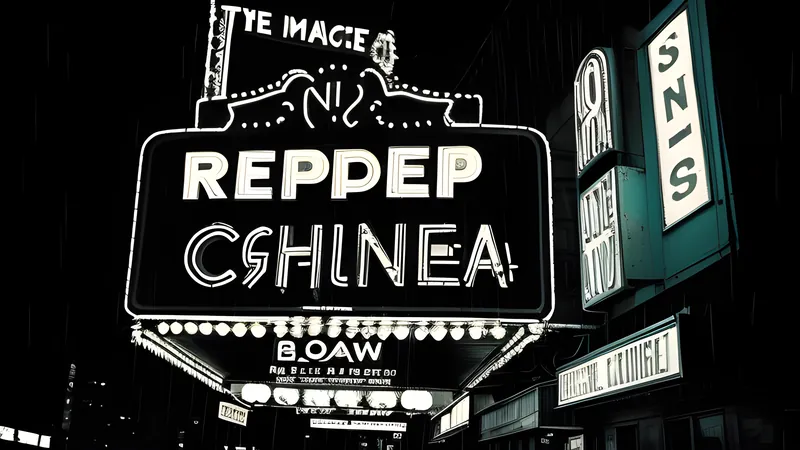
The term predates the exploitation era. It comes from the burlesque “bump and grind” houses of the 1920s and 1930s, theatres that ground out continuous programmes. By the 1960s the surviving ones — clustered on 42nd Street between Seventh and Eighth in Manhattan, and in equivalent strips in Chicago, Boston and downtown Los Angeles — had converted to films, and their economics were brutally simple. They ran continuous double and triple bills from mid-morning to the small hours, for a low flat admission, with no fixed start times. Patrons wandered in mid-film and left when they had had enough. The theatre made money on volume and concessions and did not care what was on screen provided it drew.
That model produced the aesthetics people now imitate, and it produced them as symptoms.
Prints were consumables. A distributor struck a limited number and worked them until they fell apart. A print reaching a 42nd Street house on the fourth month of a run had already been through dozens of provincial engagements. Scratches accumulate because dirt in the gate abrades the emulsion on every pass; the amber-magenta shift is Eastmancolor dye fade, an actual chemical failure of the stock Kodak sold from the 1950s onward, in which the cyan layer dies first and leaves red behind. The look film-makers now pay to simulate is a photographic record of a Kodak formulation problem.
Splices were repairs. When a print broke, the projectionist cut out the damaged frames and taped it back together. Do that thirty times and you have lost minutes. The “jump” the revivalists love is a scar from a repair made in the dark by someone who wanted to get back to his sandwich.
Missing reels went missing. Reels were stolen, misrouted, or simply not returned by the previous house. The show went on regardless, because a theatre running continuous bills to a mostly-drifting audience could survive an incoherent plot.
The circuit’s real product was the double bill
Here is what the nostalgia misses, and it is the part that mattered.
The grindhouse’s genuine invention was programming. A booker pairing two films for a 42nd Street week was performing an act of curation with real intelligence behind it, and the pairing was the artwork. He had a house to fill, a catalogue of hundreds of titles from a dozen tiny distributors, and an audience he understood precisely. He knew that a kung fu picture and a blaxploitation picture would draw the same crowd on a Saturday. He knew a women-in-prison film ran best under a biker film. He built weeks that had a shape.
That skill has no modern equivalent and it left no trace on the aesthetic, because you cannot photograph a booking decision. I have argued the full case in grindhouse double bills and the death of 42nd Street: the circuit’s contribution to film culture was a distribution system that let films made for nothing find the exact audience that wanted them, without a studio’s permission. Roger Corman’s whole method — laid out in the mogul of the margins — depended on those screens existing. He could green-light a picture because he knew a booker in Cleveland would take it sight unseen. Kill the screens and the method dies with them, which is exactly what happened.
What the films were actually like
The other thing the aesthetic gets wrong is the films, which were mostly competent.
A grindhouse bill was ordinary genre product, shot fast by professionals to a delivery date, and the good ones are conventionally well made. Jack Hill’s Coffy (1973) is a tightly structured revenge picture with a genuine star performance in it, and Hill shoots coverage like a man who has read a shot list. Russ Meyer cut his own films and was, by any technical measure, one of the fastest and most precise editors in American cinema — the argument is in the satire under the sleaze. Larry Cohen, Gordon Parks, Jonathan Demme, Joe Dante and Jonathan Kaplan all worked this circuit and could all cut a scene.
These films looked terrible in the room while the negative sat in a vault in good order. That distinction carries the whole argument of this essay, and the restorations prove it: watch Arrow’s transfer of Switchblade Sisters and you find clean, bright, sharply composed 35mm. The rot belonged to the print, the projector and the building.
Tarantino, Rodriguez, and the problem with the tribute
Grindhouse (2007) is where the aesthetic became canonical, and it is a more interesting failure than its reputation allows. Quentin Tarantino and Robert Rodriguez built a three-hour double bill with fake trailers between the features, and they distressed the footage digitally — Rodriguez’s Planet Terror is scratched and burned and missing a reel at the moment of maximum plot importance, as a joke.
The joke works once. The trouble is structural: a simulated flaw is an authored flaw, so it arrives on cue. A real missing reel was an insult that landed at random, usually during something you cared about, with no compensating gag. When Rodriguez drops a reel exactly where the sex scene would be, he has converted an accident into punctuation, and the audience laughs because they have been invited to. That is the opposite of the experience being commemorated.
Tarantino’s half is the more honest one, and the tell is that Death Proof is barely distressed at all. It is a talky, long-take character piece with two enormous set pieces, shot cleanly, and its debt to the circuit is structural — the second half rhymes with the first, the way a double bill rhymes. He understood that the inheritance was in the programming.
The film flopped in America, and the reason is a small monument to the whole thesis: audiences did not understand that they were meant to sit through both features. The Weinsteins split it into two releases internationally. A cinema-going public that had lost the double bill could no longer parse one, thirty years after the last 42nd Street house went dark.
The audience nobody writes about
The tribute has one more omission, and it is the least comfortable one.
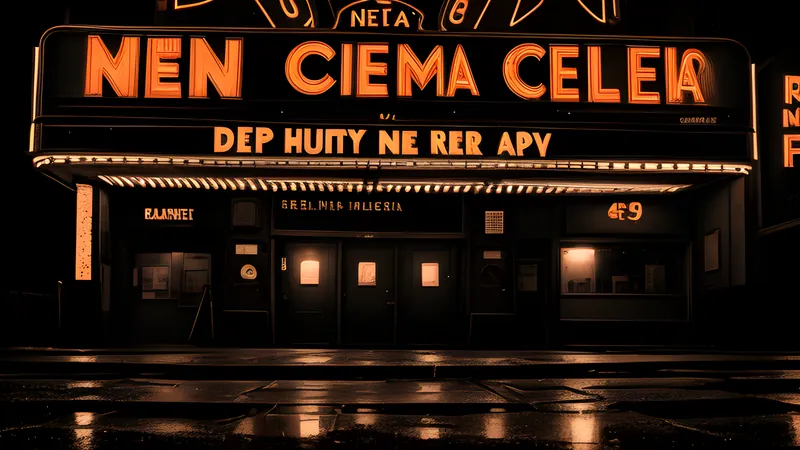
A 42nd Street house at eleven in the morning served largely as cheap shelter. The continuous programme and the flat admission meant that for the price of one ticket a person could stay warm and seated for nine hours, and a significant part of the standing audience was there for exactly that. The rest of the crowd included men who had come for the sex films that shared the strip, and by the late 1970s the Deuce carried a genuine street trade in drugs and robbery that made the block dangerous in a way no box set conveys. Contemporary accounts from people who worked there — projectionists, ushers, the distributors’ own reps — describe theatres where the floors were tacky, the seats were slashed, and the management’s chief concern was whether anyone had died in the balcony overnight.
This matters to the aesthetic argument because the revival remembers the room as transgressive when the room was mostly poor. The scratches on the print and the man sleeping in row K have the same cause: nobody with money cared about this building or the people in it. Turning that into a texture — a grade, a filter, a font — performs a small act of forgetting, and it is the same forgetting that lets the word “exploitation” be used affectionately about a business that also paid its actresses badly and its crews worse. The drive-in version of this history is sunnier and largely true; the urban version is squalid and equally true, and both were feeding the same distributors.
None of which makes the films worse. Jack Hill is not answerable for the carpet. It does mean the honest position is to love the pictures, respect the booking, and decline to romanticise the venue.
What died, and what it took
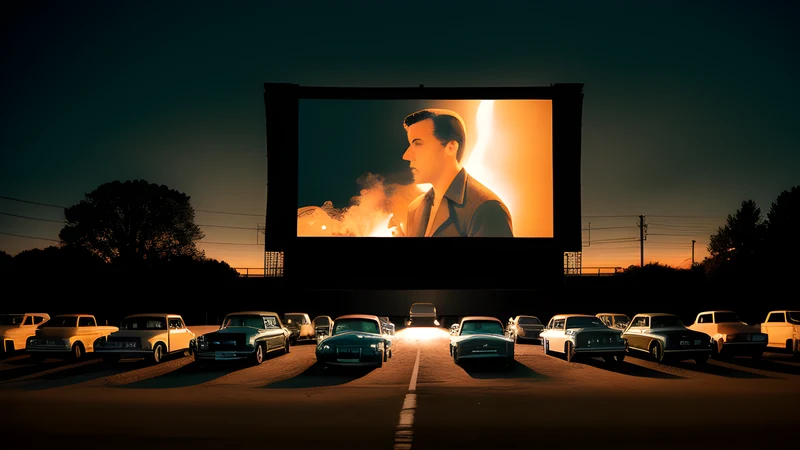
The circuit ended for reasons that had little to do with taste. Home video removed the audience — you could rent the same film and watch it without going to 42nd Street at 2am — and then the property became too valuable. New York’s redevelopment of Times Square through the late 1980s and 1990s cleared the strip; the Deuce’s houses were demolished, converted, or in the case of the New Amsterdam handed to Disney and restored to a splendour it had not enjoyed since 1903.
Something real was lost, and it was infrastructure. Grain plugins and fake trailers mourn a texture. The thing worth mourning is a distribution network that let a film made for $60,000 reach a paying audience in forty cities without asking anybody’s permission. That network has no modern replacement. Streaming is often offered as one, and it fails at the specific job: an algorithm has no equivalent of the booker who knew his Saturday crowd wanted Pam Grier and a car chase, and who would put them together himself on a hunch he could be sacked for.
Keep the box sets. Watch the restorations, where the films look the way their cinematographers intended. And when a new picture arrives wearing digital scratches like a borrowed jacket, remember that the scratches were somebody’s equipment failing, in a building that smelled of ammonia, for an audience nobody in the industry respected. The nostalgia is for the wound. The films deserve better than to be remembered by their damage.
Related Content