The Giallo's Rules and Why It Refuses Them
A genre catalogued by its clichés spent twenty years ignoring every one of them
Contents
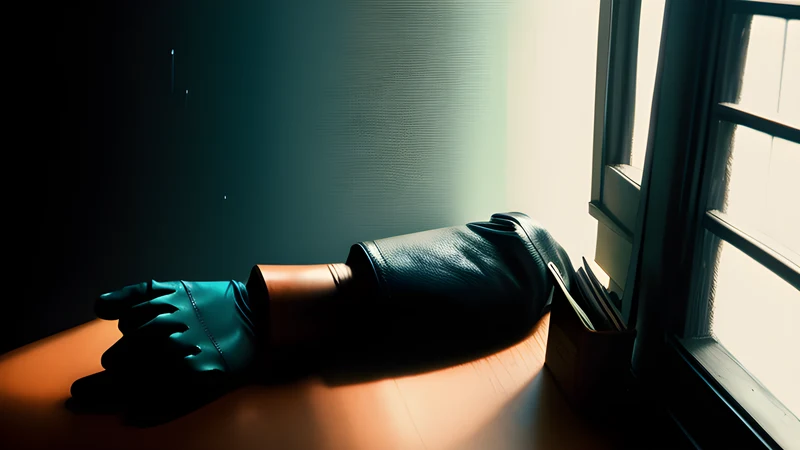
Every genre eventually gets a checklist, and the giallo’s is the most confidently recited in all of cult cinema. Black leather gloves. A straight razor. J&B whisky on a sideboard. A foreign visitor who witnesses a murder through glass and cannot quite remember what they saw. A title assembled from an animal, a colour and a threat. A killer whose motive turns out to be a childhood trauma delivered in a hurried flashback under the final credits. Recite that list at any repertory screening and half the room will nod along.
The list is accurate. It is also a description of the genre’s furniture rather than its engine, and the films that people actually love — the ones that survived the video-shop years and got the restorations — are precisely the ones that treat the checklist as a set of things to walk past on the way to something else. The giallo is a genre that was codified by its audience after the fact, and its major works spend their running time refusing the code.
The rulebook was written afterwards
Start with the name, because the name is the first misdirection. Giallo means yellow, and it refers to the yellow covers of Mondadori’s crime paperback line, launched in 1929 to bring translated Anglo-American mystery fiction to Italian readers. The word describes a publishing format. It arrived in cinema as a marketing convenience, meaning roughly “the kind of thing you find on that shelf” — Agatha Christie, Edgar Wallace, Cornell Woolrich, all filed under a colour.
So the term carried a shelf rather than a definition. When Mario Bava made The Girl Who Knew Too Much in 1963 and followed it with Blood and Black Lace the next year, nobody involved was inventing a genre with rules; they were making crime pictures with the money available, in a national industry that ran on filoni — currents, cycles, whatever the last hit suggested audiences would pay for again. The rules the fandom recites were extracted, decades later, from a body of roughly a hundred films made across fifteen years by directors who mostly weren’t talking to each other.
Which means the rulebook is a readers’ index. Treating it as a set of production requirements gets the causation backwards.
What Bava actually built
Blood and Black Lace is the founding text, and it is founding because of what it discards. Bava gives the killer a featureless white stocking mask and a fedora — a face with nothing on it. He sets the film in a fashion house full of mannequins, so that the human figures and the dummies are photographed with identical care. And then he does the thing that made the genre: he stops caring who the killer is.
The film has a solution. Its energy is organised around something else entirely: a sequence of deaths staged as tableaux, each lit in a different colour scheme, each given the running time a set-piece needs rather than the running time a plot beat needs. The mystery functions as scaffolding to hang murders from. Bava understood by 1964 that the audience was not sitting in the dark to solve anything.
This is the giallo’s actual founding rule, and it is a rule about attention. The genre asks you to look, and it punishes the assumption that looking will produce understanding. The witness who saw too little — the tourist at the window, the paralysed man in the hospital bed, the woman who cannot place the detail nagging at her — is a joke at the expense of the detective story. Vision is the whole apparatus of the mystery genre, and the giallo spends fifteen years demonstrating that vision is useless.
The films that throw the mystery away entirely
Follow that thread and the “rules” start collapsing on contact with the canon.
Short Night of Glass Dolls (1971) is narrated by a man lying on a mortuary slab, paralysed and presumed dead, reconstructing how he got there. In place of the black-gloved maniac, there is an institution. Aldo Lado takes the giallo’s paranoid architecture and points it at power, and the result is closer to a political thriller than to anything on the checklist.
Footprints on the Moon (1975) barely contains a murder investigation at all. Luigi Bazzoni and cinematographer Vittorio Storaro — the man who would shoot Apocalypse Now — build ninety minutes of a woman walking through an emptied-out Turkish resort trying to establish whether her own memories belong to her. The film is filed as a giallo because there is nowhere else to file it.
Don’t Torture a Duckling (1972) moves the whole apparatus out of the modernist apartment and into a southern village, and Lucio Fulci uses it to run an argument about superstition, the Church and mob justice that is genuinely angry in a way the genre is not supposed to be. A Lizard in a Woman’s Skin (1971) opens with a dream sequence and never fully returns to solid ground.
And The Perfume of the Lady in Black (1974) simply drops the detective frame and becomes a study of a woman’s disintegration, with the murders arriving as symptoms.
Four films, four abandonments of the structure the genre is supposedly built on. That is a strike rate that tells you the structure was never load-bearing.
Why the set-piece carries the film
Here is the craft argument, because the refusal only works if something takes the plot’s place.
Watch how Argento constructs a murder in Deep Red (1975). The camera goes handheld and low, moving at the height and speed of a person, and it arrives in the room before the victim knows anything is wrong. Goblin’s score starts earlier than the threat does — the prog-rock cue is the announcement, and it arrives in scenes where nothing subsequently happens, so you cannot use the music to predict the violence. Argento then slows the killing down past the point of comfort. The whole sequence is engineered to make you complicit in the looking, and then to make the looking cost you something.
Bava’s version is different in method and identical in purpose. He shoots through coloured gels and moves the zoom lens as an expressive instrument, so a room’s meaning changes without a cut. Sergio Martino, the most conventionally skilled director in the cycle, uses architecture: Torso (1973) builds its final act around a woman trapped upstairs in a villa while a killer works below her, and the tension is entirely a matter of floor plans and sightlines. The Fifth Cord (1971), shot by Storaro again, treats brutalist concrete as the antagonist.
In each case the film’s meaning lives in the sequence, and the sequence is designed to defeat comprehension while rewarding attention. That is a coherent aesthetic programme. It has nothing to do with whisky brands.
The foreigner in the frame was an accounting decision
The checklist’s most quoted item deserves a harder look, because it explains how the whole cycle worked.
The giallo protagonist is almost always an outsider — an American writer in Rome, a British model in Milan, a jazz musician who has just arrived and does not speak the language well. Fans read this as a thematic choice about alienation, and the films do collect that meaning as a by-product. The origin is duller and more instructive. Italian genre cinema of the period ran on international pre-sales, and a co-production needed a face that would sell in Germany, Spain, France, the United States and Japan. So you hired David Hemmings fresh from Blow-Up, or Anthony Franciosa, or Karl Malden, and you built the script around the fact that they were visiting.
Then there is the sound. Almost nothing in these films was recorded live. Italian productions shot silent and post-synchronised everything, with the cast frequently speaking different languages on set and every voice replaced later. That practice produces the strange, floating, slightly unmoored quality of the dubbed giallo — dialogue that seems to arrive from just outside the frame. What the English tracks did to eurohorror is a long argument in itself, and the short version is that the dislocation the fandom prizes as atmosphere began as a budget line.
The outsider protagonist and the uncanny sound are both economics that hardened into style. Which is a decent summary of the cycle as a whole.
The case against my own argument
Two films make the opposite case, and honesty requires putting them on the table.
The Bird with the Crystal Plumage (1970), Argento’s debut and the film that detonated the cycle commercially, is a fair-play mystery in the strictest sense. The clue is shown to you in the first reel, in full, at length, and the entire film is the protagonist trying to work out what is wrong with a memory you also possess. The pleasure is genuinely deductive. Deep Red pulls the same trick with even more nerve, hiding its answer in plain sight in a shot you have already watched and will watch again.
Torso likewise plays clean. Martino gives you suspects, motives, red herrings that resolve. The structure holds.
So the giallo can do the mystery, and its two most famous practitioners could do it better than most of their Anglo-American contemporaries. My claim is narrower and survives the counter-examples: the mystery is available to the genre as a tool, and the genre almost never depends on it. Argento kept the fair-play clue because he enjoys the game, then spent the following decade — Suspiria, Inferno, Phenomena — dismantling narrative logic entirely, which suggests where his interests actually lay. Tenebrae (1982) is a giallo about a writer of gialli being accused of misogyny, which is Argento answering his critics by building an argument out of the genre’s own machinery.
What the rules were for
The checklist survived because it is useful to distributors, to fans making recommendations, and to anyone trying to describe a body of work with no manifesto behind it. It gives an unruly cycle a face. The gloves are a genuine convention — they solved a production problem, letting a director shoot the murder himself and keeping the killer’s identity unfixed until casting was decided. J&B was on the sideboard because the company paid for it to be there. These are facts about how films got made in Rome in 1972, and they became aesthetics by repetition.
The genre’s real inheritance is elsewhere. The giallo’s fingerprints on the modern slasher are usually traced through A Bay of Blood and the body count, which is true and incomplete. The deeper debt is the one Brian De Palma took: the conviction that a camera can lie to you, that a beautifully composed image is a trap, and that a thriller’s job is to make you distrust your own eyes for two hours.
Start with Blood and Black Lace and Deep Red if you want the genre at full strength, then go straight to Short Night of Glass Dolls to see how quickly it escaped its own definition. The giallo canon has the fuller route. Bring the checklist if you like. You will have abandoned it by the third film, which is exactly what the films did.
Related Content